
United States History - 20th Century - General & Miscellaneous, United States History - 20th Century - 1901 to 1945, United States History - 20th Century - Wars & Conflict, United States History - General & Miscellaneous, Photography - Travel, Photography
Log in to track your reading progress.
Overview
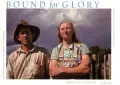
The photographs of the Farm Security Administration (FSA), which recorded American life in the late 1930s and early 1940s, remain among the most moving and famous documentary images from the first half of the 20th century. Yet few people know that, along with thousands and thousands of black-and-white photographs, the FSA photographers also took color pictures. Here, for the first time, is a selection of the best of the FSA color photographs-introduced by National Book Award finalist Paul Hendrickson and assembled to create a vivid portrait of America as it emerged from the Great Depression to fight World War II.Covering countryside and city, farm and factory, work and play, the images in this book open a window onto our national experience from 1939 to 1943, revealing a world that we have always seen in our mind's eye exclusively in black and white. Never before has there been a book that paints this picture in full color. Published in association with the Library of Congress. Author Bio: Paul Hendrickson, a longtime feature writer for the Washington Post, now teaches nonfiction writing at the University of Pennsylvania. He is the author of Looking for the Light: The Hidden Life and Art of Marion Post Wolcott, The Living and the Dead: Robert McNamara and Five Lives of a Lost War, and the recent Sons of Mississippi: A Story of Race and Its Legacy. He lives in Philadelphia.Editorials
Publishers Weekly
Taken from 1939 to 1943 under the auspices of the Farm Security Administration and the Office of War Information, these 175 "lost" photos feature shots by Russell Lee, Andreas Feininger and Marion Post Wolcott, using the then-revolutionary technology of Kodachrome film. Color photographs taken before 1939 have largely deteriorated, so these surviving photos are later than the most familiar b&w Depression-era shots. This 11 1/2" x 8 1/2" volume thus "colorizes" one's normally black-and-white impressions of a very vibrant time, as Hendrickson (Sons of Mississippi) notes in his introduction. The logic behind the arrangement of the photos, which at first seems largely random, as it follows neither photographer, location nor chronology, becomes clear by the end of the book: the U.S.'s industrial rise. Images of urban lethargy and farmhands picking cotton under hot blue skies (the unbearable conditions of cotton-picking somehow seem more apparent in color) gradually give way to images of mobility, mechanization and a changing economy. Arnold T. Palmer's gleaming portraits of Rosie the riveter-like aircraft workers follow Jack Delano's earthier photos of male railroad workers, their sweaty and intent faces caked with soot. Tellingly, the book ends with photos of bombers flying over California. (June) Copyright 2004 Reed Business Information.Book Details
Published
June 7, 2004
Publisher
New York : H.N. Abrams ; 2004.
Pages
192
Format
Hardcover
ISBN
9780810943483