
Europe - Travel Essays & Descriptions, Genres & Literary Forms, General & Miscellaneous Literary Criticism, British & Irish Literary Biography, English Literature
Log in to track your reading progress.
Overview
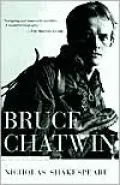
Award-winning novelist Nicholas Shakespeare has written the definitive biography of one of the most influential literary figures of our time: Bruce Chatwin, whose works’ strangely compelling combination of research, first-hand experience, myth, and mystification may have been the real substance of his seemingly contradictory life.Chatwin’s first book, In Patagonia, became an international bestseller, revived the art of travel writing, and inspired a generation to set out in search of adventure. Chatwin became a celebrity, while remaining a conundrum. With little formal education, he had become a director of Sotheby’s. An avid collector, he eschewed material things and revered the nomadic life. Married for twenty-three years, he had male lovers throughout the world. And only at his death did his personal myth fail him. Nicholas Shakespeare, who was given unrestricted access to his papers, spent eight years retracing Chatwin’s steps and interviewing the people who knew him. The result is a biography that is at once sympathetic and revelatory.
Editorials
Publishers Weekly -
Chatwin's fallen-angel looks had withered from HIV by his death at 47 in 1988, but he had achieved a cult reputation as a writer-adventurer that shows no signs of fading. Shakespeare's warts-and-all biography, thoroughly researched and unsparingly revealing of Chatwin's literary and personal failings, will be manna to cultists but ammunition to critics who see him as an overrated manufacturer of his own myth. Chatwin himself declares that the borderline between fiction and nonfiction "is to my mind extremely arbitrary, and invented by publishers." To Shakespeare the "camouflage of fiction did allow Bruce to do what he liked." A friend sees an unresolved tension in the bisexual Chatwin and his work; below the "smooth attractive surface, he was split, rather like his books, between fact and imagination." His small, genre-defying oeuvre, highlighted by In Patagonia and The Songlines, both travel narratives enhanced by artifice, and Utz, which Chatwin considered a "Middle European fairy-story" though it was largely factual, is as compelling as his ambiguous personality. Yet he is exposed by Shakespeare, an award-winning novelist, as an exploiter of people, especially his masochistically loyal wife, and as a writer who relished being in control but was obsessed self-destructively by his homosexuality. A charismatic parasite, he borrowed homes in which to write, borrowed lovers, borrowed ideas, borrowed other investigators' research. A critic he knew called him "a great intellectual thief." "I have seldom met a human being," an acquaintance wrote, "who exudes so much sex appeal with so comparatively little niceness. When the gilt has worn off his jeunesse how much substance will be left underneath?" Always fascinated by nomads of every description, Chatwin was a sophisticated nomad, restless and dissatisfied, even with his fame, and ever pulling up stakes to hide from himself. The biography, a graphic page-turner, leaves the reader wondering whether Chatwin, here simultaneously charming and unpleasant, will survive Shakespeare's relentless yet often empathic dissection. Illus. not seen by PW. Author tour. (Feb.) Copyright 1999 Cahners Business Information.Library Journal
Chatwin (1940-89) referred to his legs as his "boys." His boys carried him to many exotic locals, long journeys that eventually led back to England, his home, his green tomb. Chatwin believed man was designed to be nomadic; he also loved to collect things, a love he turned to as he was dying from AIDS. Novelist Shakespeare (The Dancer Upstairs) effectively shows readers Chatwin's many sides: his rise to prominence at Sotheby's, where he met and married Elizabeth Chanler; his homosexual leanings, from which he fled; and his constant wandering--including a journey to Edinburgh to study archaeology and to South America as a journalist, which inspired the book In Patagonia (LJ 7/78). We see Chatwin's scabs and halos, his eroticism, his deep water, his angel (no doubt, Elizabeth), his rapid heart, his vivid kingdom: the road ahead. Highly recommended for all public libraries.--Robert Kelly, Fort Wayne Community Schs., IN Copyright 2000 Cahners Business Information.Paul Elie
The book is slow getting going; but once Chatwin, age 34, sets off for Patagonia to write "something I have always wanted to write up," it becomes a very good biography, because it really does make him seem as interesting as his books and his legend.—The Village Voice
Colin Phubron
In Nicholas Shakespeare, Chatwin has found the right biographer. This is a magnificent work of empathy and detection.—The Sunday TImes
Justin Wintle
Biographies don't come any better than this. Eight years in the writing, Bruce Chatwin is a glorious quilt-work of texts, voices, and places, join together with consummate judgement.—Financial Times
William Dalrymple
Quite simply, one of the most beautifully written, painstakingly researched, and cleverly constructed biographies written this decade. Shakespeare has a quite extraordinary empathy for his subject, whom he portrays with humor, warmth, and an eye for telling detail, creating a book almost as original, intelligent, and observant as those by Chatwin himself.— Literary Review
Book Details
Published
July 1, 2001
Publisher
Anchor Books
Pages
672
Format
Paperback
ISBN
9780385498302