
Nature Experiments & Activities, Animal Ecology, Insects - General & Miscellaneous, Arthropods - Insects - General, Biology - Entomology
Log in to track your reading progress.
Overview
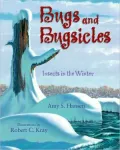
The secret world of insects revealed. Every fall, insects disappear. And every spring, they return. Where do they go? The dragonfly dies, leaving its young safe in the muddy bottom of a stream. The monarch butterfly sails the air to dry mountains in Mexico. And the Arctic woolly bear caterpillar becomes a "bugsicle"—it freezes solid, then thaws out to live another day. The honeybee, praying mantis, field cricket, ladybug, and pavement ant also use awe-inspiring tricks to outwit the killing frosts of winter. The author and illustrator re-create the insects' movements and reveal their secrets in this winner of the John Burroughs Nature Books for Young Readers Award. Experiments reinforce key concepts.
Editorials
Children's Literature -
Did you ever wonder what happens to insects during the winter months? Amy S. Hansen couples with Robert C. Kray in this enthralling and informative picture book to explain the frosty fate of numerous well known insects. A praying mantis and field cricket instinctively seek out the perfect place to lay their eggs because these adult insects will not make it through the winter. A dragonfly nymph burrows deep into the mud at the bottom of a stream, breathing through his gills and feeding on tadpoles, worms, and small fish. Ladybugs and honeybees cooperate by huddling together in a cluster for warmth. And perhaps having the most impressive adaptation of all, Monarch butterflies travel southward all the way to Mexico, laying eggs on the journey home. Each insect is illustrated with breathtaking detail; the manuscript could be incorporated in any elementary classroom. This would be a perfect book to read with children in the autumn months when insects are beginning to "disappear." Reviewer: Jennifer KeeneySchool Library Journal
Gr 3–5—The basic ways insects survive winter's harsh elements are explored in a series of picture spreads. The text, set against colorful, realistic, acrylic paintings of the invertebrates discussed, mixes short scenarios of eight representative insects preparing for winter with brief, factual descriptions of their habitats and physical and/or behavioral characteristics. A few sections sketch the behavior of all eight, but most focus on one at a time. A praying mantis finds a safe spot to lay her eggs, encasing them in a frothy sack that will harden and insulate them against the cold; a monarch butterfly starts its long migration south to Mexico where she waits out the winter with thousands of other monarchs in mountain pine trees; an Arctic Woolly Bear Caterpillar feeds heavily during the short spring and summer, spins a cocoon in a rock crevice, freezes in winter, and thaws out in spring unharmed, etc. Other insects include a ladybug, a field cricket, pavement ants, a honeybee, and a dragonfly. The text moves smoothly from the short scenarios to the factual material. While introductions to some of the same creatures mention their response to winter, there is comparatively little specific information on this topic for this age group.—Karey Wehner, formerly at San Francisco Public LibraryChildren's Literature -
Arctic wooly bear caterpillars freeze like a "bugsicle" in order to survive the winter. A field cricket lays as many as 400 eggs underground; but she will not live to see them hatch. The eggs are coated with an antifreeze called "glycerol" to keep them soft all winter. Ladybugs join in a "slow-moving dance, their bodies merging into one big red and black bundle…(holding) on to just enough warmth to keep them from freezing." Amazing moments in the life of a refuge's tiniest creatures abound on every page. Filled with intriguing and vital facts about bugs in winter, this carefully illustrated book also includes the praying mantis, dragonflies, honeybees, pavement ants, and monarch butterflies. Simple experiments help youngsters learn what happens when water freezes and how some insects are able to slow down the freezing process. Reviewer: Karen LeggettKirkus Reviews
Cold winter weather challenges animals. Using examples from eight species-praying mantis, field cricket, dragonfly, ladybug, honeybee, pavement ant, monarch butterfly, arctic woolly bear-Hansen explains different strategies insects use to survive. Some hide, others lay eggs; a few migrate and some can even freeze. Wildlife painter Kray's glorious double-page acrylic illustrations show the animals in context, including minute detail. Readers can see the tiny projections on the legs of field crickets, spines on the backs of ants and each hair where the insect has fuzz, even on honeybee legs. In an appealing conversational tone, the author includes information about life cycles, preferred habitats and living arrangements. She presents each insect as an individual, not quite personified but occasionally with improbable intention in their behavior. "Pavement ant can't imagine life without other ants." As her note suggests, what animals do in winter is a common childhood question. This is the first title for young readers in 25 years to offer an answer. Two easy ice experiments add a hands-on dimension. A splendid addition to the science shelf. (additional reading, glossary, index) (Nonfiction. 5-9)Book Details
Published
December 1, 2009
Publisher
Boyds Mills Press
Pages
32
Format
Paperback
ISBN
9781590787632