
Fiction, World Literature, Fiction Subjects, Peoples & Cultures - Fiction
Available on Bookshop
Write a review
Books.org participates in affiliate programs including Bookshop.org and the Amazon Services LLC Associates Program. We may earn a commission from qualifying purchases made through links on this page, at no additional cost to you.
Log in to track your reading progress.
Overview
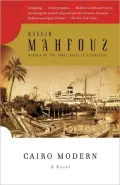
The novelist's camera pans from the dome of King Fuad University (now Cairo University) to students streaming out of the campus, focusing on four students in their twenties, each representing a different trend in Egypt in the 1930s. Finally the camera comes to rest on Mahgub Abd al-Da'im. A scamp, he fancies himself a nihilist, a hedonist, an egotist, but his personal vulnerability is soon revealed by a family crisis back home in al-Qanatir, a dusty, provincial town on the Nile that is also a popular destination for Cairene day-trippers. Mahgub, like many characters in works by Naguib Mahfouz, has a hard time finding the correct setting on his ambition gauge. His emotional life also fluctuates between the extremes of a street girl, who makes her living gathering cigarette butts, and his wealthy cousin Tahiya. Since he thinks that virtue is merely a social construct, how far will our would-be nihilist go in trying to fulfill his unbridled ambitions? What if he discovers that high society is more corrupt and cynical than he is? With a wink back at Goethe's Faust and Henry Fielding's Joseph Andrews, Mahgub becomes a willing collaborator in his own corruption. Published in Arabic in the 1940s, this cautionary morality tale about self-defeating egoism and ill-digested foreign philosophies comes from the same period as one of the writer's best known works, Midaq Alley. Both novels are comic and heart-felt indictments not so much of Egyptian society between the world wars as of human nature and our paltry attempts to establish just societies.Synopsis
A major Early novel by the Egyptian Nobel laureate, published for the first time in English
The New York Times - Dinitia Smith
Despite its flaws the novel is a singular look at a historical moment in the lives of Egyptians raised in traditional households whose existences were rocked by modernity. If you want to understand the hunger, the corruption, the bitterness that led to Gamal Abdel Nasser's 1952 coup against Farouk, the rise of fundamentalism and the intense Arab nationalism that accompanied it, you will find it played out here in this book.
Editorials
Dinitia Smith
Despite its flaws the novel is a singular look at a historical moment in the lives of Egyptians raised in traditional households whose existences were rocked by modernity. If you want to understand the hunger, the corruption, the bitterness that led to Gamal Abdel Nasser's 1952 coup against Farouk, the rise of fundamentalism and the intense Arab nationalism that accompanied it, you will find it played out here in this book.—The New York Times
Publishers Weekly
This new translation of an affecting early novel about love and social climbing by deceased Egyptian Nobel laureate Mahfouz (the Cairo trilogy) follows the fortunes of a Cairo university graduate eager to make his way in a venal 1930s imperialist society. When new graduate Mahgub Abd al-Da'im learns his father is at death's door and his monthly stipend will soon be terminated, he accepts a ministry position out of desperation. There is also a very large string attached: he must marry the minister's beautiful young mistress. The dishonor of this Faustian bargain is further underscored by the revelation that the young woman, Ihsan, was the ideal love of one of Mahgub's university friend's, and the two intended to marry before she was encouraged by her calculating family to accept the minister's seduction. Fallen characters, Mahgub and Ihsan set out on their single-minded path toward material advancement. Mahfouz is a master at depicting shifting forces of motivation, and despite some dated stereotypes, he offers a keen psychological portrait of a complex society in the midst of radical transformation. (Jan.)Library Journal
An early work by the only Arab writer yet to receive the Nobel Prize in literature, Cairo Modern was originally published in 1945 and was first issued in English in 2008 by the American University in Cairo Press, in the same translation that appears here. His fifth novel overall and the second to be set in 20th-century Egypt, it captures Mahfouz in a fiery, youthful stage. Though largely a work of social realism, the story has strands of the existentialism that would figure heavily in Mahfouz's later novels. Mahfouz explores the lives of several recent university graduates in 1930s Cairo, particularly that of Mahgub, a poor but ambitious young man whose life spirals out of control as he fiercely pursues a place among the upper class. Throughout, Mahfouz displays a mastery of character development and strong control of his themes, mainly the consequences of trying to escape one's fate.Book Details
Published
December 1, 2009
Publisher
Knopf Doubleday Publishing Group
Pages
256
Format
Paperback
ISBN
9780307473530