
Teaching - Art, General & Miscellaneous French Literature - Literary Criticism, Literary Theory - General & Miscellaneous, Literary Criticism - U.S. Fiction & Prose Literature - General & Miscellaneous, Higher Education - General & Miscellaneous, Art Stud
Available on Bookshop
Write a review
Books.org participates in affiliate programs including Bookshop.org and the Amazon Services LLC Associates Program. We may earn a commission from qualifying purchases made through links on this page, at no additional cost to you.
Log in to track your reading progress.
Overview
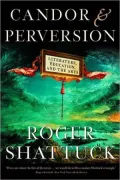
With incisive analysis, he elucidates the nature of intellectual craftsmanship, defends art's undeniable moral component, and, faced with an academic world shattered by theory, laments how extra-literary politics have grown increasingly dominant, now attempting to eliminate the very category of literature. Whether commenting on Foucault, Pulp Fiction, Georgia O'Keeffe, V.S. Naipaul, or the survival of a core tradition in the humanities, Shattuck presents a stirring synthesis of the principles and values by which we can live together as a nation finally at peace with its diversity. A Los Angeles Times Best Book of the Year and a TLS Notable Book of 1999.Editorials
Publishers Weekly -
Written over the past 15 years, this gathering of retired Boston University professor Shattuck's essays and reviews begins with a vociferous section on the education wars, leveling shots at cultural relativism and the politicization of education. In 1994, at the founding session of the Association of Literary Scholars and Critics, of which Shattuck was later president, the author read "Nineteen Theses on Literature," which distilled his beliefs in a traditional academic approach based on a faith in authors and their works. The theses are reproduced here, along with critiques of other books on education, as well as musings on reading, teaching, language and thought. Shattuck's tone is sometimes polemical, but the essays that follow are his own best defense. In pieces on Manet, impressionism, futurism, Man Ray and Marcel Duchamp ("the court jester of modernism"), he demonstrates the keen insight and fluid prose produced by a deep and broad education, strongly focused (on early 20th-century French culture) and sophisticated, yet open to unexpected correspondences and plainspoken analysis. His affinity for figures like Mallarm , who was both a dutiful citizen and a revolutionary poet, is a reminder that, despite some conservative views on education, Shattuck has always been a champion of the new and experimental in art. From The Banquet Years (1955) to the NBA-winning Marcel Proust (1974) to Forbidden Knowledge (1996), he has blazed his own intellectual trail, and readers will welcome this latest foray into the groves of art and academe. (Sept.) Copyright 1999 Cahners Business Information.Library Journal
An award-winning American critic and Proust scholar, Shattuck enjoys a wide readership, and a new book by him is always something of a literary event. In this authoritative collection of critical essays and occasional pieces, Shattuck shows the breadth of his interest in modern Western culture. He considers subjects as diverse as the writings of Michel Foucault, the "Beulah Quintet" novels of Mary Lee Settle, the accomplishments of Sarah Bernhardt, and the collaborative efforts of Georgia O'Keeffe and Alfred Stieglitz. Much of the book is devoted to the intellectual life of 19th- and 20th-century France, with Shattuck focusing on impressionism, symbolism, surrealism, and other avant-garde movements in art and literature. He also includes several insightful essays on the current state of higher education. For academic and larger public libraries, especially where there is an interest in French arts and letters.--Ellen Sullivan, Ferguson Lib., Stamford, CT Copyright 1999 Cahners Business Information.Booknews
Now retired from Boston University, National Book Award winner Shattuck argues that literary studies in the US have embarked on a deeply wayward course of late. He finds that the increasing dominance if politics and theory threaten to eliminate literature as a category, and looks to the past for a common literary and philosophical heritage. Annotation c. Book News, Inc., Portland, OR (booknews.com)Kirkus Reviews
Diverse essays on literature and the arts from an eminent critic who writes for the educated public rather than the academic specialist. Shattuck, professor emeritus of literature at Boston Univ., is probably best-known for his National Book Award–winning biography of Marcel Proust and his various books on French modernism, but his interests have always been wide-ranging. The most recent of his 12 books (Forbidden Knowledge: From Prometheus to Pornography, 1996) explored its title theme from earliest myth to the contemporary critical preoccupation with transgression. The new book picks up 39 essays—book reviews, public lectures, columns that he wrote for the liberal arts journal Salmagundi—that have appeared elsewhere over the past two decades. Interestingly, the hodgepodge format doesn't vitiate the pleasure and insight that his book offers. In a way, it increases that pleasure, because it encourages browsing and dipping. Shattuck's prose is urbane but never pretentious, "in the wake of the great literary journalists" he admires: Hazlitt, Baudelaire, and Edmund Wilson. Shattuck is a resolutely public critic, and early essays in the collection polemicize against the obscurantism and what he sees also as the moral corruption of contemporary academic criticism. Michel Foucault and his followers, in particular, come in for a sound drubbing. But the book's greater part is taken up with book reviews, a genre that Shattuck masters with great flair. Reviews are the chief venue for literary journalism in our era, and Shattuck makes the most of it. Even though the books under review vary widely—from Mallarmé to Mailer, from W.S. Merwin to LeopoldSenghor—Shattuck's own vision emerges clearly. Throughout he emphasizes the moral dimension of criticism, the link between art and lived human experience, and the ethical imperative of what he calls "intellectual craftsmanship." Even if his polemics are a bit one-sided and sanctimonious, the overall effect of his writing about art and literature is engaging.Book Details
Published
January 3, 2001
Publisher
New York : W.W. Norton, c1999.
Pages
432
Format
Paperback
ISBN
9780393321111