
Medical Figures & Sick People - Biography, Hospitals, General & Miscellaneous Science, Doctors & Nurses, African American - Biography - General, Scientists, Naturalists & Engineers - Biography
Log in to track your reading progress.
Overview
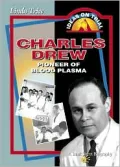
On April 1, 1950, celebrated African American surgeon and pioneering blood plasma researcher Dr. Charles Drew bled to death after an auto accident. It was a tragic end to a life dedicated to discovery and the advancement of blood transfusions. A doctor on the scene reported, "All the blood in the world could not have saved Dr. Drew." Charles Drew presents Drew's life and struggle in gripping and vivid detail, including his groundbreaking work in the large-scale production of human plasma that was eventually used by the U.S. Army and the American Red Cross as the basis for blood bands. One of the most influential men of his time, Drew also served as the first director of the Red Cross blood bank and held the chair of surgery at Howard University.A biography of the black surgeon who conducted research on the properties and preservation of blood plasma and was a leader in establishing blood banks.
Editorials
KLIATT
This biography is about a fascinating man about whom most modern white Americans, however liberal and open-minded, know virtually nothing but his name and that he was "a doctor of some kind, wasn't he?" But Drew wasn't just a doctor. He was a black doctor, and racism was always a part of his life. Born in Washington, D.C., his undergraduate degree was from Amherst College. He went to medical school at McGill University in Montreal. He became an instructor in pathology at Howard University, in Washington, D.C., and that led to a fellowship at New York City's Columbia University, where he received his doctorate of science in surgery. He returned to Howard to teach. His research on blood made the modern blood bank possible. Dr. Drew served as a role model for his generation, becoming a doctor when few African Americans did. By the end of WW II, he had trained half of the African American doctors in this country. In the face of racism, he demanded of his students that they be the best doctors possible. They did not disappoint him. Trice makes the reader wish that Dr. Drew were still alive. She includes timelines, not only of Dr. Drew's life, but of what was happening in world history, from the sinking of the Titanic to the discovery of blood types to the 1918 flu epidemic, and she includes both world wars. Her writing is clear, captivating, and simple without being simplistic. A Bank Street Biography: Ideas on Trial. KLIATT Codes: JSA—Recommended for junior and senior high school students, advanced students, and adults. 2000, McGraw-Hill, 121p, illus, bibliog, index, 21cm, 00-026137, $8.95. Ages 13 to adult. Reviewer: Judith H. Silverman; Chevy Chase, MD, March 2001 (Vol.35 No. 2)VOYA
Like virtually all successful people, Dr. Charles Drew knew what he wanted when he was young. His sister had died in the 1918 influenza epidemic, and his determination to study medicine to help other children live did not see obstacles. Aiming for medical school is difficult enough today, but although Drew excelled academically, he faced the fact that African Americans were accepted at a mere handful of American medical colleges. Drew went to medical school at McGill University in Montreal, where he was elected to the medical honor society. Although trained as a surgeon, shortly after graduation he became interested in researching the use of blood for transfusion. One world war over and another looming, the problem of how to treat wounded men at a distance from a large blood supply was getting attention. Drew was recruited to Columbia University to work on the solution and developed both a method for extracting plasma from whole blood and the protocol for what became known as blood banks. This biography in the Ideas on Trial series admits up front that it uses a you-are-there format, with some liberties taken with dialogue. There are special insert boxes with facts and quotations, as well as time lines that help sort story from historical information. It is an especially readable story that will involve the reader in Drew's life, but even with its attempt to avoid confusing fact with fiction, it will be challenging to the young reader to separate them. Index. Photos. Further Reading. Chronology. VOYA CODES: 3Q 2P M (Readable without serious defects; For the YA with a special interest in the subject; Middle School, defined as grades 6 to 8). 2000, McGraw-Hill, 121p, $8.95 Trade pb.Ages 11 to 14. Reviewer: Lynne HawkinsBook Details
Published
June 1, 2000
Publisher
McGraw-Hill Inc.,US
Pages
121
Format
Paperback
ISBN
9780071353175