
Impressionism, Individual Artists, French Art, Landscapes, Landscapes & Places in Art
Log in to track your reading progress.
Overview
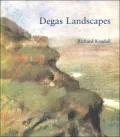
Degas is renowned for his masterful studies of the human body - powerfully rendered paintings of dancers, jockeys, washerwomen and bathers. It is less well known, however, that he also produced challenging and varied landscapes at almost every phase of his career - from his early travels in Italy, to his association with the Impressionist movement, and into his final decades. Remarkably, Degas chose the subject of landscape for his only one-person show in 1892. This lavishly illustrated book by Richard Kendall is the first to deal with Degas' landscapes, relating them to his other work and to his evolving views of art. Kendall demolishes the myth of Degas' indifference to the landscape itself and to the painters of landscape art. He traces Degas' first experiments in watercolour, oil and etching; his progress as a painter of equestrian scenes and pastel seascapes in the 1860s; and his association with Pissarro, Cassatt and Gauguin and rivalry with Monet and Cezanne in the middle of his career. Kendall provides a detailed examination of Degas' audacious colour monotypes from the early 1890s, showing how they reveal the artist's engagement with contemporary colour printing, his interest in Japanese art, his involvement with symbolism and his affinity for contemporary philosophy and literature. He concludes by discussing the last flowering of Degas' landscape activity - the little-known series of paintings produced at Saint-Valery-sur-Somme in the late 1890s - and with the help of photographic evidence proves that these pictures relate directly to surviving streets and buildings, often in radical and innovative ways. Handsomely illustrated with many previously unpublished works, this book demonstrates that Degas had an affectionate, original and complex relationship with the landscape, a relationship that has profound implications for his more familiar repertoire of subjects.This lavishly illustrated book is the first to deal with Degas' landscapes, relating them to his other work and to his evolving views of art. Features many previously unpublished works. Accompanies an exhibition of Degas' landscapes, opening at the Metropolitan Museum of Art in January 1994. 120 colorplates. 100 illus.
Editorials
Library Journal
Degas was considered to be the dominant figurative painter among the French Impressionists. British art historian Kendall presents a highly focused study that details the artist's more than 40 years as a landscapist. Published in conjunction with an exhibition that opened at New York's Metropolitan Museum of Art and travels this spring to Houston's Museum of Fine Arts, this amply illustrated volume brings together for the first time less familiar Degas works, including previously unpublished images. Beginning with Degas's travels in Italy in the 1850s, Kendall discusses the artist's early Italian landscape studies, equestrian scenes, and pastel seascapes and concludes with a series from the French resort town of Saint-Valery-sur-Somme. There is a fascinating analysis of the only individual exhibition Degas himself ever staged, which was devoted solely to the landscapes and featured the artist's innovative color monotypes. Kendall's clear, solid scholarship proves that Degas was neither indifferent to landscapes nor scornful of plein-air painting (literally, painting done in the ``open air''). Recommended for general and special collections.-- Joan Levin, MLS, ChicagoBook Details
Published
January 4, 1994
Publisher
Yale University Press
Pages
322
Format
Hardcover
ISBN
9780300058376