
Poetry, General
Available on Bookshop
Write a review
Books.org participates in affiliate programs including Bookshop.org and the Amazon Services LLC Associates Program. We may earn a commission from qualifying purchases made through links on this page, at no additional cost to you.
Log in to track your reading progress.
Synopsis
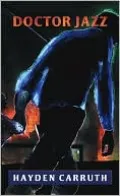
In his first collection of poems since he won the National Book Award for Scrambled Eggs & Whiskey, Carruth writes the threadbare memories of old age and from the bleakest circumstances-such as the death of his own daughter-defiantly reclaims dignity and beauty. With the spit and bop of a jazzman playing all the right notes, Carruth lives his music, finding the low tones of terrible loss, the highs of great friendships.
Times Literary Supplement
Though Carruth has received several other honours for his poetry, his work as critic, poet, anthologist and essayist is little known in Britain. The publication of this new book, the re-issue of the vast Collected Shorter, and the availability of A Listener's Guide, a CD of Carruth reading from the Collected Shorter Poems and Scrambled Eggs and Whiskey, are good opportunities to rectify this neglect, and for a wider range of readers to discover the work of an important, accomplished and humane poet.
"Dearest M---", the longest poem in Doctor Jazz, is subtitled "The first day of her death (as recorded by her father)". A "surging elegy", the poem drifts through the many emotions and remembrances that arose through the day and the first sleepless night after the death from cancer of Carruth's daughter, Martha. The poem's plain language and the directness of its descriptions of the outer world, and its transcriptions of the inner, give it a heart-rending immediacy. It struggles to contain the memory of Martha "riddled by cancer, wracked by pneumonia, / comatose in a stupor of morphine, attached / by tubes and wires to the gleaming apparatus", to make some sense of the fact that "Martha was dead for two minutes, then two hours, / then ten". As in the beautiful and tender memoir of Martha that Carruth published in Reluctantly (1998), his last book of autobiographical writings, the tones of "Dearest M---" are of rejoicing and of devastation; he records a version of his daughter's life within the poem, rejoicing in her talent, beauty and imagination, but this telling is always overshadowed by a feeling of the injustice of her death, what the poem describes as the offence to nature of a father outliving his child.
"And like all elegiac words, these swirl / around the question forever unanswered: 'What for? What is it all for?'" Though the poem can give no answer--answers are usually beyond the range of elegy--the rest of the book, without directly addressing the question, does supply a kind of reply. The section immediately following is entitled "The Afterlife", and consists of nine poems written from the viewpoint of the poet's own death. One begins "You may think it strange {...} that I'm writing / a letter in these circumstances. I thought / it strange too--the first time."
Carruth's letters to the living reflect on beauty, pleasure and appreciation, on love and friendship. They lay claim to the hindsight of posthumousness, but what they actually enjoy is the perspective of an elderly man reflecting on his experience and on what has been most important to him, a perspective here specifically invoked, but which naturally informs the other poems in the book. The final poem in the series recalls the face of the trumpeter Dizzy Gillespie, his cheeks distended, sweat-streaked, the "brilliance, {...} clarity and force, [the] / Extraordinary originality", of his playing and concludes with lines that are a kind of signature for the book as a whole: "I know, / He knew, everyone must know that beauty / is always, always, accompanied by pain. " In the face of this knowledge, Carruth continues to write his poems, just as Dizzy continued to play his trumpet.
One of a series of poems written in a form of syllabic haiku stanzas, inspired by the Japanese poet Basho, describes as the most significant event in human history - "No / other occasion / in all our lives has been as / important as this" the first time a poet "murmured his praise to / a twisted sapling". Carruth's new poems are, essentially, songs of praise and celebrations of beauty; for all the real anguish and pain they record, they remain enactments of a fundamental attitude of faith and wonder that has always run through his work. The closing lines of an early poem reprinted in Collected Shorter Poems address Venus, the goddess of Love.
Great queen, an ignorant poet's heart
Is all his faith, yet still his art
Can prick your source to tell the truth
So teach him, lady. Then always
Among the people her who praise
Your powers, one will be Carruth.
Throughout all the intervening years, through all the loss and sadness of an ordinary life, Doctor Jazz demonstrates that the poet has kept faith with his early promise.
Book Details
Published
September 1, 2001
Publisher
Copper Canyon Press
Format
Hardcover
ISBN
9781556591631