
Fiction - Animals - Mammals, Fiction - Holidays & Festivals, Fiction - Religion & Beliefs, Fiction - General & Miscellaneous, Fiction - Comic Books & Graphic Novels
Available on Bookshop
Write a review
Books.org participates in affiliate programs including Bookshop.org and the Amazon Services LLC Associates Program. We may earn a commission from qualifying purchases made through links on this page, at no additional cost to you.
Log in to track your reading progress.
Overview
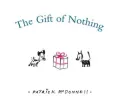
What can Mooch the cat give Earl the dog when Earl has everything? The answer, of course, is nothing. This simple picture book story features characters from McDonnell's popular comic strip, "Mutts." Illustrations.Synopsis
What can Mooch the cat give Earl the dog when Earl has everything? The answer, of course, is nothing. This simple picture book story features characters from McDonnell's popular comic strip, "Mutts." Illustrations.
The Washington Post - Elizabeth Ward
A mellow paean to anti-materialism that should ideally be handed out now, before holiday gift mania really kicks in. Spare drawings done in black, white and a seasonal touch of red reinforce the Zen-inspired idea that less is more.
Editorials
From Barnes & Noble
A simple and divine tribute to friendship, this tome from Mutts creator Patrick McDonnell introduces us to Mooch, a cat who wants to give his doggy pal, Earl, a gift. The trouble is, Earl has everything, so Mooch decides to give him the perfect present -- nothing. Confused? Don’t be: Your heart will be as touched as Earl’s in this thoughtful picture book that sails above other friendship books and is an ideal gift for the holidays, birthdays, or other occasions.Elizabeth Ward
A mellow paean to anti-materialism that should ideally be handed out now, before holiday gift mania really kicks in. Spare drawings done in black, white and a seasonal touch of red reinforce the Zen-inspired idea that less is more.—The Washington Post
Publishers Weekly
The stars of the Mutts comic strip, Mooch the cat and his canine friend, Earl, break out of the Sunday funnies into the picture book world. McDonnell applies his spare style, sketching his cheeky characters with only a few deliberate lines. Each has a distinctive feature-Mooch's red ellipse-shaped nose, Earl's Princess Leia ears-that makes them instantly endearing. With plain backgrounds, a limited palette and a small square trim size, the book looks like a blown-up cartoon strip (even the pages have a newspaper-like grittiness). But the story has more depth than the minimalist visuals would suggest. Here, Mooch searches for the perfect gift for Earl. "What do you get someone who has everything?" he wonders. (Earl is the proud owner of a bowl, bed and chewy toy.) Mooch mulls it over (red and black dots and bubbles indicate his deep thinking) and comes up with "Nothing! He would give Earl the gift of nothing." But where to find nothing? Mooch tries shopping (because "Millie came home from the store and said, `There was nothing to buy!' "). But alas, "nothing was not for sale." How he solves the problem is pure delight, reminding young readers that the greatest gift is friendship, not things. Both Mutts fans and newcomers will appreciate McDonnell's clever wordplay and lovable characters, who prove that nothing can be everything. All ages. (Oct.) Copyright 2005 Reed Business Information.Children's Literature
The problem of Mooch the cat is what to give his best friend, Earl, who has everything. The answer, obviously, is nothing. In his search for this elusive "nothing," Mooch finds that although people say that there is "nothing" on TV, or "nothing" to buy, there really is quite a lot. It is only back home, however, not even looking, that he finds that "nothing." Wrapping it in a big box, since Earl deserves a lot, he takes it to his friend's. Together they can enjoy "nothing, and everything." Playing on just a few words per page, McDonnell manages to convey the elusive concept of "nothing" while including the strong feelings of a well-meaning friend. The black-and-white drawings with touches of pink—and the cat and dog from the artist's comic strip Mutts—are almost lost on the white pages with their minimal backgrounds and spare detail. Mooch is the appealing star, as we find our emotions surprisingly involved. McDonnell's few black strokes combine effectively to illuminate the search as we ponder the philosophy underneath the simple tale. Check the contrasting jacket and cover. 2005, Little Brown and Company, Ages 6 up.—Ken Marantz and Sylvia Marantz
School Library Journal
Gr 1-4-This story features characters from McDonnell's comic strip "Mutts." Mooch (a cat) wants to give Earl (a dog) a gift, but he already has a bowl, a bed, and even a chewy toy. In fact, "he [has] it ALL." In a flash of inspiration, Mooch decides to give him nothing, and sets out to find it. Though the kids say there is "nothing to do," they always seem to be doing something. And even though Millie says "there [is] nothing to buy," Mooch finds plenty in the stores. In the end, he wraps a big box with nothing in it and presents it to his friend. "There's nothing here," says Earl. "Nothing-but me and you," Mooch replies. And that's the point. The text is minimal and the small cartoon drawings are executed in black and white with touches of red and surrounded by plenty of white space. As Mooch ponders over his dilemma, he is engulfed by question marks. The picture of the two friends sitting wrapped paw-in-paw as they enjoy "nothing and everything" is charming. A fine vehicle for a one-on-one discussion of the meaning of friendship and gift-giving.-Marianne Saccardi, Norwalk Community College, CT Copyright 2005 Reed Business Information.Kirkus Reviews
Fresh from the comic-strip panels of Mutts, Mooch the cat doesn't know what to get his best friend Earl the dog on a certain "special day." Earl has everything: dish, chewy toy and a bed. Then inspiration strikes. "Nothing" is the perfect gift for someone with everything . . . but where to find it? Mooch has heard his people say there's "nothing" on TV-but something's always on. He hears there's "nothing" at the stores-but there's plenty of everything. After a moment of Kitty Zen, Mooch wraps up a big empty box and presents it to Earl. " 'There's nothing here,' said Earl. / 'Yesh!' said Mooch. 'Nothing . . . / but me and you.' " And the two of them enjoy nothing-and everything-together. A perfect meditation on gift giving and friendship, this is a great present for the Type-A hoarder in your life. It will do double duty as a conversation starter for older kids at storytime. (Picture book. 5+)Book Details
Published
September 1, 2005
Publisher
Little, Brown Books for Young Readers
Pages
56
Format
Hardcover
ISBN
9780316114882