
Nursing, Education - General & Miscellaneous, Educational Guidance & Counseling
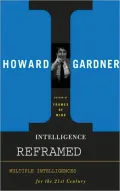
Available on Bookshop
Write a review
Books.org participates in affiliate programs including Bookshop.org and the Amazon Services LLC Associates Program. We may earn a commission from qualifying purchases made through links on this page, at no additional cost to you.
Log in to track your reading progress.
Overview
Harvard psychologist Howard Gardner has been acclaimed as the most influential educational theorist since John Dewey. His ideas about intelligence and creativity - explicated in such bestselling books as Frames of Mind and Multiple Intelligences (over 200,000 copies in print combined) - have revolutionized our thinking.In his groundbreaking 1983 book Frames of Mind, Howard Gardner first introduced the theory of multiple intelligences, which posits that intelligence is more than a single property of the human mind. That theory has become widely accepted as one of the seminal ideas of the twentieth century and continues to attract attention all over the world.Now in Intelligence Reframed, Gardner provides a much-needed report on the theory, its evolution and revisions. He offers practical guidance on the educational uses of the theory and responds to the critiques leveled against him. He also introduces two new intelligences (existential intelligence and naturalist intelligence) and argues that the concept of intelligence should be broadened, but not so absurdly that it includes every human virtue and value. Ultimately, argues Gardner, possessing a basic set of seven or eight intelligences is not only a unique trademark of the human species, but also perhaps even a working definition of the species. Gardner also offers provocative ideas about creativity, leadership, and moral excellence, and speculates about the relationship between multiple intelligences and the world of work in the future.Editorials
Publishers Weekly -
In Frames of Mind (1983), Gardner first set forth his influential theory of Multiple Intelligences, contending that each of us is equipped with eight or more separate types of intelligence (including linguistic, logical-mathematical, musical, bodily-kinesthetic, spatial, interpersonal and intrapersonal varieties). In this combative update, geared mainly to educators, psychologists and other professionals, Harvard education professor Gardner adds to the list a new naturalist intelligence, which involves attunement to the environment, its flora and fauna. He further proposes that there may be a spiritual or existential intelligence (knowledge of transcendental and cosmic matters), but adds that this awaits scientific verification. Critics will undoubtedly pounce on his ideas, but Gardner has his ammunition ready: he argues that accumulating neurological evidence supports MI theory, and cites a study by Harvard Project Zero (of which he is codirector) reporting that schools across the U.S. applying MI theory boast improved student performance and parent participation. Gardner also outlines two of his new educational approaches: "individually configured education," tailored to individual differences, and "Teaching for Understanding," designed to assess students' comprehension at each step. He also throws down a gauntlet: "If we ignore the differences [in how people acquire and represent knowledge], we are destined to perpetuate a system that caters to an elite--typically those who learn best in a... linguistic or logical-mathematical manner." His book is certain to fuel debate. (Nov.) Copyright 1999 Cahners Business Information.Library Journal
In his seminal work, Frames of Mind, Harvard psychologist Gardner argued that intelligence comprises more than one or two properties. Since translated into seven languages, the book proceeded to spawn debate. Besides language and math, Gardner posits five other types of intelligence: musical, kinesthetic, spatial, interpersonal, and intrapersonal. Here he considers three new possibilities: naturalistic, spiritual, and existential. Three chapters take up issues and misunderstandings commonly found in applying multiple intelligence theory in education, business, and the arts. A chapter on creators and leaders shows the breadth of Gardner's knowledge and interests, and one on achieving understanding through performance proves his pragmatic orientation as a teacher. Besides references, appendixes include schools and other contacts. This valuable book by a leading psychologist and educator is essential for most libraries.--E. James Lieberman, George Washington Univ. Sch. of Medicine, Washington, DC Copyright 1999 Cahners Business Information.Booknews
Gardner (cognition and education, Harvard U.) broadens his theory of multiple intelligences first posited in (1983) to include intelligences of the existential and naturalist types and multiple forms of creativity. The McArthur genius award recipient advises on applications of his theory, responds to critics, and provides global contacts on MI theory. Annotation c. Book News, Inc., Portland, OR (booknews.com)Book Details
Published
September 18, 2000
Publisher
Basic Books
Pages
300
ISBN
9780465013142