
Literary Figures - Women's Biography, English, Irish, Scottish Women - Literary Biography, British Authors - 20th Century - Literary Biography, Irish Literary Biography, Philosophers - Biography
Log in to track your reading progress.
Overview
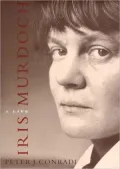
Iris Murdoch's life - like her books - was full of extraordinary passions and profound relationships with some of the most inspiring and influential thinkers, artists, writers and poets of her time. During the war she pondered Aldous Huxley's doctrine that, for a writer, 'it is not what one has experienced but what one does with what one has experienced that matters,' and she later wrote that the person who might help her better herself 'must not distinguish between me and my work'. She was sometimes portrayed as a bourgeois grandee living an unworldly, detached intellectual life, inventing a fantastical alternative world for compensation; but much that was thought to be romance in her work turns out to be reality. 'Real life is so much odder than any book,' she wrote to a friend, and her life was as exciting and improbable as her fiction. Her novels are not just stylised comedies of manners with artificial complications, but reflect passionately lived experience, albeit wonderfully transmuted. Peter Conradi's biography returns the reader to her best work, through a quest for the living flesh-and-blood creature: the Irishwoman, the Communist-bohemian, the Treasury civil servant, the worker in Austrian refugee-camps, the RCA lecturer during the 1960s, the lifelong devotee of friendship conducted at a distancce and by letter, and the Buddhist-Christian mystic. It balances the formative years before the creative confusion of youth gave way to a greater stability, with an account of her maturity.Editorials
Washington Post Book World
Fun stuff. The emphasis, properly, is on her work.Publishers Weekly
It has been nearly two years since Iris Murdoch's death from Alzheimer's and the publication of her husband John Bayley's memoir Elegy for Iris. It seems fitting that the beloved philosopher and novelist should be the subject of a biography nearly as idiosyncratic and charming as she herself was. One of the numerous oddities of this one is its construction: each chapter is broken into numbered sections rarely more than four pages long. This allows the author (Murdoch's longtime friend and biographer of Angus Wilson) to ramble back and forth chronologically, examining a few years at a time through different perspectives literary, romantic, philosophical and gradually progress forward. The overall effect is leisurely, informal, highly literary and more than a bit uneven. In the first half, Conradi faithfully traces Murdoch's family background and intellectual development, painstakingly tracking down her earliest Latin teachers or the history of modern Irish sectarianism, as the moment requires. But the second half ends as if winded, streaking through 16 prolific years in one short chapter, mentioning Murdoch's knighthood almost in passing. The book's great strength lies in its characterizations ("She had a way of staring down at her glass, listening very carefully to the speaker, possibly indicating also that the glass was empty"). Documenting Murdoch's eccentricities and legendary kindnesses, Conradi succeeds in reviving her presence. Thus, readers who seek a few last glimpses of Murdoch's rare personality will be gratified by this affectionate, if disorganized, tribute; those looking for closure or hoping to make sense of the narrative of her life will not. (Sept.) Copyright 2001 CahnersBusiness Information.Library Journal
Conradi, the literary executor of Iris Murdoch's (1919-99) estate, presents a richly textured study of her personal, professional, academic, and literary life. A well-loved only child who dove headlong and with open heart into the excellent liberal education she was offered in adolescence and then at Oxford, Murdoch saw "philosophical problems [as] the problems of [her] own life" even as she worked through the Classics to Kant to the newborn ideas of Existentialism and beyond. It was through fiction, however, that she worked to discern most clearly for herself and display for her readers how the moral life is to be lived. For that feat, William Golding praised her work for the access it gives readers into the 20th century itself, giving "it back to us as myth" after examining its actuality, and, most particularly, its nuanced and troubled contest with the Good. Conradi offers sensual and intellectual details about every aspect of his subject, including her developing sense of both self and the absoluteness of Kant's moral imperative. Rich footnoting leads the reader to expansions on the narrative as well as to the authority behind the biographer's statements. Scholars need this text, but it will also intrigue lay readers, especially those who enjoyed John Bayley's Elegy for Iris (LJ 12/98). (Photos and index not seen.) Francisca Goldsmith, Berkeley P.L., CA Copyright 2001 Cahners Business Information.Kirkus Reviews
A long but selective biography that focuses on the distinguished British novelist as an expert on love, emphasizing her many affairs and intense friendships. Briskly summarizing Murdoch's Anglo-Irish ancestry and birth in Dublin in 1919, Conradi devotes the longest portion to the period from his subject's years as an Oxford undergraduate through jobs as a civil servant in wartime London and as a UN refugee worker in postwar Europe, to her teaching post at Cambridge in 1947 and '48. During those years, richly detailed through her letters and journals, Murdoch joins the Communist party and excels in her philosophy studies. She works hard, yet everything seems almost effortless to her, including maintaining close ties with her many friends. These early connections are frequently the models for her novels' characters, though she denies the portraits are directly drawn from life. Conradi deftly weaves throughout the text an account of Murdoch's political activism, including her complicated views on Ireland. The author loses steam a bit in the second half, when he introduces her future husband, literary critic John Bayley, whom she met around the time she was writing her first novel, Under the Net (1954). Conradi discusses Murdoch's fiction best in terms of the relationships that influence it. And he leaves out a lot. After her school days, there is scant mention of her family, though she was close to both her parents. There is only one description of the strain her enduring marriage to Bayley might have suffered because of her extramarital attachments, lesbian and otherwise. Her illness and death from Alzheimer's in 1999 are briefly, though movingly, touched upon. Given the fact that theauthor is Murdoch's literary executor (and the book is dedicated to Bayley), it's not too surprising that no one has a bad word for her, with the exception of one former lover, novelist Elias Canetti. It's also true that, as Murdoch herself admitted, very few people really know her. Conradi could well be one of them. Illuminating, but as the author himself suggests, it's the beginning of the discussion about Murdoch's life, not the end. (50 photos, not seen)Book Details
Published
October 29, 2001
Publisher
W. W. Norton & Co.
Pages
512
Format
Hardcover
ISBN
9780393048759