
State & Local U.S. Government, U.S. - Political Biography
Log in to track your reading progress.
Overview
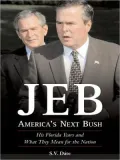
Jeb Bush, Florida's governor and a dutiful prince, was groomed his entire life for the presidency, only to learn that life isn't fair when his far less industrious black sheep brother beat him to the job.S. V. Date, who, as Tallahassee bureau chief of The Palm Beach Post, has covered Jeb for eight years, rejects the trend in political journalism that focuses only on American Idol-like artifice--who's up and who's down and what are the latest poll numbers?--and muckrakes his way to the core of Jeb in this revealing account of his Florida years.
This was no easy task, for in Jeb's kingdom dissent is frowned upon and journalists are supposed to be accommodating stenographers, not steadfast reporters. Date soon became the biggest journalistic thorn in Jeb's side, producing award-winning stories that revealed the real winners and losers of Bush's policies. Jeb's second and final term as Florida governor ended in January 2007. He left office a popular man in his home state, and revered by the national Republican Party's conservative base. True, Bush fatigue may result in Jeb settling for the vice-presidency in 2008-he's already discussed this possibility with John McCain-and maybe NFL commissioner in 2007, but his day will come, and Date shows us why: Jeb, unlike his brother George, is a policy wonk, knows how to take charge when a natural disaster strikes, is a workaholic, eloquently speaks without notes, and, at six-four, has a larger-than-life charismatic presence that makes even opponents say: "I want him to like me."
Editorials
Publishers Weekly
Love Jeb Bush or hate him, D te writes, but "if you want to see what he would do with the nation, take a good look at what he did here in Florida." Though the Palm Beach Post reporter admits he has a bit of an axe to grind after covering the younger Bush for eight years, he says it's on principle alone, as a critic of Jeb's autocratic ruling style, not his policies. As D te portrays it, Jeb Bush for president is less a question of "if" than "when." Yet the book is worth close attention regardless of what Jeb decides. Bush's personal story-his youth; his business relationships in Miami before taking office (which weren't always savory); his years spent running a highly secretive administration, obsessed with tax cuts and school vouchers-is a masterful lesson in political ambition. Most compelling is Date's examination of the constantly evolving history of the hypercompetitive, hyperpowerful Bush family dynasty; how the family has amassed, wielded and abused political power and entitlement; and how it has evolved after that power and entitlement have been transferred from one generation of leaders to the next. B&w photos. (Feb. 15) Copyright 2006 Reed Business Information.Kirkus Reviews
Bush 2008? Anyone who worries at the prospect will want to have a look at this partial-and revealing-portrait. The Bushes harbor dynastic ambitions, but the old patrician noblesse oblige has changed. "Somehow," writes Palm Beach Post Tallahassee bureau chief and longtime John Ellis Bush watcher Date, "Prescott Bush's duty to lead has, through a new combination of chromosomes, mutated into the right to rule." By Date's account, that conviction impelled George W., older and less gifted, to seek the White House. It may set Jeb Bush-unlike his brother, a reader, policy-minded leader and hard worker-on the same course, unless Dubya so tarnishes the name that no Bush is named dogcatcher, much less chief executive. The brothers do not always get along, especially on Election Day 2000, when it appeared that Jeb, governor of Florida, would not be able to deliver his state. Date suggests that a clear-cut Dubya victory might have been in the bag had not Jeb alienated some 300,000 black voters with an attack on affirmative action; but then, as he notes, Jeb, though not racist as such, has some difficulties with minorities, mostly the poor ones, who, in his worldview, bring poverty on themselves. In this, Date writes, Jeb is much like his brother. He shares other points on the resume, having been allowed to use other people's money-especially the taxpayers' in the wake of the infamous S&L scandal-to make their fortunes. He is also like his brother in having come to office on a pleasing "compassionate conservatism" platform that instantly hardened into a rightist, "win-at-any-cost" antagonism, much beholden to fundamentalist Christians and the hardcore right. Jeb has also frittered away Floridians'money by giving massive tax cuts to the rich-Date writes that his Democratic predecessors raised taxes and created more jobs than Bush has, disproving his fiscal arguments-and, though priding himself on being an "education governor" of the no-child-left-behind ilk, has much worsened Florida's schools. There is scarcely a positive note in the book, save that Date finds Jeb personally likeable in some measure and notes that Jeb at least registered for the draft during the Vietnam era, even if, as Bush said, he "wanted to get married, work and have a family" and had "no compelling reason to go to Vietnam."After reading this, voters may find no compelling reason to support Jeb, either.Book Details
Published
February 15, 2007
Publisher
Penguin Group (USA)
Pages
416
ISBN
9781101176887