
Fiction, General & Miscellaneous Philosophy, World Literature, Fiction Subjects
Log in to track your reading progress.
Overview
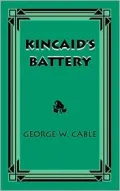
"Throughout that land of water and sky the willow clumps dotting the bosom of every sea-marsh and fringing every rush-rimmed lake were yellow and green in the full flush of a new year, the war year, Sixty-one." Set in sultry New Orleans during the Civil War, this novel tells the story of a certain Confederate army artillery unit. It provides an account of the experiences of Hilary Kincaid's Battery, or "the ladies' men," as they are more playfully called, and gives insight into the nature of war, hope, and peace. One of the South's greatest writers of all time, George Washington Cable brings this story to life with his skilled use of beautiful language and detailed description. His words paint images that leap to life from the page. His extensive knowledge of the history of New Orleans and the South is evident in Kincaid's Battery.Synopsis
1908. The book begins: For the scene of this narrative please take into mind a wide quarter-circle of country, such as any of the pretty women we are to know in it might have covered on the map with her half-opened fan. Let its northernmost corner be Vicksburg, the famous, on the Mississippi. Let the easternmost be Mobile, and let the most southerly and by far the most important, that pivotal corner of the fan from which all its folds radiate and where the whole pictured thing opens and shuts, be New Orleans. Then let the grave moment that gently ushers us in be a long-ago afternoon in the Louisiana Delta. See other titles by this author available from Kessinger Publishing.
Book Details
Published
November 1, 2001
Publisher
Pelican Publishing Company, Incorporated
Pages
424
Format
Paperback
ISBN
9781565549784