
Join Books.org — it's free

Ancient Fiction & Literature Classics, Ancient Rome Biography, Classics By Subject, General & Miscellaneous Ancient Roman History
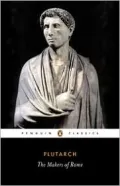
Makers of Rome by Plutarch β€” book cover

Makers of Rome

by Plutarch, Ian Scott-Kilvert (Translator), Ian Scott-Kilvert
Available on Bookshop Write a review

Books.org participates in affiliate programs including Bookshop.org and the Amazon Services LLC Associates Program. We may earn a commission from qualifying purchases made through links on this page, at no additional cost to you.

Log in to track your reading progress.

Overview

For this volume Ian Scott-Kilvert has selected nine of Plutarch's Roman Lives: figures whose careers range from the earliest years of the Republic to the establishment of the Empire under Octavius Caesar. The Shakespearean heroes Coriolanus, Brutus and Mark Antony have been included to illustrate Plutarch's fondness for a semi-fictional rather than a factual treatment of history.

Synopsis

For this volume Ian Scott-Kilvert has selected nine of Plutarch's Roman Lives: figures whose careers range from the earliest years of the Republic to the establishment of the Empire under Octavius Caesar. The Shakespearean heroes Coriolanus, Brutus and Mark Antony have been included to illustrate Plutarch's fondness for a semi-fictional rather than a factual treatment of history.

About the Author, Plutarch

Plutarch (c.50-c.120 AD) was a writer and thinker born into a wealthy, established family of Chaeronea in central Greece. He received the best possible education in rhetoric and philosophy, and traveled to Asia Minor and Egypt. Later, a series of visits to Rome and Italy contributed to his fame, which was given official recognition by the emperors Trajan and Hadrian. Plutarch rendered conscientious service to his province and city (where he continued to live), as well as holding a priesthood at nearby Delphi. His voluminous surviving writings are broadly divided into the β€˜moral’ works and the Parallel Lives of outstanding Greek and Roman leaders. The former (Moralia) are a mixture of rhetorical and antiquarian pieces, together with technical and moral philosophy (sometimes in dialogue form). The Lives have been influential from the Renaissance onwards.

Reviews

There are no reviews yet. Log in to write one.

Book Details

Published
October 1, 1965
Publisher
Penguin Group (USA)
Pages
368
Format
Paperback
ISBN
9780140441581

More by Plutarch

Moralia, Volume X: Love Stories. That a Philosopher Ought to Converse Especially With Men in Power. To an Uneducated Ruler. Whether an Old Man Should Engage in Public Affairs. Precepts of Statecraft. On Monarchy, Democracy, and Oligarchy. That We Ought No
Moralia, Volume XV: Fragments (Loeb Classical Library)
Moralia, Volume VIII: Table-talk, Books 1-6 (Loeb Classical Library)
Moralia, Volume III: Sayings of Kings and Commanders. Sayings of Romans. Sayings of Spartans. The Ancient Customs of the Spartans. Sayings of Spartan Women. Bravery of Women (Loeb Classical Library)
Moralia, Volume II: How to Profit by One's Enemies. On Having Many Friends. Chance. Virtue and Vice. Letter of Condolence to Apollonius. Advice About Keeping Well. Advice to Bride and Groom. The Dinner of the Seven Wise Men. Superstition
Moralia, Volume VII: On Love of Wealth. On Compliancy. On Envy and Hate. On Praising Oneself Inoffensively. On the Delays of the Divine Vengeance. On Fate. On the Sign of Socrates. On Exile. Consolation to His Wife
Moralia, Volume XII: Concerning the Face Which Appears in the Orb of the Moon. On the Principle of Cold. Whether Fire or Water Is More Useful. Whether Land or Sea Animals Are Cleverer. Beasts Are Rational. On the Eating of Flesh
Moralia, Volume VI: Can Virtue Be Taught? On Moral Virtue. On the Control of Anger. On Tranquility of Mind. On Brotherly Love. On Affection for Offspring. Whether Vice Be Sufficient to Cause Unhappiness. Whether the Affections of the Soul are Worse Than T
Moralia, Volume IV: Roman Questions. Greek Questions. Greek and Roman Parallel Stories. On the Fortune of the Romans. On the Fortune or the Virtue of Alexander. Were the Athenians More Famous in War or in Wisdom?
Moralia, Volume XIII: Part 2: Part 2. Stoic Essays (Loeb Classical Library)

Similar books