
Ethnic & Race Relations, General Christianity, African Politics, African Politics & Government, Southern African History, Christian Life
Available on Bookshop
Write a review
Books.org participates in affiliate programs including Bookshop.org and the Amazon Services LLC Associates Program. We may earn a commission from qualifying purchases made through links on this page, at no additional cost to you.
Log in to track your reading progress.
Overview
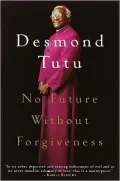
The establishment of South Africa's Truth and Reconciliation Commission was a pioneering international event. Never had any country sought to move forward from despotism to democracy both by exposing the atrocities committed in the past and achieving reconciliation with its former oppressors. At the center of this unprecedented attempt at healing a nation has been Archbishop Desmond Tutu, whom President Nelson Mandela named as Chairman of the Truth and Reconciliation Commission. With the final report of the Commission just published, Archbishop Tutu offers his reflections on the profound wisdom he has gained by helping usher South Africa through this painful experience.In No Future Without Forgiveness, Tutu argues that true reconciliation cannot be achieved by denying the past. But nor is it easy to reconcile when a nation "looks the beast in the eye." Rather than repeat platitudes about forgiveness, he presents a bold spirituality that recognizes the horrors people can inflict upon one another, and yet retains a sense of idealism about reconciliation. With a clarity of pitch born out of decades of experience, Tutu shows readers how to move forward with honesty and compassion to build a newer and more humane world.
From the Trade Paperback edition.
Editorials
Publishers Weekly -
This insightful book about South Africa's healing process is no simple feel-good tale. In 1995, Tutu was looking forward to a well-earned retirement from his role as Anglican Archbishop of Cape Town. He had given his life to the antiapartheid struggle and had spoken the truth to those in power so many times that, in 1984, he received the Nobel Peace Prize. Still, in 1996, President Mandela and others prevailed upon him to postpone retirement's pleasures to give South Africa one more thing: his leadership as chairman of the Truth and Reconciliation Commission. Tutu speaks frankly of this call, of the struggle that preceded it and of the betrayals and jubilations of this unique commission. The TRC's work was unprecedented not only in its emphasis on restorative over retributive justice but in the spirituality that permeated its work, the bulk of which constituted hearings from the "victims" and "perpetrators" of apartheid. Ubuntu, Tutu explains, is the African expression that was at the heart of the TRC's labors. Meaning something like "a person is a person through other people," ubuntu sums up Tutu's philosophical framework for addressing apartheid's hard truths and beginning the reconciliation process necessary to move beyond apartheid's legacy. Despite the occasional factual inconsistency and some clich s (the book seems hastily written), Tutu's wisdom and experience come through. Human rights, he affirms, cannot stand without ubuntu's deeper foundation; the future cannot be without forgiveness. (Oct.) Copyright 1999 Cahners Business Information.Library Journal
Tutu, winner of the Nobel Peace Prize in 1984, retired as Archbishop of Capetown, South Africa, in 1998. Here, he reflects on the wisdom he gained as chairman of the Truth and Reconciliation Commission, a group formed to expose crimes committed under apartheid and to achieve reconciliation with South Africa's former oppressors. Copyright 1999 Cahners Business Information.Kirkus Reviews
The story of South Africa's Truth and Reconciliation Commission (TRC) and a meditation on evil and forgiveness from Nobel laureate Tutu (The Rainbow People of God: The Making of a Peaceful Revolution, 1994). In 1994, South Africa faced a historically unique situation. A long-oppressed majority had peacefully taken power from its minority oppressor. As Tutu explains, the question facing the nation was, What then to do? Should Nuremberg-like trials be held against those who had maintained the ghastly system of apartheid? Or, as many whites wished, should the past be forgotten, let bygones be bygones? The new regime found what Tutu calls "a third way" to deal with the past: the TRC. Those who had committed politically motivated crimes during the apartheid era would receive amnesty if they made full and truthful public disclosures. In turn, the victims of such acts would be allowed to tell their stories in the hopes that this would restore a measure of their human dignity. Over 18 months some 20,000 victims appeared before the commission, imparting their tales of personal anguish—of torture, rape, imprisonment—but also exposing a system perpetrated and supported by the highest levels of government, military, and police. No longer could anyone deny knowledge of the past, as so many whites had; never again would such an evil be allowed to exist in South Africa. Yet it would be not only supporters of apartheid answering for their deeds. Those who had committed crimes in the fight against the system, including Winnie Mandela, would answer for their acts as well. Bishop Tutu's writing on this process is nothing short of miraculous. He is strong in his defense of the commissionthat so many doubted as either too harsh or too lenient. He is also anguished by the depths of human depravity the commission hearings revealed, but passionately hopeful that human caring and unity might prevail, in South Africa and the world. In its sober depiction and searing indictment of evil and in its never-maudlin advocacy of love, this is a masterpiece. (Author tour)Book Details
Published
February 4, 2009
Publisher
The Doubleday Religious Publishing Group
Pages
304
ISBN
9780307566287