
Short Story Collections (Single Author), Jewish Fiction & Literature, Russian Fiction, Character Types - Fiction
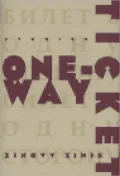
Available on Bookshop
Write a review
Books.org participates in affiliate programs including Bookshop.org and the Amazon Services LLC Associates Program. We may earn a commission from qualifying purchases made through links on this page, at no additional cost to you.
Log in to track your reading progress.
Overview
You step outside your house for a breath of fresh air. After a while, you want to get back in, but you can't--you locked yourself out. It is not your home any longer.Or, alternatively, you step outside your house to find out what's going on in the neighborhood. When you get back, you find its interior has changed beyond recognition. It is not your home any longer.Or, yet again, you step outside your house to meet other people. By the time you get back you have changed beyond recognition so that everyone inside the house regards you as an alien. it is not your home any longer.Editorials
Publishers Weekly -
With a narrative style and humor that sometimes hints at Nabokov, Zinik (The Mushroom Picker, 1986), who left Russia in 1975, crafts amazing stories depicting the plight of migrs as they endure their solitude and try, ultimately, to create new lives and new selves. These eight stories give glimpses of the mindset and frustrations that the narrator (also named Zinovy Zinik) experiences. In "A Ticket to Spare," a Russian Jew who travels to Kiev to see a Duke Ellington concert experiences the difficulty of seeking comfort in an unfamiliar city-if only for a day. Being both Russian and Jewish, Zinik finds it hard to meet folks in Kiev; even on the anniversary of the slaughter of the Jews at Babi Yar, he's shunned by fellow Jews engaged in a secret prayer for the victims. The stories have an archness of tone, a playfulness born of the experience of displacement and the accompanying knowledge that the world is endlessly mutable. In "A Chance Encounter," Zinik is allowed by the Soviets to return home briefly to visit his mother's grave, where he meets a woman he vaguely remembers. He becomes convinced she is a former girlfriend, only to find out that she is that former girlfriend's daughter. While walking around Moscow, he enters a familiar building and is suddenly overcome by "a Soviet version of Proustian nostalgia, carried by the urine and garbage underfoot, illuminated by a naked spattered bulb as dim as memory." Zinik captures perfectly and evocatively these memories, which reverberate within his head-his own cork-lined room. (Nov.)Library Journal
Zinik's one-way ticket took him from the Soviet Union to the West in 1975, and most of his characters have had a similar fate. "You sit with a cocktail at a caf table and all this joyous, richly diverse world swirls about you. And you start to swirl with it" says one in a letter home to Moscow, and swirl is evident throughout these finely balanced stories. But so is the nostalgia, the restlessness, the lack of connection that so many emigrs experience. In "The Refugee," in fact, set in a Vienna "seeth[ing] with former Soviet citizens," one much-anticipated new arrival never arrives at all, having opted to stay in his homeland. In unembellished prose, Zinik nicely captures the emigr's ambivalence, deftly pinpointing subtle shades of feeling with quick character sketches, e.g,. the rabidly anti-Semitic Englishman who won't concede that one Jewish character is Russian, the lady with the "large dragon-fly head in the panama hat" who typifies a sort of emigr "so out of place under the Atlantic sky." Dating from 1980 to 1992, these stories represent a good selection from an important Russian voice. For literary collections.-Barbara Hoffert, "Library Journal"Book Details
Published
February 13, 1997
Publisher
New Directions Publishing
Pages
196
Format
Hardcover
ISBN
9780811213417