
Fiction - Short Story Anthologies, English Poetry, Poetry - Emotions & Behaviors, Emotions & Feelings, Poetry - General & Miscellaneous
Log in to track your reading progress.
Overview
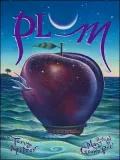
We're proud to "pear" a plum of a poet and a peach of an artist for a book that will be the apple of your eye!Tony Mitton has been hailed in the U.K. for reviving the tradition of English lyric children's poetry. Now he makes his U.S. collection debut with poems for every mood -- thoughtful, funny, silly, fantastical -- all perfectly accompanied by the wondrous pastels of Mary GrandPre. Together they reveal the story of St. Brigid and the baker ... the mysteries that lie down Green Man Lane ... the pleasure of a special hat ... the joys of the Elegant Elephant Delicatessen and the talents of Mrs. Bhattacharya's Chapati Zap Machine. Like plums and poems, this book holds beauty inside.
A collection of poems, including "Mrs. Bhattarchaya's Chapati Zap Machine," "The Snake and the Apple," and "Freak Cat-flea."
Editorials
From Barnes & Noble
"As I went walking down Green Man Lane / I met a stranger there. / His clothes were all of foliage / and tangled was his hair." British poet Tony Mitton has revived the art of children's lyric poetry. We all stand in his debt.Publishers Weekly
Mitton (Down by the Cool of the Pool) makes his foray into poetry with this uneven collection of 20 verses. Beginning with the tangible (the first poem, "Plum," opens, "Don't be so glum, plum./ Don't feel beaten./ You were made to be eaten"), he proceeds to more abstract themes, ending with "Instructions for Growing Poetry" ("Does it please you?/ Does it tease you?/ Does it ask/ to grow and spread?/ Now those little/ words are sprouting/ poetry/ inside your head"). GrandPre's (Harry Potter series; The Sea Chest) pastels, rendered in a predominantly dark and chilly palette, emphasize an underlying anxiety in many of the poems. For "Plum," she envisions the speaker as a bird of prey, precariously perched on a windowsill high above the sea. A coiled snake that not only sits in a tree but that seems to form the tree itself overtakes the spread for "The Snake and the Apple"; the menacing mood seems unwarranted by the poem, which focuses on the taste of the apple rather than the forbidden knowledge it imparts. The highlight might be "The Minstrel and the Maid," in which verse and illustrations work together to demonstrate the flirtation between the two subjects, each beckoning from one side of the spread. The minstrel's music ("I'll breathe you an air/ on a flute of gold") swirls like a thread of steam to where the maid holds a pie as an offering; the roses on her skirt echo his poodle's curls and the ornamentation of his music stand. But, as in the gratuitous gatefold illustration of pink and purple pachyderms clowning in "Elegant Elephant Delicatessen," many of the visual interpretations seem superficial. Ages 5-12. (Mar.) Copyright 2003 Reed Business Information.School Library Journal
Gr 3-5-These 20 poems exhibit a wide range of subjects and styles. Some deal with the mysterious and spectral; others reflect on the ordinary, giving it new dimension and perspective; and still others are zany and nonsensical. Mitton is at his best where his words evoke lingering moods and images, but his attempts at humor tend to be awkward, strained, or sometimes simply uninspired, as in "Flightpath": "The reason why the fly annoys me, as it does, is that, however hard I try, I can't ignore its buzz." GrandPr 's watercolors seem to follow suit, enlarging on the mood of the more thoughtful selections with rich, deep colors and effective use of light and shadow, but verging on the garish and frenetic for the supposedly humorous ones. There is, however, a good deal to savor in this eclectic collection, which should keep it circulating where poetry is popular.-Grace Oliff, Ann Blanche Smith School, Hillsdale, NJ Copyright 2003 Reed Business Information.Book Details
Published
March 1, 2003
Publisher
New York : Arthur A. Levine Books, c2003.
Pages
64
Format
Hardcover
ISBN
9780439364096