
Ancient Civilizations - History - General & Miscellaneous, Archaeology, Ancient Egypt - History
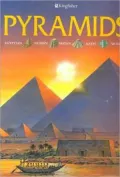
Available on Bookshop
Write a review
Books.org participates in affiliate programs including Bookshop.org and the Amazon Services LLC Associates Program. We may earn a commission from qualifying purchases made through links on this page, at no additional cost to you.
Log in to track your reading progress.
Overview
From the ancient ziggurats of Mespotamia and the steep pyramids of the Maya to the modern wonders of today, the engrossing text and beautifully detailed pictures of Pyramids provides a through historical overview of all types of pyramids. This meticulously illustrated reference also reveals how these awe-inspiring structures were constructed, what was kept inside them, and why they were so important to the different societies that produced them. An illustrated glossary and index help make this an even more enjoyable and easy-to-use reference.Describes the pyramids of Egypt and the Americas and their significance in the social, political, and religious life of long-vanished civilizations.
Editorials
Children's Literature -
This outstanding reference provides a thorough historical overview of all types of pyramids (Egyptian, Nubian, Mayan, Incan, Aztec, modern) and discusses the significant role these amazing structures played in the social, political, and religious lives of long-vanished civilizations. This beautifully illustrated resource reveals how and why these awe-inspiring architectural wonders were constructed, who built them, what was kept inside them, and why they were so important to the different societies that produced them. In addition to informative text and detailed illustrations, this volume also includes timelines, maps, and an illustrated glossary.Children's Literature -
For younger kids, pyramids and mummies seem to be almost equal in fascination to dinosaurs these days. This colorful British import is another addition to the field. Its quotes from hieroglyphic texts are welcome, as are the attempts to explicate ancient Egyptian astronomy within the context of pyramid designs. However, the layout-while eye-catching-makes some of the information "modules" difficult to follow.Children's Literature -
Part of the "Hallmarks of History" series which uses a physical feature of the day to introduce a specific time period in history, this book focuses on ancient Egypt through the unifying feature of the Egyptian pyramid. As would be expected from a book written by a person with a doctorate in Egyptology, the book does an excellent job of explaining the structure and purposes of pyramids in Egypt, but goes far beyond this to discuss the events of the period and the lives of the people during the time. There are many colorful and well-captioned illustrations, and actual photographs of pyramids are also used occasionally. In addition, one chapter discusses pyramids worldwide, including those in Peru and Mexico. As with all of the titles in this series, this book is thirty-two pages long with twelve chapters. The chapters include information about such topics as the building of pyramids, the social hierarchy of ancient Egypt, Egyptian hieroglyphs, and mummies. Each book in the series has simplified research aids, such as an index, and a date chart that shows what was happening in various parts of the world during the time being studied. This book also includes motivational questions to engage students with the topic. Maps, charts, and sidebars are included throughout the book where appropriate. The books in this series are short and contain relatively simple language and sentence structure, making them suitable for many third graders and especially helpful to older struggling readers who are studying ancient civilizations.Children's Literature -
Anne Millard helps children understand Pyramids from around the world and from all angles-construction, symbology, and history. Information is accessible because of the simple, large print and the preponderance of spectacular illustrations that are clear and inviting.School Library Journal
Gr 4-6Though these titles suggest that they grapple with the unanswered questions of outer space and ancient Egypt, what they actually include is known information, with a few ``what ifs'' thrown in for spice. Universe covers the history of how humans have viewed space, as well as facts on the moon, planets, galaxies, stars, and current and future space exploration. Pyramids traces ancient Egyptian culture (mummies, religion, hieroglyphs), its discoveries, and scanty information on other pyramids around the world. The books' layout favors browsing over research; paragraph-long captions annotate full-color illustrations and photographs, but rarely give in-depth information on one topic. Simplification and attempts to cover too much too briefly mar both books. Many other titles cover similar material equally well, or better. Try The Visual Dictionary of the Universe (DK, 1993) or James Putnam's Pyramid (Knopf, 1994) for better fact and photo coverage of the same topics.Cathryn A. Camper, Minneapolis Public LibraryChris Sherman
Millard's examination of pyramids is sure to be popular: the nicely designed, oversize format; attractive, full-color illustrations; and concise, clearly written text are very appealing. Millard's own interest in Egypt is evident, as more than half the book is devoted to Egyptian pyramids from all three kingdoms. She provides a wealth of information on their design, construction, and purpose, as well as on ancient funerary practices and the workers' roles. Far less detailed information is supplied for pyramids in the Americas, and a single double-page spread covers pyramids in Africa, the Middle East, and Southeast Asia. Although unfamiliar terms are defined in the text, an illustrated glossary provides additional information.Book Details
Published
April 15, 1996
Publisher
Kingfisher
Pages
64
Format
Hardcover
ISBN
9781856976749