
Literary Criticism - General & Miscellaneous, Literary Criticism - U.S. Fiction & Prose Literature - General & Miscellaneous, African American Literature - Literary Criticism, Ethnic & Minority Studies - General & Miscellaneous
Log in to track your reading progress.
Overview
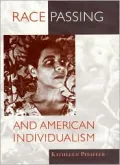
"In the literature of late nineteenth- and early twentieth-century America, black characters who pass for white embody a paradox. By virtue of the "one drop" rule that long governed the nation's race relations, they are legally black. Yet the color of their skin makes them visibly - and therefore socially - white." In this book, Kathleen Pfeiffer explores the implications of this dilemma by analyzing its treatment in the fiction of six writers: William Dean Howells, Frances E. Harper, Jean Toomer, James Weldon Johnson, Jessie Fauset, and Nella Larsen. Although passing for white has sometimes been viewed as an expression of racial self-hatred or disloyalty, Pfeiffer argues that the literary evidence is much more ambiguous than that. Rather than indicating a denial of "blackness" or co-optation by the dominant white culture, passing can be viewed as a form of self-determination consistent with American individualism. In their desire to manipulate personal identity in order to achieve social acceptance and upward mobility, light-skilled blacks who pass for white are no different from those Americans who reinvent themselves in terms of class, religion, or family history.Synopsis
Pfeiffer (English, Oakland U.) examines novels written during the three decades after the 1896 US Supreme Court upheld racial segregation. Focusing on novels about people pretending to be a race other than their own, she looks beyond the trope's narrative function to its social criticism and political commentary. Annotation (c)2003 Book News, Inc., Portland, OR
Book Details
Published
February 1, 2003
Publisher
University of Massachusetts Press
Pages
184
Format
Hardcover
ISBN
9781558493773