
Environmental Science & Ecosystems, Forests & Trees
Available on Bookshop
Write a review
Books.org participates in affiliate programs including Bookshop.org and the Amazon Services LLC Associates Program. We may earn a commission from qualifying purchases made through links on this page, at no additional cost to you.
Log in to track your reading progress.
Editorials
Children's Literature -
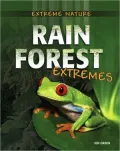
A rain forest is an ecosystem that brings to mind lush green foliage and cool breezes, with a myriad of insects and animal life. While this is a somewhat accurate depiction, a rain forest can also be very warm and muggy, or cold and wet. An example of a cold rain forest would be the Pacific coast of Canada. An example of a warm rain forest would be the South American Amazonia. Scientists have determined that rain forests will receive an average of seventy-eight inches of rain a year. That is ten times the amount of rain that falls on Los Angeles, California, in the same amount of time. Rain forests stay green all year because they work much like a greenhouse, keeping temperatures stable even at night. Rain forest animal life can range from small lizards to chimpanzees. Most of the animals living in a rain forest will live in the trees or among the vegetation. Food is plentiful in the rain forest, whether you are eating vegetation, small insects that burrow in the ground, or animals. Examples of the reality of the food chain are ever present. The photographic illustrations bring the animals off the page. Vital statistics are presented throughout the text. Sidebars present fast facts such as the location of rare rhinos or how bromeliads offer a breeding place for small frogs. Resource pages include an index, a glossary, and a list of further readings, including kid-friendly websites. This series includes six titles dealing with other ecosystems. This thirty-two page text is very readable and presents a wealth of information in an eye-catching format. This is a recommended title for elementary science classrooms. Reviewer: Joyce RiceSchool Library Journal
Gr 3–5—Frozen Extremes demonstrates that the Arctic and Antarctic regions are hospitable to a range of species. A brief discussion of exploration is included, and global warming is briefly mentioned. Rain Forest Extremes offers information on a variety of animals, plants, and peoples and suggests what to take along on trips to the deepest jungles. Deforestation is mentioned briefly but readers are assured that "Local groups have been given control of their lands and national parks protect forest wildlife." Deep Sea Extremes concentrates on oceans' lower depths and the unusual creatures living there. Printed on mostly black pages, a variety of sea life, ranging from plankton to the great blue whale, is presented. Oddly, in discussing how underwater volcanoes can bring the temperature up to 660 F, an accompanying photograph shows an underwater photographer wearing only regular scuba-diving gear. Hyde notes that trawlers are harvesting into deeper areas, but overfishing is ignored. Mountain Extremes covers the largest mountains of the world and their various inhabitants and includes many examples of worst-case scenarios in which climbers can die. A sidebar describes a mudslide in Colombia that was caused by a volcanic eruption, resulting in 23,000 deaths, although there is no other discussion of volcanoes. There are many excellent photographs in these books, but they are layered upon each other and the accompanying captions are often difficult to attach to the appropriate illustration. The myriad facts are often interesting, but have little focus. Students may not be able to maneuver through the hodgepodge of extremes.—Eva Elisabeth VonAncken, Trinity-Pawling School,Pawling, NYBook Details
Published
January 1, 2009
Publisher
Crabtree Publishing Company
Pages
32
Format
Hardcover
ISBN
9780778745044