
Genetics - Mapping & Engineering, Medical Ethics, Genetics, Medical & Biomedical Technology - General & Miscellaneous, Reproductive Medicine & Technology, Technology - General & Miscellaneous, Ethics & Moral Philosophy - Applied - Bioethics/Medical, Philo
Log in to track your reading progress.
Overview
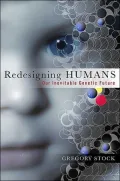
Forget worries about cloning people. In the future, technological advances will bring far more meaningful and controversial changes to our offspring, says Gregory Stock. As scientists rapidly improve their ability to identify and manipulate genes, people will want to protect their future children from diseases, help them live longer, and even influence their looks and their abilities. Stock, an expert on the implications of recent advances in reproductive biology, clearly shows that neither governments nor religious groups will be able to stop the coming trend of choosing an embryo's genes.
Editorials
Publishers Weekly
Rather than worry about the ethics of human cloning, Stock (Metaman; The Book of Questions), director of the UCLA School of Medicine's Program of Medicine, Technology and Society, believes we should focus our attention on the idea that we'll soon be able to genetically manipulate embryos to develop desired traits a more immediate and enticing possibility for most parents than cloning. He gives a lucid overview of the new biotechnology that will allow scientists to delay aging and to insert genes that enhance physical and cognitive performance, combat disease or improve looks into embryos. Stock thoughtfully weighs the ethical dilemmas such advances present, arguing that the real threat is not frivolous abuse of technology but the fact that we don't know the long-term effects of these genetic changes. In any case, Stock insists, there's no turning back, and government bans "will determine not whether the technologies will be available, but where, who profits from them, who shapes their development, and which parents have early access to them." Stock demonstrates that much of the current criticism of human genetic engineering sounds remarkably similar to what was being said about in vitro fertilization when it first appeared. He believes that we will come to accept laboratory conception of all offspring and the addition of artificial chromosomes stocked with designer genes as readily as we have come to accept in vitro fertilization. Along the way we are sure to have many ethical issues to confront, issues that Stock does an impressive job of outlining. (Apr. 25) Copyright 2002 Cahners Business Information.From The Critics
Stock (medicine, technology, and society; U. of California at Los Angeles) speculates about the arrival of the übermensch via the purposeful alteration of the human genome. He argues that there is no possibility of limiting through law or any other means the growth of "germinal choice technology." While we may need to look to the Nazis as a cautionary lesson, the new eugenics is viewed as likely leading to a new species of superhumans. Annotation c. Book News, Inc., Portland, OR (booknews.com)Kirkus Reviews
A visionary lays out a future in which humankind is enhanced beyond our wildest dreamsBook Details
Published
April 11, 2002
Publisher
Boston : Houghton Mifflin, 2002.
Pages
288
Format
Hardcover
ISBN
9780618060269