
Arts & Entertainment Occupations, Careers & Occupations - General & Miscellaneous
Log in to track your reading progress.
Overview
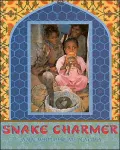
A little boy in India longs to become a snake charmer.
Vishnu dreams of being a snake charmer like his father. He already knows how to handle cobras and he is learning to play the special flute. He longs to go to the city to charm snakes while the tourists watch. But his father thinks that education is more important, so Vishnu must stay home.
Life in the village is never dull, though. There are plenty of games and chores to keep everyone busy, and then there's school, which is taught outdoors. And every few weeks Vishnu's father-and the snakes-return home to visit.
A striking introduction to life in India as seen through the eyes of one little boy.
Editorials
Publishers Weekly
Culture Club Several offerings give kids a glimpse of different cultures. Young readers learn about a child's life in India as they explore an ancient art form in the nonfiction picture book Snake Charmer by Ann Whitehead Nagda. The book, illustrated with color photographs, follows Vishnu, a boy who dreams of following in his father's footsteps. (May) Copyright 2002 Cahners Business Information.Children's Literature
A visually-compelling page design decorated with textile motifs and featuring glowing photographs shows how a snake charmer makes a living by traveling to Agra while his family lives in Mania, a village city in Northern India. Most of the text follows the son Vishnu and his family as they go about their daily lives; one part shows how the father Sher Singh pulls a rat snake from its burrow, and other parts show Vishnu at school and with his siblings. Snake charming is an endangered occupation, says the text, because too many snakes were being made into wallets and purses. While the text makes clear that the father wishes a better job for his son, the son cherishes his father's life even as he studies beyond the literacy skills of his family. An interesting three-page note says that over thirty thousand people die from snakebites in India yearly, yet snakes are considered holy, so a charmer always has a job removing snakes from houses. Text also explains how "charming" really works. This book would make a good addition to a theme of occupations around the world and it brings the reader a little closer to and more sympathetic to the lives of those in a developing country that is very much in the news today. 2002, Henry Holt, $16.95. Ages 7 to 10. Reviewer: Susan HeplerSchool Library Journal
Gr 3-5-The life of a snake charmer in northern India is revealed through the eyes of a son who hopes to follow in his father's footsteps. Through full-color photographs of young Vishnu, his father, and the cobra, children will step into life in this country, experiencing a bustling village, the boy's school, and his chores that include feeding the snakes. Readers will discover villages without electricity, and their interest is sure to be piqued when they learn that the children sleep on quilts on the floor in the one-room house and that the snakes sleep in baskets under the parents' bed. The layout is attractive, with the crisp photos either taking up a full page or framed as pictures in a family album. With its attractive introduction to the country, plus details about the intricacies of a unique profession, this title is sure to charm young readers.-Alida F. Given, Fairhope Intermediate School, AL Copyright 2002 Cahners Business Information.Kirkus Reviews
Exotic and down-to-earth at the same time, this scrapbook of images of a family whose father and grandfather practice the ancient art of snake charming intrigues visually and textually. Nagda (Tiger Math, 2000, etc.) writes sympathetically about the interconnections between people and animals. Vishnu, the nine- or ten-year old boy who is the focus of this photo essay would like to follow his male relatives, but his father knows that conditions in India are changing. The government, concerned with conservation, is starting to look askance on the men who use snakes for entertainment purposes. Sher Singh would like his son to stay in schools and grow up to "have a better job." The snake charmers work in Agra, the home of the Taj Mahal, in northern India, but come home often to their village, Mania. Most of the photos show the family and their neighbors as they go about their daily activities: bathing, preparing chapatis, collecting firewood and cow dung for fuel, and attending the village school. Vishnu also accompanies his father as he hunts for new snakes and enjoys the performance he gives for the villagers. Tej, the younger brother, even gets into the act playing the snake flute, whose movement and not the music itself is really the key to snake-charming. Although some of the individual photos lack clarity, the overall design, incorporating decorative borders and folk-art elements on pastel-colored pages, holds the eye. The informative afterword on snake-charming, less accessible than the main text, places this traditional art within a larger context. No bibliography or index is provided. Although intrinsically interesting and true to the village setting, one wishes for a wider glimpseof contemporary India. When will these pictures show the son of a computer programmer or a scientist? (Nonfiction. 7-10)Book Details
Published
May 1, 2002
Publisher
Henry Holt & Company
Pages
32
Format
Hardcover
ISBN
9780805064995