
Folklore - General & Miscellaneous, Folklore & Mythology - By Subject, Fables, Fairy Tales, & Folk Tales - Literary Criticism, Women's Studies - General & Miscellaneous
Log in to track your reading progress.
Overview
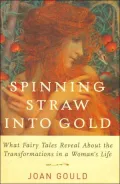
Throughout this illuminating book, Gould delves into the deeper meanings behind fairy tales and myths - helping you to understand not only what your choice of fairy tale may mean for you, but also what you need to be doing during the three main stages of development: maiden, matron, and crone.Editorials
Publishers Weekly
Gould expands on issues raised in her previous volume (Spirals: A Woman's Journey through Family Life) to show how the stories of Cinderella, Rapunzel and other folk and modern heroines correspond to the real-life stages of women, from budding adolescence to wise old age, in this original, well-written book. "Fairy tales tell us that a day comes when we are due to wake up to a new reality, come to life again transformed... with a sense of wonder at how far we've come," she writes, "along with a twinge of nostalgia for the person we used to call me' but for whom we no longer have a name." Snow White, Gould suggests, reflects familiar mother-daughter jealousy, while Sleeping Beauty examines a girl's anxiety about the next stage of her life. While Gould concentrates on classic European fairy tales (the Grimm brothers; Charles Perrault), she also examines fairy tale themes in Greek myths (Persephone; Psyche) and popular movies and novels (Pretty Woman; Jane Eyre). Without interrupting the flow of commentary, she also refers to her own transformations as a woman and the perspectives of female acquaintances and family members. With its smooth prose and snappy fairy tale summaries, this book should have broad appeal to women's studies students, folk history buffs and casual readers searching for a better understanding of their own lives. Agent, Harold Ober Associates. (Feb. 22) Copyright 2004 Reed Business Information.Library Journal
For Gould (Spirals: A Woman's Journey Through Family Life), the pinnacle of a woman's life is pregnancy and childbirth, and the titular transformations relate to fertility and reproduction, from puberty through menopause. Fairy tales serve to prepare women's psyches for these changes, the reward of which is the appearance of the Prince, the means to wife- and motherhood. Of the stories analyzed, few are actual fairy tales, while nearly a third are movies and novels. All of Gould's selections come from the Western world and appear to have been chosen for their ability to support her thesis; hundreds of fairy tales from other cultures were overlooked. This book will be popular with those who share Gould's belief that biology is destiny. A broader view of the meaning of fairy tales is given in the critical essays of The Classic Fairy Tales and The Great Fairy Tale Tradition. An optional purchase.-Suzanne M. Stauffer, Stevenson Ranch, CA Copyright 2005 Reed Business Information.Kirkus Reviews
A nontraditional and challenging vision of how female lore passed down from generation to generation sheds light on the changes experienced by women through different stages of life. Freelance journalist Gould (Spirals: A Woman's Journey Through Family Life, not reviewed) identifies three stages-maiden, matron, and crone-and divides her material into three corresponding but unequal parts. In each, she examines classic fairy tales, ancient myths, and modern novels, plays and films that can be viewed as retellings of these old tales to reveal what they have to say about women's lives and the biological, social, and spiritual transformations they undergo as they move from one stage to the next. Thus, the first section looks at, among others, "Snow White," "Cinderella," Jane Eyre, and My Fair Lady; the second includes "Bluebeard's Wife," Gone With the Wind, and Rebecca; and the last features "Hansel and Gretel" and the myth of Demeter and Persephone. Exhibiting considerable scholarship, Gould examines various versions of the tales as they have been revised and altered through the centuries. Her own experiences and those of such well-known women as Eleanor Roosevelt and Florence Nightingale provide further examples of transforming events. Disney fans will shudder as the very Freudian author sees sex everywhere: a key to a locked room, the spindle that pricks Sleeping Beauty's finger, and the tower that houses Rapunzel are all phallic symbols, while a drop of spilled blood signifies either a first menstrual period or the loss of virginity, and Bluebeard's forbidden bloody chamber is the male equivalent of a womb. Gould argues that the drive to procreate propels the maiden into the matron stage,during which the joys and stresses of bearing children and nurturing a family may create ambiguity and conflict. She is most specific when dealing with the biological and social transformations of stages one and two, and most uncertain when discussing the spiritual changes of stage three. Not entirely persuasive, but sure to provoke brisk controversy in women's-studies courses.Book Details
Published
February 22, 2005
Publisher
New York : Random House, c2005.
Pages
401
Format
Hardcover
ISBN
9780394585321