
Landscape, Nature & Wildlife Photography, Natural Terrian - Deserts
Log in to track your reading progress.
Overview
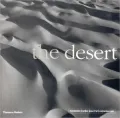
The desert is a place of silence, mystery, and solitude, a setting and vehicle for dreams and myths, and the ultimate site of illusion and mirage. Europe discovered the desert in the nineteenth century via archaeological and geographical explorations. In that period too, photography was invented, and it went hand in hand with the discovery of the desert. Solitary travelers or members of scientific expeditions, artists, and photographers embarked upon the representation of the desert as a territory to explore and as landscape. Organized around a series of historical and contemporary works, this book examines the ways photography and the movies have represented the desert. Among the artists included are Michael Ashkin, Lee Friedlander, Edward Weston, Wilfred Thesiger, Bill Viola, Pier Paolo Pasolini, and Herge (of Tintin fame). Distributed on behalf of the Fondation Cartier pour l'art contemporain. 140 photographs.Synopsis
Essays by photography historian Mounira Khemir, writer and naturalist Sir Wilfred Thesiger, and urbanist and essayist Paul Virilo, combined with an array of photographs, offer a study of the desert and an exploration of the ways photography and the movies, past and present, have represented it. The photos are b&w and color images executed by major artists; they depict the Sahara and the deserts of Namibia, Libya, Australia and the American Southwest. Oversize: 11.5x11.75". Annotation c. Book News, Inc., Portland, OR (booknews.com)
Alan G. Artner
The juxtaposition is brilliant, exploring the impact of the desert on centuries of highly sensitized pilgrims. It's a wonderful surprise.
Editorials
Alan G. Artner
The juxtaposition is brilliant, exploring the impact of the desert on centuries of highly sensitized pilgrims. It's a wonderful surprise.Library Journal
This catalog was published in conjunction with the exhibition of the same name, presented last year at the Fondation Cartier pour l'art contemporain in Paris. Depardon, a filmmaker, photographer, and reporter, collaborated with Mounira Khemir (photography historian), Sir Wilfred Thesiger (explorer and naturalist), and Paul Virilio ("urbanist" and essayist) to create this exhibit catalog, which celebrates the mystery and solitude of the desert as interpreted by 19th- and 20th-century photographers. Some of the images were commissioned for the book. Subjects include the Lunar Highlands, the Sonora Desert in Arizona, the Saharan Desert in Timbuktu and Mali, and deserts in California, Utah, Libya, the Sinai Peninsula, Niger, Chad, Algeria, Tunisia, Namibia, and Red Centre, Australia. The contemporary approaches include multimedia, collage, film stills, overpainted images, and classical black-and-white views of the f64 school. We see beautiful drifts of sand and cacti but also abandoned autos and other refuse, telephone poles marching across unending space, and ugly commercial signs. The most compelling images were made nearly a century or more ago, but notable among the modern images are those by Legado Ortiz Echag e, photographing in Morocco in 1964. The book has beautiful reproductions and short textual pieces as varied as the photographs. Recommended for fine art and historical photography collections. Kathleen Collins, Bank of America Corporate Archives, San Francisco Copyright 2001 Cahners Business Information.Book Details
Published
February 1, 2001
Publisher
Thames & Hudson
Pages
208
Format
Hardcover
ISBN
9780500974919