
Books & Illuminated Manuscripts, History - General & Miscellaneous, Graphic Design - History & Criticism
Available on Bookshop
Write a review
Books.org participates in affiliate programs including Bookshop.org and the Amazon Services LLC Associates Program. We may earn a commission from qualifying purchases made through links on this page, at no additional cost to you.
Log in to track your reading progress.
Editorials
Children's Literature
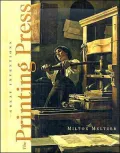
The power of the printed word is amazing. Books, newspapers, and a host of other publications travel not only across the physical world but also in the minds of mankind. Yet, printing has a relatively short history. Reaching back to the 15th century invention of the printing press, we have only a few centuries of mechanically produced texts. But, in those years, the impact printed matter has had upon human development has been enormous. Meltzer outlines the history of printing as an industry. In this work readers will experience the initial development of the Guttenberg printing press. They will then see how in a variety of situations the printed word has influenced human behavior. Examples such as Tom Paine's Common Sense or William Lloyd Garrison's newspaper The Liberator are but two ways in which ideas were spread via publication. Meltzer touches upon a variety of such exemplars of the ways printing presses have been used to shift public opinion and shape history. Printing, as Meltzer notes in this fine volume in the illustrated "Great Inventions" series, continues to evolve. The current use of the Internet to publish materials has changed the way in which many people access information. However, as readers of this excellent book will note, the printing press, and books in general, remain a core force in the way human beings learn. 2003, Benchmark Books, Ages 12 up.— Greg M. Romaneck
Library Journal
Gr 5 Up-These titles focus on two inventions that changed the course of history. Meltzer briefly explores the lives of the men most closely associated with them, Eli Whitney and Johann Gutenberg, respectively, and delves into the historical context that led to the development of the machines. In Cotton Gin, the influence of mechanized cotton processing on the growth of slavery in the United States and the increase in textile mills is documented. The author makes the case that the greater volume of cotton production required more people to harvest it and work in the mills built to handle the increase. In the second title, Meltzer emphasizes the more positive outcomes of the printing press. Science, religion, democracy, and exploration all benefited enormously from the widespread dissemination of information and knowledge that followed the advent of movable type. In both books, the author expertly describes a setting that is ripe for invention. Powerful photographs (Cotton Gin), historical artwork, and personal narratives make the times real and relevant to readers. The bibliographies and the further reading in Cotton Gin are helpful additions; however, several suggested Web sites were not functioning at the time of this review and quotes are not fully documented. Students will find the books accessible, and the primary-source material makes them strong choices for reports and general classroom use.-Jody Kopple, Shady Hill School, Cambridge, MA Copyright 2004 Reed Business Information.Book Details
Published
January 1, 2003
Publisher
Cavendish, Marshall Corporation
Pages
128
Format
Hardcover
ISBN
9780761415367