
Join Books.org — it's free

Fiction - Adventure, Adventurers & Heroes, Mapped Categories - PubIt, Fiction - Science Fiction, Fiction - Animals - General & Miscellaneous, Fiction - Children's Classics, Fiction - Fantasy & Magic, Fiction - Animals - Insects, Politics & Social Issues -
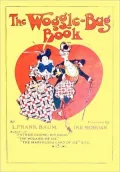
The Woggle-Bug Book by L. Frank Baum — book cover

The Woggle-Bug Book

by L. Frank Baum, Ike Morgan (Illustrator)
Available on Bookshop Write a review

Books.org participates in affiliate programs including Bookshop.org and the Amazon Services LLC Associates Program. We may earn a commission from qualifying purchases made through links on this page, at no additional cost to you.

Log in to track your reading progress.

Overview

This book is part of the TREDITION CLASSICS series. The creators of this series are united by passion for literature and driven by the intention of making all public domain books available in printed format again - worldwide. At tredition we believe that a great book never goes out of style. Several mostly non-profit literature projects provide content to tredition. To support their good work, tredition donates a portion of the proceeds from each sold copy. As a reader of a TREDITION CLASSICS book, you support our mission to save many of the amazing works of world literature from oblivion.

The Woggle-Bug has a series of misadventures trying to possess a dress made from cloth of the bright colors he so dearly loves.

About the Author, L. Frank Baum

L. Frank Baum
Not only is L. Frank Baum’s classic The Wonderful Wizard of Oz one of the most enduring and magical children’s books ever written, it’s also -- with its adventurousness and its lessons of resourcefulness, friendship, courage, and self-reliance -- one of the most American.

Biography

Dorothy, Toto, the Scarecrow, Aunt Em -- where would our national psyche be without The Wonderful Wizard of Oz? L. Frank Baum, who created a story with an indelible, sometimes haunting impression on so many people, led a life that had a fairy-tale quality of its own.

Baum was born in 1856 to a family that had made a fortune in the oil business. Because he had a heart condition, his parents arranged for him to be tutored privately at the family’s Syracuse estate, “Roselawn.” As an adult, though, Baum flourished and failed at a dizzying variety of ventures, from writing plays to a stint with his family’s medicinal oil business (where he produced a potion called “Baum’s Castorine”), to managing a general store, to editing the Aberdeen Pioneer in Aberdeen, South Dakota. In 1897, following his mother-in-law’s advice, Baum wrote down the stories that he told his children. The firm of Way & Williams published the stories under the title Mother Goose in Prose, with illustrations by Maxfield Parrish, and Baum’s career as a writer was launched.

With the publication of The Wonderful Wizard of Oz in 1900, Baum gained instant success. The book, lavishly produced and featuring voluptuous illustrations by William Wallace Denslow, was the bestselling children’s book of the year. It also set a new standard for children’s literature. As a commentator for the September 8, 1900 New York Times described it, “The crudeness that was characteristic of the oldtime publications...would now be enough to cause the modern child to yell with rage and vigor...” The reviewer praised the book’s sheer entertainment value (its “bright and joyous atmosphere”) and likened it to The Story of the Three Bears for its enduring value. As the film industry emerged in the following years, few books were as manifestly destined for adaptation, and although it took almost four decades for a movie studio to translate Baum’s vision to film, the 1939 film did for the movies what Baum’s book had done for children’s literature: that is, raised the imaginative and technical bar higher than it had been before.

The loss of parents, the inevitable voyage toward independence, the yearning for home -- in The Wonderful Wizard of Oz, Baum touched upon a child’s primal experiences while providing a rousing story of adventure. As his health declined, Baum continued the series with 14 more Oz books (his publisher commissioned more by other authors after his death), but none had quite the effect on the reading public that the first one did. Baum died from complications of a stroke in 1919.

Good To Know

Baum founded the National Association of Window Trimmers and published a magazine for the window-trimming trade – he also raised exotic chickens.

Buam was married to Maud Gage, a daughter of the famous women’s rights advocate Matilda Joslyn Gage.

Reviews

There are no reviews yet. Log in to write one.

Book Details

Published
November 12, 2011
Publisher
Wilder Publications
Pages
30
Format
Paperback
ISBN
9781617204494

More by L. Frank Baum

Similar books