
Historical Biography - General & Miscellaneous, Politics & Social Issues - Fiction, Historical Figures - Fiction, Family & Friendship - Fiction, Historical Fiction
Available on Bookshop
Write a review
Books.org participates in affiliate programs including Bookshop.org and the Amazon Services LLC Associates Program. We may earn a commission from qualifying purchases made through links on this page, at no additional cost to you.
Log in to track your reading progress.
Overview
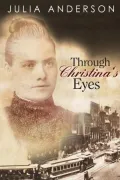
The rippling effects of choices made in a family…A mother’s love for her children…Unspoken communication…This inspirational, true-life story explains a mother’s choices, struggles, and beliefs. The life experiences of a family are creatively weaved through Christina’s history in Sweden and her children’s lives in early 1900’s Chicago. The book culminates with the true life, present day experiences of her great-great granddaughter, unable to verbalize her own story.
This book shows a family’s love can sustain us through many adversities, and that one person’s choices can have a dramatic effect on many lives. And, it explores the possibility of communication between people that occurs without words, across time and space.
Part creative non-fiction, part memoir, this book is sure to spark your emotions, enthrall your heart and inform. A great read!
Editorials
Kirkus Reviews
In this fictionalized version of the author's family history, matriarch Christina tells her own story, and then--from the afterlife--follows her descendants. Christina's own story follows a linear path, from her childhood in Sweden in the second half of the 19th century to her immigration to the United States and her arrival in Joliet, Ill., where she spent the rest of her life. After a few years as a domestic servant, Christina settles into a lackluster marriage, meeting her taciturn husband's every need and giving birth to 10 children. Although Christina's world is mostly defined by the walls of her home, and the author makes the limitations of that environment evident, her narration of family life is interspersed with remarks on notable moments in American and Chicago history that took place at the same time, blending the oral history with a textbook feel. After her death, Christina seamlessly transitions into telling the stories of her children as a detached observer, watching them grow up and start families of their own. The focus shifts to Walter, one of her sons, who faces professional and health challenges of his own, and then to his granddaughter, Julia, a fictional version of the author. In the second half of the book, Christina follows Julia's struggle to care for her daughter, Anna Christina, who's born with severe brain damage and remains medically fragile. Christina feels a particular connection to this great-great-granddaughter, who spends much of her life in the hospital and is unable to communicate verbally. Although exhausted by the reality of caring for a child with special needs, Julia begins to explore her family history and eventually travels to Sweden, where she visits Christina's birthplace and forges her own connection with Christina. By fictionalizing this intimate history, the account achieves a sense of distance that doesn't always benefit the story. Despite Anderson's palpable compassion, particularly for her daughter and her condition, parts of the novel read more like a series of events than a coherent plot, which will leave readers feeling less engaged than such an emotionally compelling story should warrant. Also, the writing can be uneven, although the strong narrative voice remains one of the book's most appealing attributes. An engrossingly intimate family portrait, but the narrative could be tightened.Book Details
Published
April 28, 2012
Publisher
CreateSpace Independent Publishing Platform
Pages
384
Format
Paperback
ISBN
9781470028510