
French Fiction, Thrillers, Literary Styles & Movements - Fiction, European Peoples & Cultures - Fiction & Literature
Available on Bookshop
Write a review
Books.org participates in affiliate programs including Bookshop.org and the Amazon Services LLC Associates Program. We may earn a commission from qualifying purchases made through links on this page, at no additional cost to you.
Log in to track your reading progress.
Overview
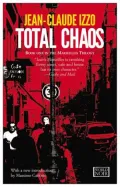
The Marseilles trilogy, featuring ex-cop Fabio Montale, is a classic of European crime fiction. Its publication was the catalyst for the foundation of an entire literary movement, Mediterranean noir, and made its author an overnight celebrity. Europa is Proud to reissue the entire trilogy this summer in new editions that have a fresh look and feature an introduction by “the reigning king of Mediterranean noir”, Massimo Carlotto.
Editorials
Publishers Weekly
A love quadrangle that has lain dormant for 20 years-three men and one woman, friends and successive partners in childhood and young adulthood-resurfaces with a vengeance in this literary policier. Italian emigre Fabio Montale is the beat cop in Marseille's La Paternelle, an Arab ghetto that sits at the center of the city's seething melting pot of immigration, xenophobia and corruption. He's the last of the three men left standing after Manu, a Spanish emigre, is killed (probably by the mob) and Ugo (a nabo, or Neapolitan) is killed by police while staking out the boss he thinks ordered the hit. Manu was the partner of Lole, also from Spain and Ugo's ex-lover. If the deaths aren't enough to spur Fabio to action, the disappearance of his former lover Leila, an Arab who had made it out of La Paternelle, puts him on the case-and back in Lole's life. Izzo, who died in 2000 at age 55, puts a sophisticated spin on mob-murder-mystery clich s and airs French race politics frankly-the latter is what made this (and two related novels) a hit there. This novel won't electrify U.S. readers in the same way, but it's a hard-boiled and entertaining look at the underside of la politesse. (Nov.) Copyright 2005 Reed Business Information.Library Journal
In this first installment of a trilogy (Europa Editions will publish Posse and Solea, the second and third installments, in 2007), the French port of Marseilles gets the unadulterated noir treatment. Three boyhood friends-Fabio, Ugo, and Manu-are in love with the same girl. As adults, Ugo and Manu stray into a life of crime, while Fabio becomes a police officer. The girl is still waiting for Ugo when he gets out of prison, but soon both he and Manu are killed, leaving only Fabio to try to make sense of the puzzle. For the Marseilles-born author who died in 2000, it's all in the atmosphere. Noir and Marseilles get reduced to their ugly essentials, with Izzo conveying the "mixture of piss, dampness and mildew" that is the essence of both. Though the plot of this "Mediterranean noir" tale is as insubstantial as the cause for a good street fight, the vivid portrayal of a city as a melting pot on the verge of a meltdown is comparable to such recent works as Donna Leon's Blood from a Stone and Ian Rankin's Fleshmarket Alley. Recommended for all larger public libraries, especially those where cosmopolitan works are in demand.-Bob Lunn, Kansas City P.L., MO Copyright 2005 Reed Business Information.Kirkus Reviews
Ten years after its success in France, the first installment of Izzo's ultra-noir Marseilles trilogy finally arrives in English translation. Pierre Ugolini returned to Marseilles to avenge his murdered friend Manu by killing old gangster Charles Zucca, even though it meant dying himself. Now it's police detective Fabio Montale's job to get to the bottom of Ugo's death. It's more than a job for Fabio, since his friendship with Ugo and Lole, the hostess who loved them both, goes back to their childhood, in the days before they got involved with petty criminals. After Fabio climbed out of the morass by enlisting in the army, Ugo climbed the ladder to serious crime. Recognizing that his force is riddled with corruption, Fabio goes outside the law and works on his own to round up the criminals whose murderous activity is just getting underway. What's distinctive and fascinating about this case is that everybody else is doing the same. Izzo's Marseilles is crowded with prostitutes, enforcers, agitators and hit men, all of them bent on going independent. The result is a reeking stew whose every sight, sound and smell Izzo captures with gusto, even though you can't tell the heroes from the villains without a scorecard. For better or worse, the title of this melancholy, high-energy bloodbath is just perfect. One can only wonder what new atrocities are left for the second and third installments, both due next year.Book Details
Published
May 7, 2013
Publisher
Europa Editions, Incorporated
Pages
256
Format
Paperback
ISBN
9781609451264