
Literary Figures - Women's Biography, English, Irish, Scottish Women - Literary Biography, British Authors - 20th Century - Literary Biography, Women Authors - British - Literary Criticism, English Fiction & Prose Literature - 20th Century - Literary Crit
Available on Bookshop
Write a review
Books.org participates in affiliate programs including Bookshop.org and the Amazon Services LLC Associates Program. We may earn a commission from qualifying purchases made through links on this page, at no additional cost to you.
Log in to track your reading progress.
Overview
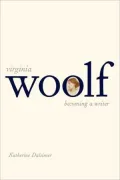
By the time she was twenty-four, Virginia Woolf had suffered a series of devastating losses that later she would describe as "sledge-hammer blows," beginning with the death of her mother when she was thirteen years old and followed by those of her half-sister, father, and brother. Yet vulnerable as she was ("skinless" was her word) she began, through these years, to practice her art-and to discover how it could serve her. Ultimately, she came to feel that it was her "shock-receiving capacity" that had made her a writer.Astonishingly gifted from the start, Woolf learned to be attentive to the movements of her own mind. Through self-reflection she found a language for the ebb and flow of thought, fantasy, feeling, and memory, for the shifts of light and dark. And in her writing she preserved, recreated, and altered the dead, altering in the process her internal relationship with their "invisible presences." "I will go backwards & forwards" she remarked in her diary, a comment on both her imaginative and writerly practice.
Following Woolf's lead, psychologist Katherine Dalsimer moves backward and forward between the work of Woolf's maturity and her early journals, letters, and unpublished juvenilia to illuminate the process by which Woolf became a writer. Drawing on psychoanalytic theory as well as on Woolf's life and work, and trusting Woolf's own self-observations, Dalsimer offers a compelling account of a young artist's voyage out-a voyage that Virginia Woolf began by looking inward and completed by looking back.
Editorials
Choice
[An] original and readable study. . . . The discussion focuses on the origins, development, and purpose of [Woolf's] writing.Paul Schwaber
This astute study is written with eloquence, clarity, and tact. A wonderful contribution."Robert Michels
Dalsimer’s literary sensitivity,psychoanalytic sophistication,and expert understanding of female development enrich our appreciation of Virginia Woolf and her work. Dalsimer weaves together Woolf’s fiction,letters,and diaries,giving new meaning to each. The result makes for wonderful reading.The Harvard Crimson
[G]ives us a thoughtful, nuanced picture of the connection between Woolf's illness and her extraordinary artistic talent.Publishers Weekly
As the daughter of archetypal Victorian parents and Freud's first English publisher, Woolf has often been a posthumous analysand; but among her chroniclers, Dalsimer, a clinical psychologist and faculty member of two Ivy League universities, may have the best credentials for putting her on the couch. "This is not a biography," Dalsimer warns; it is, instead, an exploration of "the ways that writing served Virginia Woolf" throughout her difficult life, and particularly in her "adolescence and young womanhood." Approaching Woolf through her juvenilia, diaries, letters, criticism and novels, Dalsimer (Female Adolescence: Psychoanalytic Reflections on Literature) traces both her artistic apprenticeship and her psychological narrative, placing Woolf's introspective observations alongside her early work from Jacob's Room to A Room of One's Own and amid plenty of analytical commentary. While Woolf claimed that in her autobiographical To the Lighthouse she had "done what psychoanalysts do for their patients," Dalsimer draws out the book's psychology and Woolf's relationship to her deceased parents, and shows the matter to be much more complicated. Dalsimer also demonstrates, through Woolf's later letters and essays, that her affectionate, influential and overbearing father and her self-sacrificing, distant and tragic mother were instrumental in forming her creative character. Woolf's mental illness (which ultimately led to suicide) also receives understated, careful consideration. Dalsimer's clinical objectivity may be more notable than her line-by-line literary criticism, but she elegantly explains how Woolf's imagination, often subsumed in tragedy, could still find pleasure in life's daily rhythms, and how writing "consoled and sustained her as much as it was possible for her to be consoled or sustained." (Mar. 26) Forecast: The close textual reading targets this for serious students of Woolf and for those interested in the links between literature and psychology. Copyright 2002 Cahners Business Information.Library Journal
Columbia University psychologist Dalsimer (Female Adolescence: Psychoanalytic Reflections on Literature) here uses Virginia Woolf's early writing to analyze how she overcame the loss of her parents and siblings to death and marriage by "becoming a writer." Taking a psychoanalytic approach, Dalsimer focuses on the journals, letters, and reviews Woolf wrote between the ages of nine and 25 to explicate this process. She also incorporates Woolf's first published book, The Voyage Out, the essay "On Being Ill," later journal entries, and To the Lighthouse into her study. Dalsimer interprets the role of Woolf's journals during her developmental years, taking an interest, as Woolf did, in the contrast between current impressions of an event and the memory of it. She focuses on Woolf's relationships with her mother and father as depicted in her early writings and on the sometimes hostile impressions she gave of them as an adult. While this well-written work will be of interest to fans of Woolf's work, it ultimately provides only a superficial literary analysis. Thus, it is more appropriate for general-interest collections than for academic libraries. Readers looking for an excellent, current biography should stick with Nigel Nicolson's Virginia Woolf. Paolina Taglienti, Long Island Univ., Brooklyn, NY Copyright 2002 Cahners Business Information.Book Details
Published
November 30, 2011
Publisher
Yale University Press
Pages
226
Format
Paperback
ISBN
9780300184099