
Literary Figures - Women's Biography, English, Irish, Scottish Women - Literary Biography, British Authors - 19th Century - Literary Biography, Lesbian Biographies, Writing - General & Miscellaneous, British Authors - General & Miscellaneous - Literary Bi
Log in to track your reading progress.
Overview
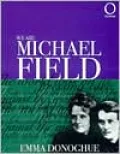
In 1884 The Spectator hailed 'a new voice, which is likely to be heard far and wide among the English-speaking peoples': Michael Field. But the reviewer had no idea that Michael Field was the joint pseudonym of Katherine Bradley and Edith Cooper, two poets, playwrights and diarists who found freedom behind a male mask. They were aunt and niece, but also lovers, sharing a 'bone-of-bone, flesh-of-flesh life' for more than half a century. The uncensored story of the extraordinary women who were Michael Field, based on their unpublished diaries, is told here for the first time.Biography of the aunt and niece who wrote together under the pseudonym of Michael Field.
Editorials
Elizabeth Millard
Rich in wit, honesty and passion.... Although Michael Field's books may be almost forgotten, The Michaels live on in this impressive work.— ForeWord Magazine
Publishers Weekly -
Author of some 30 plays and 11 books of poetry, Michael Field was a prolific if relatively minor late-Victorian literary figure. Field's first verse play, Callirrhoe and Fair Rosamund, was published to wide acclaim in 1884; what early reviewers didn't know was that "Michael Field" was actually two women, Katherine Bradley and her sister's daughter, Edith Cooper, who were not only literary collaborators but also lovers. Donoghue's (Kissing the Witch) brief but absorbing biography is based on the detailed journals in which Bradley and Cooper recorded their life together for nearly half a century. Describing her subjects as "hardworking, witty, generous in love and friendship" but also "bitchy, snobbish and monstrously egotistical," Donoghue finds Bradley and Cooper "superbly contradictory" in the way that so many late-Victorian literary figures are. Indeed, as lesbians who wrote blatantly erotic love poetry and celebrated "art for art's sake" but who also clung to many of the pieties of their haute-bourgeois upbringing, they emerge here as embodiments of the complex fin de siecle literary zeitgeist. Donoghue suggests that their work deserves more attention than it has received. That's a debatable point, but given their literary friendships with such notables as Robert Browning, John Ruskin and Oscar Wilde; their struggles to maintain their literary reputation as Michael Field's true identity gradually became known; and their constant straddling of the lines between respectability and transgression, Bradley and Cooper were undeniably a remarkable pair. (Feb.)Library Journal
These short biographies belong to the "Outlines" series, which serves to introduce the lives and works of significant gay and lesbian writers, artists, singers, dancers, composers, and actors. Although compact, they are quite dense, and each includes a bibliography and a list of recommended readings. Donoghue (Passions Between Women: British Lesbian Culture, 1668-1801, HarperCollins, 1996) uses nearly 30 volumes of letters and journals to tell the story of the two Englishwomen who shared the pseudonym Michael Field: Katherine Bradley (1846-1914) and Edith Cooper (1862-1913). Donoghue sheds light on the obscure careers of these women, who collaborated to write 30 plays and 11 volumes of poetry. More than co-writers, the two women were aunt and niece as well as lovers. Donoghue provides an engaging, informal overview of their history, including family origins, their decision to use a male pseudonym, their rise to fame, their intimate relationship, and their colorful circle of friends. French scholar Ivry (he translated Todd Olivier's Albert Camus, LJ 11/15/97) has the Herculean task of condensing the life story of the poet Arthur Rimbaud (1854-91) into a handful of chapters, which he does admirably well. Rimbaud, considered one of France's greatest modern poets, created complex poems that used language in ways that had never been attempted in poetry. Ivry covers the evidence of Rimbaud's early genius as a schoolboy, his fateful meeting with the poet Paul Verlaine and their tempestuous love affair, the aftermath of their breakup, Rimbaud's phenomenal prowess as a poet (he reached the zenith of his career at 20), his travels, and his continuing influence on artists today. For more in-depth biographical information on Michael Field and Arthur Rimbaud, consult Mary C. Sturgeon's Michael Field (1922; Ayer, 1975. reprint) and Enid Starkie's Arthur Rimbaud (Norton, 1968. reprint). Recommended for larger collections of gay and lesbian materials.--Kimberly L. Clarke, Univ. of Minnesota Lib. MinneapolisBook Details
Published
October 26, 1998
Publisher
Absolute Press
Pages
152
Format
Paperback
ISBN
9781899791668