
News
Taiwan Travelogue Wins 2026 International Booker Prize
Yáng Shuāng-zǐ and translator Lin King have made International Booker history with a novel that turns travel writing, romance and translation itself into something far more complicated.
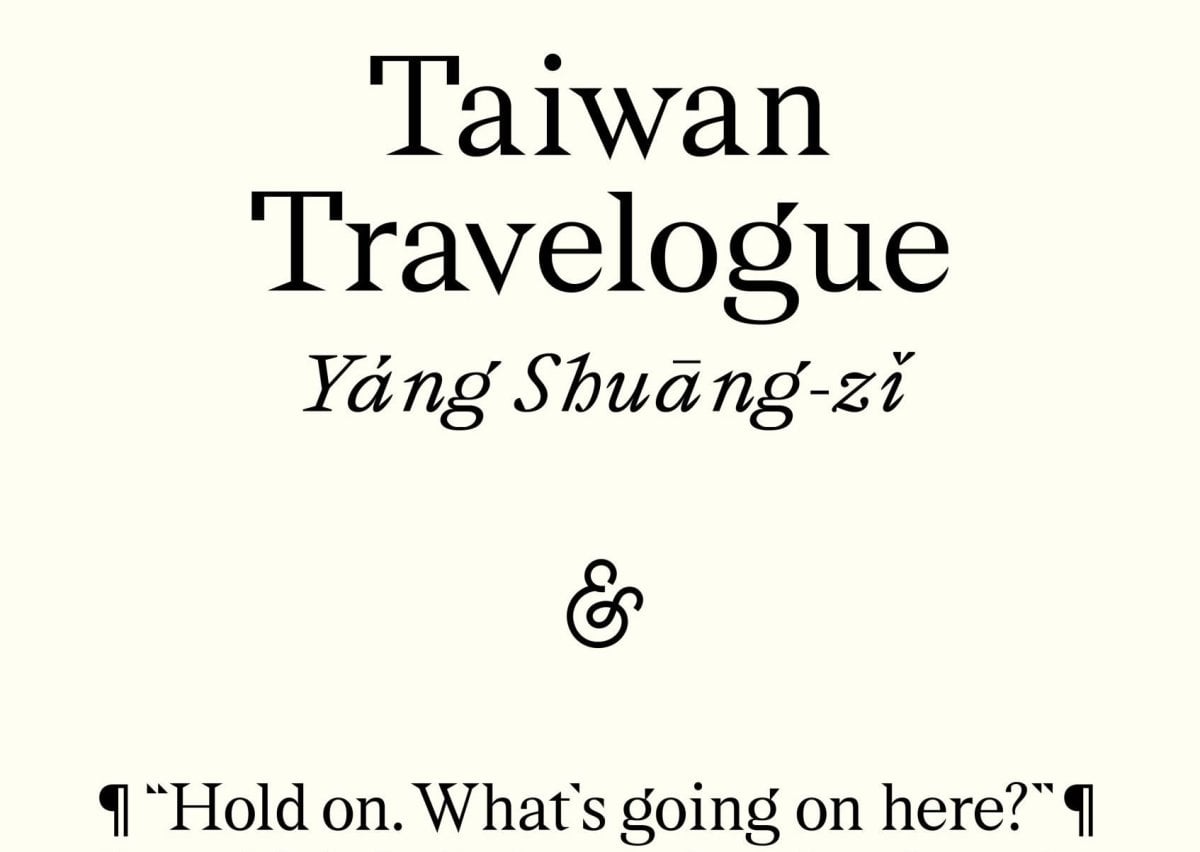
Taiwanese author Yáng Shuāng-zǐ and translator Lin King have won the 2026 International Booker Prize for Taiwan Travelogue, making it the first book originally written in Mandarin Chinese to receive the award.
The winner was announced on 19 May 2026 at a ceremony at Tate Modern in London. The £50,000 prize is shared equally between author and translator, reflecting the International Booker’s distinctive emphasis on translated fiction as a creative partnership. Taiwan Travelogue was translated into English by Lin King and published in the UK by And Other Stories.
On the surface, Taiwan Travelogue sounds like a historical journey: a Japanese novelist travels through Taiwan in 1938, during the period of Japanese colonial rule, accompanied by a local interpreter. But the book is not simply a period novel or a culinary travel story. It is presented as a “rediscovered” text, complete with layers of fictional translation, footnotes and afterwords, blurring the line between document, invention and interpretation.
That layered structure is part of what makes the win so interesting. This is a novel about movement across borders, but also about who gets to describe a place, who is translated, and who is made visible or invisible by history. Its central relationship between the Japanese writer and her Taiwanese interpreter carries the charge of romance, but also the unease of unequal power.
A historic win for Taiwanese literature
The result marks a major moment for Taiwanese literature on the world stage. Yáng Shuāng-zǐ and Lin King are the first Taiwanese and Taiwanese-American winners of the International Booker Prize. The book had already attracted major attention before its Booker win: King’s English translation won the 2024 National Book Award for Translated Literature in the United States.
For many English-language readers, Taiwan Travelogue may also serve as an introduction to a complex part of East Asian history. Rather than treating colonial Taiwan as a static backdrop, the novel explores memory, language, food, class and intimacy as part of the same historical fabric.
In an interview published by the Booker Prize Foundation, Yáng said she wanted to examine Taiwan’s Japanese colonial past through a contemporary Taiwanese lens, describing Taiwanese attitudes to that history as a conflicted mixture of “distaste and nostalgia.” That complexity is central to the novel’s power: it resists a simple historical lesson and instead asks how the past continues to shape identity, desire and cultural memory.
Translation at the centre of the story
The International Booker Prize has always placed translators in the spotlight, but Taiwan Travelogue feels especially fitting as a winner because translation is not just how the book reaches English-speaking readers; it is part of the novel’s machinery. The book is disguised as a translation of a rediscovered Japanese memoir, while its real English translation adds another layer to the performance.
That makes Lin King’s role unusually visible. The novel depends on the reader noticing mediation: who is speaking, who is interpreting, what has been footnoted, and what remains uncertain. In that sense, Taiwan Travelogue is both a story and a challenge to the idea that any culture can be understood without translation, context or humility.
A win for independent publishing, too
The award also continues a strong run for independent publishers. And Other Stories, the Sheffield-based independent press behind the UK edition of Taiwan Travelogue, also published the previous International Booker winner, Heart Lamp by Banu Mushtaq, translated by Deepa Bhasthi.
For readers, the message is encouraging: some of the most exciting fiction being published in English today is arriving through translation, often from smaller presses willing to take risks on formally inventive work.
Taiwan Travelogue succeeds because it is not only “important” literature. It is playful, romantic, witty and deliberately slippery. It uses the pleasures of travel writing and food writing to draw the reader into a much deeper consideration of colonialism, memory and power. Its International Booker win is historic, but the novel’s real achievement may be that it makes history feel intimate, unstable and alive.
Further reading: The Booker Prize Foundation has more on Taiwan Travelogue and the 2026 International Booker Prize.
Taiwanese author Yáng Shuāng-zǐ and translator Lin King have won the 2026 International Booker Prize for Taiwan Travelogue, making it the first book originally written in Mandarin Chinese to receive the award.
The winner was announced on 19 May 2026 at a ceremony at Tate Modern in London. The £50,000 prize is shared equally between author and translator, reflecting the International Booker’s distinctive emphasis on translated fiction as a creative partnership. Taiwan Travelogue was translated into English by Lin King and published in the UK by And Other Stories.
On the surface, Taiwan Travelogue sounds like a historical journey: a Japanese novelist travels through Taiwan in 1938, during the period of Japanese colonial rule, accompanied by a local interpreter. But the book is not simply a period novel or a culinary travel story. It is presented as a “rediscovered” text, complete with layers of fictional translation, footnotes and afterwords, blurring the line between document, invention and interpretation.
That layered structure is part of what makes the win so interesting. This is a novel about movement across borders, but also about who gets to describe a place, who is translated, and who is made visible or invisible by history. Its central relationship between the Japanese writer and her Taiwanese interpreter carries the charge of romance, but also the unease of unequal power.
A historic win for Taiwanese literature
The result marks a major moment for Taiwanese literature on the world stage. Yáng Shuāng-zǐ and Lin King are the first Taiwanese and Taiwanese-American winners of the International Booker Prize. The book had already attracted major attention before its Booker win: King’s English translation won the 2024 National Book Award for Translated Literature in the United States.
For many English-language readers, Taiwan Travelogue may also serve as an introduction to a complex part of East Asian history. Rather than treating colonial Taiwan as a static backdrop, the novel explores memory, language, food, class and intimacy as part of the same historical fabric.
In an interview published by the Booker Prize Foundation, Yáng said she wanted to examine Taiwan’s Japanese colonial past through a contemporary Taiwanese lens, describing Taiwanese attitudes to that history as a conflicted mixture of “distaste and nostalgia.” That complexity is central to the novel’s power: it resists a simple historical lesson and instead asks how the past continues to shape identity, desire and cultural memory.
Translation at the centre of the story
The International Booker Prize has always placed translators in the spotlight, but Taiwan Travelogue feels especially fitting as a winner because translation is not just how the book reaches English-speaking readers; it is part of the novel’s machinery. The book is disguised as a translation of a rediscovered Japanese memoir, while its real English translation adds another layer to the performance.
That makes Lin King’s role unusually visible. The novel depends on the reader noticing mediation: who is speaking, who is interpreting, what has been footnoted, and what remains uncertain. In that sense, Taiwan Travelogue is both a story and a challenge to the idea that any culture can be understood without translation, context or humility.
A win for independent publishing, too
The award also continues a strong run for independent publishers. And Other Stories, the Sheffield-based independent press behind the UK edition of Taiwan Travelogue, also published the previous International Booker winner, Heart Lamp by Banu Mushtaq, translated by Deepa Bhasthi.
For readers, the message is encouraging: some of the most exciting fiction being published in English today is arriving through translation, often from smaller presses willing to take risks on formally inventive work.
Taiwan Travelogue succeeds because it is not only “important” literature. It is playful, romantic, witty and deliberately slippery. It uses the pleasures of travel writing and food writing to draw the reader into a much deeper consideration of colonialism, memory and power. Its International Booker win is historic, but the novel’s real achievement may be that it makes history feel intimate, unstable and alive.
Further reading: The Booker Prize Foundation has more on Taiwan Travelogue and the 2026 International Booker Prize.