
British History - General & Miscellaneous
Log in to track your reading progress.
Overview
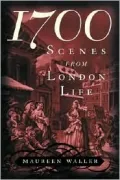
Maureen Waller captures the grit and excitement of London in 1700. Combining investigative reporting with popular history, she portrays London's teeming, sprawling urban life and creates a brilliant cultural map of a city poised between medievalism and empire in this Book of the Month Club Selection.
Editorials
Publishers Weekly -
British historian and editor Waller contrasts the 18th century with the 21st in this radiant book. She sketches London at the turn of the 18th century--when the city, poised between two worlds, hosted remnants of the medieval world alongside harbingers of the empire that was to come. London in 1700, she notes, was both growing more modern--industry was thriving, trade was expanding and the country had its first constitutional monarchs--and, simultaneously, suffering from old troubles, including high mortality rates, poor drinking water and rampant, unchecked disease. Similarly, at the beginning of the 21st century, she suggests, we are wandering among the survivals of the age that's just ended and the precursors of a world whose outlines we cannot yet see. The resemblance between the two eras gives a piquancy to the text, but even if there were no such correspondence, there would still be a great deal to praise in this very fine book. Waller has mined the archival record for fascinating details of 18th-century British marriage and childbirth, disease and death, home and fashion, work and play, religion and vice, crime and punishment, and she includes an exhaustive bibliography. Although the book's chapters (grouped into such topics as childbirth, marriage and disease)--despite a plethora of vivid anecdotes--never really cohere into a unified narrative, this rigorous, informative and entertaining text deserves a wide readership. (May) Copyright 2000 Cahners Business Information.|School Library Journal
Adult/High School-An enlightening and, in most cases, disgustingly good read, 1700 provides useful facts; illustrative scenes; and marvelously reproduced paintings, woodcuts, and articles contemporary to the period. The chapters are organized around themes of marriage, childbirth, childhood, the working city, death, prostitution, and crime, allowing easy access for students seeking facts and statistics, but the arrangement does not interfere with the overall readability of the text. Readers learn that it was so difficult for debtors in Newgate prison to pay the departure fee that many of them had to stay additional years after they had served their time, sometimes marrying, raising children, and keeping pets there. They find out that child mortality was so high that parents sometimes gave several children the same name, reasoning that at least one of them would probably die. Although the usefulness of this book on cultural and material history should never be called into question, it also serves as a nice companion piece to the books about tattooing and human and animal physical deformities that some teens have been known to peruse from time to time.-Sheryl Fowler, Chantilly Regional Library, VA Copyright 2001 Cahners Business Information.Internet Bookwatch
Eighteenth century London was posed between a medieval world and a modern society in 1700, and no other book captures this dichotomy like Maureen Waller's 1700: Scenes from London Life, which blends investigative reporting with popular history using newspaper accounts, court records, letters and eyewitness descriptions to examine urban life of the times. From fashion and work to politics, this packs in a broad-based consideration of London life and experiences.Peter Ackroyd
Maureen Waller is remarkably astute about the alien or unrecognizable aspects of 18th-century London; she dramatizes to great effect, with the opening of each chapter like some overture to the principal theme . . . In her hands a short history of children's toys -- 'a small pebble, a piece of paper, the mother's bunch of keys' -- may be a thousand times more evocative and more instructive than a list of battles or diplomatic engagements. Intriguing and inclusive.—author of The Plato Papers, The Life of Thomas More, Chatterton, etc. writing in the London Times
Kirkus Reviews
Londoner Waller offers a journey to another age and another London. The year 1700 was not a particularly special one in history, but in 1700, London was the greatest metropolis of its day, teeming with more than half-a-million busy urbanites. Wren redefined the city skyline after the great fire, but he is scarcely mentioned. William and Mary reigned, but they matter not all in this story: this is a social history, in which we meet merchants and apothecaries, fops, footpads, highwaymen, pickpockets, prostitutes and wig snatchers—in a time when London had no central police force, houses had no numbers, and no one had knickers to show off on stage. Regular entertainment was largely in the form of public executions and other blood sports. There were cock fights, bear-baiting, and general fisticuffs, Bedlam was considered a fun place to visit, and coffeehouses and taverns were busy. But leisure was scarce for the majority and life was short for most. Few children survived to adulthood. Disease was treated by dubious means and by benighted practitioners. Decent sanitation was unknown (which, incidentally, caused the practice of ladies leaving dinner tables to the men). Waller investigates life and death and the travails of childbirth, as well as comestibles and drink, the regulation of the home, and the dictates of fashion (including the price of worsteds and silks) in 1700. Also considered are rampant crime and fierce punishment, as well as the everyday lives of the poor, the rich, and the `middling people.` To tell the story she draws copiously from contemporary bills of mortality, diaries, wills, letters, news reports and guidebooks—with the added delight of originaleccentricorthography. Clearly speaking to posterity, Swift, Pepys, and Defoe appear frequently. Ultimately, despite different values and habits, these Londoners of three centuries ago, on the cusp of modern times, are no strangers to us. Here's material for many a budding picaresque romance. It's an expedition in time, educational and entertaining, and more edifying, surely, than a visit to Bedlam.Book Details
Published
January 22, 2002
Publisher
Four Walls Eight Windows
Pages
400
Format
Paperback
ISBN
9781568582160