
Australia & Oceania - Travel, General & Miscellaneous Biography, Travel - Cities of the World
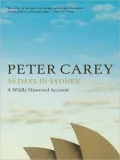
Available on Bookshop
Write a review
Books.org participates in affiliate programs including Bookshop.org and the Amazon Services LLC Associates Program. We may earn a commission from qualifying purchases made through links on this page, at no additional cost to you.
Log in to track your reading progress.
Overview
After living abroad for years, novelist Peter Carey returns home to Sydney and attempts to capture its character with the help of his old friends, drawing the reader into a wild and wonderful journey of discovery and rediscovery as bracing as the southerly buster that sometimes batters Sydney's shores. Famous sights such as Bondi Beach, the Opera House, the Harbour Bridge and the Blue Mountains all take on a strange new intensity when exposed to the penetrating gaze of the author and his friends.Editorials
From Barnes & Noble
When Australian novelist Peter Carey left Sydney in the early '80s, he was a relatively unknown novelist. When he returned to the city 17 years later, he was a Booker Prize winner, a New York resident, and a somewhat controversial figure in the land of his birth. His exhilarating and offbeat tour of his homeland's cultural capital engages Sydney rather than merely describing it. By turns raucous and introspective, 30 Days in Sydney presents the bustling hive as a volatile fusion of the four primal elements. Mix at your own pleasure.Publishers Weekly
In the second volume of Bloomsbury's The Writer and the City series, Carey (Oscar and Lucinda), an Australian native, returns to Sydney after 17 years. Armed with a battery-powered tape recorder, he badgers old friends including a Vietnam vet, a lawyer and an architect to contribute stories that might define Sydney. "A metropolis is, by definition, inexhaustible, and by the time I departed, thirty days later, Sydney was as unknowable to me as it had been on that clear April morning when I arrived," Carey concludes. He deftly intertwines dry facts about climate, geography and history with poetic stream of consciousness. The result is a desultory, impressionistic love letter to the city, structured loosely around earth, air, fire and water (one friend protected his home from bush fires; another barely survived the "murderous seas of the 1998 Sydney-Hobart race" which sank six yachts and killed five men). The acclaimed Booker Prize winner lets his characters direct the story, stepping in briefly to explain ("A rissole, in case you are from across the sea, is a kind of hamburger patty, but it is also an arsehole and also an RSL [Returned Services League]") and describe ("On Bondi I feel the space everywhere, not just in the luxury of beach and light but in that imagined house two streets back where I will not have to throw a book away to make room for each new one"). Carey touches lightly but firmly on Sydney's own brand of white guilt and patriotism, as well as its culture and landmarks. While other travelogues may provide more information, this effort will leave more lasting impressions. (Sept. 6) Copyright 2001 Cahners Business Information.Library Journal
This second entry in Bloomsbury's promising "The Writer and the City" series (following Edmund White's The Fl neur: A Stroll Through the Paradoxes of Paris) is anything but a typical tourist guide. In fact, its subtitle best explains the author's goal: to write "a wildly distorted account." This intimate look at Sydney, written by a native who visited Australia during the Olympics in 2000 after a 17-year absence, has little practical travel advice to offer but loads of details of the many days the author spent wandering in a stupor from too much surfing during the day and too much partying at night. This presentation of Sydney as seen through the eyes of an insider rather than a tourist gives the book its undeniable charm, but it is also its weakness. Those who want to dig deep into the Aussie psyche will be richly rewarded, but those looking for advice on whether to take a tour of the Blue Mountains or cuddle a koala at a wildlife park may be disappointed. Carey is an award-winning novelist whose most recent work is True History of the Kelly Gang. Recommended for medium and large public libraries. Joseph L. Carlson, Lompoc P.L., CA Copyright 2001 Cahners Business Information.Kirkus Reviews
Booker-winning novelist Carey (The True History of the Kelly Gang, 2001, etc.) turns in a "distorted" tour of Sydney during last year's Olympic Games. Though this "Writer and the City" series promises musings from well-regarded writers on "the city they know best," Carey is originally from Melbourne, and didn't live in that "vulgar crooked convict town" of Sydney until he was almost 40-and most of the time since, he has lived as a resident alien in New York. With the idiosyncratic notion of describing Sydney in terms of Earth, Air, Fire, and Water, Carey spends his 30 days with old cronies, architects and artists for the most part, all grown older, their wildness mostly behind them. His friends tell good stories, and through them Carey offers bits and pieces of the essence of Sydney: a little-known eccentric who painted "Eternity" in hundreds of unlikely places; sailors reliving the disastrous Sydney-to-Hobart race of 1998; how to catch a kingfish; and most appealingly, the story of Sheridan, an ex-hippie soap-opera writer who has holed himself up in a cave in the austere Blue Mountains to write a novel. (The Olympics are mostly ignored, regarded mainly as an intrusion.) Carey weaves in the history of Sydney's founding: the unsuitability of the land for farming; the absence of lime (needed to make mortar for laying bricks); the abuse of aborigines by the convict settlers, who were themselves abused. That convict history still informs the Australian character, Carey says, an observation commonly made. Carey's style is a pleasure, but his point is a bit hard to make out, unless one wants to take his effort as a long prose poem-an approach to travel-writing not likely to find manyreaders. Not so much "wildly distorted," it turns out, as disjointed and unfocused.Book Details
Published
July 15, 2010
Publisher
Bloomsbury USA
Pages
256
ISBN
9781608192380