
Children - Fiction & Literature, Fiction Subjects
Available on Bookshop
Write a review
Books.org participates in affiliate programs including Bookshop.org and the Amazon Services LLC Associates Program. We may earn a commission from qualifying purchases made through links on this page, at no additional cost to you.
Log in to track your reading progress.
Overview
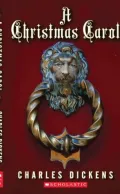
One of the best-loved and most quoted stories of "the man who invented Christmas"-English writer Charles Dickens-A Christmas Carol debuted in 1843 and has touched millions of hearts since. Cruel miser Ebeneezer Scrooge has never met a shilling he doesn't like. . .and hardly a man he does. And he hates Christmas most of all. When Scrooge is visited by his old partner, Jacob Marley, and the ghosts of Christmas Past, Christmas Present, and Christmas Yet to Come, he learns eternal lessons of charity, kindness, and goodwill. Experience a true Victorian Christmas!A miser learns the true meaning of Christmas when three ghostly visitors review his past and foretell his future.
Editorials
Publishers Weekly
This reissued recording of Stewart's touted Broadway performance might prove to be the enduring interpretation of Dickens's beloved tale of the miserly Ebenezer Scrooge and the ghosts of past, present, and future who catalyze his transformation. In a production stripped of sound effects, Stewart's theatrical talents take center stage. Reading with a voice that it is at once commanding and fragile, he creates a Scrooge of unexpected complexity and pathos. A spare and dazzling listen that might be the best rendition of the classic since the 1951 Alistair Sim production. (Nov.)School Library Journal
Gr 3 Up–Dickens’s cautionary tale of an embittered, stingy old man learning to be a happier, more giving person thanks to the intervention of four ghosts has long been fodder for holiday collections. From its stark opening spread (“MARLEY WAS DEAD”) to the final one with its much more cheerful winter scene, this year’s version, illustrated in Helquist’s darkly comic style, is one of the best. Some of that credit must go to Greenhut, who provided the abridgment. Sacrificing none of Dickens’s rich language, this retelling reads beautifully. The artist uses watercolor, pencil, and pastel to create cinematic artwork that contains amusing details; additionally, there are a number of pen-and-ink vignettes that help set the scenes. A winning combination of sparkling prose and exciting art.–Mara Alpert, Los Angeles Public LibrarySunday Express
A sure-fire tear-jerker. At one public reading by Dickens in Boston, there were 'so many pocket handkerchiefs it looked as if a snowstorm had gotten into the hall.Times
It has it all: a spooky ghost story, a heartwarming redemption, and a great plot with a satisfyingly ending.Book Details
Published
September 1, 2000
Publisher
Scholastic
Pages
144
Format
Paperbound
ISBN
9780439101332