
Join Books.org — it's free

English, Scottish, & Welsh Fiction, Horror, Motivations - Fiction, Phases of Life - Fiction, Holidays - Fiction, Character Types - Fiction
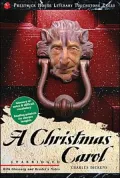
A Christmas Carol by Charles Dickens — book cover

A Christmas Carol

by Charles Dickens
Write a review
Log in to track your reading progress.

Overview

London 1843 few know any leisure, and Christmas has all but been forgotten...

...Enter Charles Dickens and his "Ghostly little book," in which he invents the modern concept of Christmas Spirit and offers one of the world’s most adapted and imitated stories. We know Ebenezer Scrooge, Tiny Tim, and the Ghosts of Christmas Past, Present, and Future, not only as fictional characters, but also as icons of the true meaning of Christmas in a world still plagued with avarice and cynicism.

This Prestwick House Literary Touchstone Edition includes a glossary and reader’s notes to help the reader fully appreciate the beauty and humor of Dickens’s work.

About the Author, Charles Dickens

Charles Dickens
Charles Dickens is probably the greatest novelist England ever produced. His innate comic genius and shrewd depictions of Victorian life -- along with his memorable characters -- have made him beloved by readers the world over. In Dickens' books live some of the most repugnant villains in literature, as well as some of the most likeable (and unlikely) heroes.

Biography

Born on February 7, 1812, Charles Dickens was the second of eight children in a family burdened with financial troubles. Despite difficult early years, he became the most successful British writer of the Victorian age.

In 1824, young Charles was withdrawn from school and forced to work at a boot-blacking factory when his improvident father, accompanied by his mother and siblings, was sentenced to three months in a debtor's prison. Once they were released, Charles attended a private school for three years. The young man then became a solicitor's clerk, mastered shorthand, and before long was employed as a Parliamentary reporter. When he was in his early twenties, Dickens began to publish stories and sketches of London life in a variety of periodicals.

It was the publication of Pickwick Papers (1836-1837) that catapulted the twenty-five-year-old author to national renown. Dickens wrote with unequaled speed and often worked on several novels at a time, publishing them first in monthly installments and then as books. His early novels Oliver Twist (1837-1838), Nicholas Nickleby (1838-1839), The Old Curiosity Shop (1840-1841), and A Christmas Carol (1843) solidified his enormous, ongoing popularity. As Dickens matured, his social criticism became increasingly biting, his humor dark, and his view of poverty darker still. David Copperfield (1849-1850), Bleak House (1852-1853), Hard Times (1854), A Tale of Two Cities (1859), Great Expectations (1860-1861), and Our Mutual Friend (1864-1865) are the great works of his masterful and prolific period.

In 1858 Dickens's twenty-three-year marriage to Catherine Hogarth dissolved when he fell in love with Ellen Ternan, a young actress. The last years of his life were filled with intense activity: writing, managing amateur theatricals, and undertaking several reading tours that reinforced the public's favorable view of his work but took an enormous toll on his health. Working feverishly to the last, Dickens collapsed and died on June 8, 1870, leaving The Mystery of Edwin Drood uncompleted.

Author biography from the Barnes & Noble Classics edition of David Copperfield.

Reviews

There are no reviews yet. Log in to write one.

Book Details

Published
January 1, 2005
Publisher
Prestwick House Inc.
Pages
87
Format
Paperback
ISBN
9781580495790

More by Charles Dickens

Similar books