
United States History - African American History, African American History, United States History - Western, Plains & Rocky Mountain Region, Ethnic & Race Relations, Criminology, United States History - 20th Century - 1945 to 2000, Discrimination & Prejud
Log in to track your reading progress.
Overview
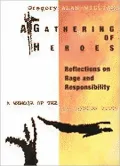
On April 29, 1992, actor Gregory Alan Williams walked into the intersection of Florence and Normandie avenues - in the heart of South Central Los Angeles - and into the midst of the worst riot in America's recent history. Summoning a courage born from the examples of his own personal heroes, Williams, an African American, rescued Japanese motorist Takao Hirata from an angry mob armed with bottles and metal rods. Through an endless shower of projectiles and verbal abuse, he managed to drag the nearly lifeless man to safety. In this account of that traumatic event and its complex, fascinating aftermath, Williams vividly captures the sights and sounds of that horrendous day, setting them against the background of his own life. He recalls his own experiences with racism and his own violent behavior when he was in the Marines. All of these experiences are grist for William's mill as he reflects on the meaning of rage, on the ambiguity of attitudes about race and, most importantly, on the obligation we bear when confronted with the mindless face of violence. Thus, this thoughtful, articulate and touching memoir explores the larger implication of the LA Riots, from the cops' beating of Rodney King, the later beating of Reginald Denny and the subsequent trials of those involved.On April 29, 1992, Baywatch actor Alan-Williams walked into the midst of the South Los Angeles riot and rescued a nearly lifeless Japanese motorist amidst a shower of verbal abuse and debris. An African American, Alan-Williams reflects on the obligation we bear when confronted with the mindless face of violence. Illus.
Editorials
Publishers Weekly -
Alan-Williams is an African American TV actor, who, at the height of the Los Angeles riots nearly two years ago, deliberately set out for the epicenter of the violence, determined to try to restrain his fellow blacks' anger and, if necessary, to save victims of it. As he did so, he was mindful of the many violences done to him as a young black man growing up in largely white Iowa--and of a time, in the Marine Corps, when he had willingly participated in the beating of a fellow recruit that led to the man's suicide attempt. At the heart of the book is a searing eyewitness account of the frightful brutality and lawlessness of that day in Los Angeles. Alan-Williams saved two people: a young light-skinned black whose attackers, whom Alan-Williams drove off, mistook for white, and a terribly injured Japanese man he rescued from his smashed car. Alan-Williams's description of the actions and emotions of the occasion is gripping; his analysis of his own motives and of the senseless brutality of the attackers lacks any trace of the maudlin or the vengeful. Alan-Williams thinks clearly, standing outside the vagaries of racial politics as a man of hard-won conscience--though he ruefully admits that his own anger and resentment sometimes betray him. His small but intense book is inspirational in the best sense of that much-abused word. Photos not seen by PW . (Mar.)Kirkus Reviews
The media called them Good Samaritans, those brave souls who rescued drivers trapped at the Florence and Normandie intersection—ground zero of the '92 L.A. riots. Alan-Williams, an African- American actor, was one of them. Here, his short but impassioned report dovetails his role at the intersection with reflections on black rage, mob violence, individual responsibility, and the dangers of stereotyping. Alan-Williams hears the Rodney King beating verdict on his car radio. After his aerobics class, he drives purposefully to the already notorious intersection, his large hope being to save the victims from their aggressors and the aggressors from themselves. The actor was no saint. He had been badly bruised by racism during his Iowa childhood and understood the self-destructive rage that ensues, but he had also—as an aspiring Marine eager to show he was "one of the fellas"—participated in a despicable group attack on a fellow-recruit. At the intersection, he plunges into the mob to rescue an Asian truck-driver, beaten to a pulp. He drags him away, drawing for support on the "gathering of heroes" inside his head, those who had taught him compassion (like the Mayan woman in Mexico caring for her disfigured child) and those who had taught him steadfastness (his Marine drill instructors). Perception is everything. Where Alan-Williams sees in the driver his battered childhood self, a furious teenager sees a justly punished "Korean motherfucker." (The victim is, in fact, Japanese-American.) Minutes later, an LAPD squad car approaches the blood-soaked Samaritan and his charge, sees human refuse, and speeds away. But there is a happy ending. Overcoming his prejudice, Alan-Williamsentrusts Takao Hirata to a "brother" wearing a shoulder-length "doo" rag, who delivers him safely to the hospital. A moving illumination of the meaning of brotherhood. It deserves to sell and sell and sell. (Eleven photographs—not seen)Book Details
Published
April 1, 1994
Publisher
Chicago : Academy Chicago Publishers, 1994.
Pages
200
Format
Hardcover
ISBN
9780897334044