
Teen Fiction - Adventure & Survival, Fiction - General & Miscellaneous
Log in to track your reading progress.
Overview
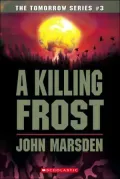
Life in the war zone enters its sixth month of heart-stopping tension in the latest installment of the internationally bestselling Tomorrow series.In the third installment of the Tomorrow saga, the anything-to-survive existence of Ellie and her friends has sharpened their senses and emboldened their plans. They aren't merely on the defensive anymore; they're also striking back. Their strategy? Attack the enemy not just on land, but also on water. If they have any hope of sabotaging the formidable container ship at Cobbler's Bay, then stealth is a must, but so, too, is one very big explosion.
And if they fail, they may face a whole new kind of terror -- imprisonment.
Ellie and her friends, a small band of teenagers trying to survive in the Australian countryside, continue to resist the enemies who have invaded their country.
Editorials
Gregory Maguire
John Marsden's trilogy about a band of teen-age terrorists resisting the annexation of Australia by a foreign army is compulsively readable.—NY Times Book Review
Publishers Weekly -
The trilogy about Australia under siege that started with Tomorrow, When the War Began comes to a thrill-a-minute conclusion as the teen heroes continue their guerrilla tactics against totalitarian foes. Ages 12-up. (Oct.) Copyright 1999 Cahners Business Information.VOYA -
This sequel to Tomorrow, When the War Began (Houghton, 1995/VOYA August 1995) and The Dead of Night (Houghton, 1997/VOYA February 1998) continues the adventures of Ellie and her friends, a group of Australian teenagers trying to survive and fight back after their country has been invaded. As in the other two novels, Ellie must face the elements as well as fear, hunger, and injury. In this novel she and her friends manage to blow up an enemy ship and destroy an important port. Eventually they are captured and imprisoned. Ellie and Homer are sentenced to death, but the prison is bombed and they and the others escape before the sentence can be carried out. New Zealanders rescue the survivors and take them to safety and convalescence. The quotation on the back of the book deals with the group entering the maximum-security prison. This does not take place until page 218 of 288, which is unfortunate because it is the most interesting part of the novel. The preceding pages are more of what was in the two earlier books, only less fresh and with less emotion. Once again, despite the rescue, there is little closure to the plot. What happens to Australia? Will the kids ever see their families again? To go through three books only to end up here is a disappointment. If your collection has the other two books in the series you will probably want this one, too. YAs who have read the first two and are interested in more of the same may pick it up; however, there would not be much point to recommending this book to someone who has not read-or loved-the first two. VOYA Codes: 3Q 2P J S (Readable without serious defects, For the YA reader with a special interest in the subject, Junior High-defined as grades 7 to 9 and Senior High-defined as grades 10 to 12).Children's Literature -
What would you do if your country had been taken over by foreign attackers, your family and most of your countrymen captured-all, that is, except you? It is a story of hiding, survival, plotting, and fighting back. Using the outback brush as their cover and sheer fear as their weapons, Ellie and her four friends take on animal-like if not soldier-like qualities, sabotaging, bombing, and killing. At one point, Ellie and Homer smuggle themselves and tons of homemade explosives into a ship's container, destroying the enemy fleet and setting in motion a drastic chase for their capture. They have carried forth more destruction to the enemy than their allies, the New Zealand Kiwis. Not until they are captured are the Kiwis, with help from American weapons, able to bomb the prison and facilitate the teens' escape and rescue. It is a gripping story as much as it is a disturbing and graphic one.KLIATT -
First published in Australia, this suspenseful series was reviewed extensively in KLIATT when released in the US in hardcover editions and also as audiobooks. Now, the volumes are available as trade paperbacks, and this is the chance for all YA libraries to get copies. The basic plot of the series is that a group of high school friends in Australia are away on a camping trip when their country is attacked and terrorized by an unnamed enemy. They become an insurgency group, doing whatever they can do to make things difficult for the occupying forces. Their parents and families have been placed in concentration camps, demoralized. The teenagers, making use of their intimate knowledge of their own hometown, stage raids and then retreat to the outback to regroup. The narrator is Ellie, who is filled with rage sometimes and remorse at other times. She is a realist, knowing that they have to do what they are doing if they expect to get their homeland back. All kinds of moral issues are raised. Also compelling are their feelings about each another. This represents the best of YA literature—exciting, honest, gripping. (Look for the final two books in the series to be released shortly—there are seven in all.)School Library Journal
This is the third installment of the saga begun in "Tomorrow, When the War Began" (1995) and continued in "The Dead of Night" (1997). Six months have now passed since an invading army attacked Australia. Ellie and her band of teenage guerrilla fighters are rapidly becoming harder, more jaded, less inhibited. Their plan this time is to destroy the port at Cobbler's Bay, a strategic harbor for the enemy. Throughout most of the book, the young freedom fighters outwit the bad guys and manage to keep just one step ahead of them. Alas, they are finally captured and taken to a maximum-security prison. There they are certain to be sentenced to death for their activities. Good prevails in the end, however. Well, sort of. War is not neat and tidy, and along the way there is a personal tragedy for Ellie's gang. This sequel is less taut, less compelling, and grimmer than the other books, but it is still an action-packed, enjoyable read. Readers will be lost, however, if they have not been introduced to the characters in the earlier books. Furthermore, the Australian slang (even with the help of a glossary) can be daunting. As in the other titles, Marsden poses several questionsabout right and wrong, the nature of evil, and what human beings are capable of enduring under extreme circumstances. Roxanne Burg, Thousand Oaks Library, CAHorn Book Magazine
Fans of John Marsden's "Tomorrow, When the War Began" and "The Dead of Night" won't be disappointed by this third novel about a group of Aussie teens on the lam after enemy invaders take over their country. This time, Ellie and company carry out a dramatic rescue, build a bomb to destroy a huge ship, and make radio contact with the New Zealand military before being caught, imprisoned, and interrogated by their old pal, Major Harvey. When help arrives and the friends are finally rescued, they're more numb than relieved-they're alive only because of a horrifying, heroic self-sacrifice made by one of their own. As carefully as the teenagers mix ammonium nitrate and diesel, Marsden combines suspense and action with Ellie's thoughtful self-examination and loads of detailed description (in particular, the author has clearly done his research on prisoner psychology and post-traumatic stress). Without the details to ground it and make it deadly realistic, the story would have been like an action-adventure film-riveting but forgettable. Readers won't find Ellie's story all that easy to forget.Kirkus Reviews
Marsden offers an unflinching look at living in war-torn Australia in a follow-up to "Tomorrow, When the War Began" (1995) and "The Dead of Night" (1997). For Ellie, the tough and likable teenage narrator of the tale, life has become a battle ever since the nameless invading army swept across Australia's shores, locking her family, her neighbors, her entire town into prison camps, and murdering those who attempted to resist. With her mates, Ellie acts out what may be the ultimate teenage fantasy, living in the woods and blowing up things to thwart the enemy. Marsden presents Ellie's plight realistically, and so the starvation, sickness, and death that are part of every war are also depicted to maximum dramatic effect. While some adults will shrink from the discussions on making homemade bombs, Marsden's characters risk their lives to shut down one of the invader's key sea ports. The group succeeds, but they are subsequently captured and interrogated; they escape, but one of their fellows sacrifices herself with a hand grenade to make that escape possible. The final scene, in which the young guerrillas are celebrated as the war rages on, casts an appropriately ambiguous ending for this exemplary depiction of a true living hell.Book Details
Published
June 11, 2026
Publisher
Scholastic, Inc.
Pages
288
Format
Paperback
ISBN
9780439829120