
Join Books.org — it's free

Fiction - African, Fiction - African American, Fairy Tales & Folklore - General & Miscellaneous, Fiction - Short Story Anthologies, Fairy Tales & Folklore - Regional, Fiction - General & Miscellaneous
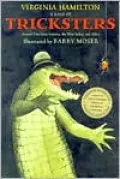
A Ring of Tricksters by Barry Moser β€” book cover

A Ring of Tricksters

by Barry Moser
Write a review
Log in to track your reading progress.

Overview

Twelve trickster tales that show the migration of African culture to America via the West Indies.

Twelve trickster tales that show the migration of African culture to America via the West Indies.

About the Author, Barry Moser

BARRY MOSER is the prize-winning illustrator of many beautiful books for children and adults, including Harcourt's Telling Time with Big Mama Cat and Sit, Truman!, both co-illustrated by his daughter Cara Moser and written by Dan Harper. He has won the American Book Award and earned accolades from the American Library Association and the American Institute of Graphic Arts. Mr. Moser lives in western Massachusetts. TONY JOHNSTON's numerous books for children include It's About Dogs, illustrated by Ted Rand, Very Scary, illustrated by Douglas Florian, and The Day of the Dead, illustrated by Jeanette Winter. She lives with her family in California.

Biography

A writer of prodigious gifts, Virginia Hamilton forged a new kind of juvenile fiction by twining African-American and Native American history and folklore with contemporary stories and plotlines.

With Hamilton's first novel, Zeely, the story of a young farm girl who fantasizes that a woman she knows is a Watusi queen, she set the bar high. The book won a American Library Association Notable Children's Book citation. Hamilton rose to her own challenge, and every new book she published enriched American literature to such a degree that in 1995 she was awarded the ALA's Laura Ingalls Wilder Award for lifetime achievement.

Born in Yellow Springs, Ohio, and raised in an extended family of farmers and storytellers (her own father was a musician), Hamilton's work was inspired by her childhood experiences, family mythology, and Ohio River Valley homeland. In an article about the importance of libraries in children's lives, she credits her mother and the "story lady" at her childhood public library with opening her mind to the world of books.

Although she spent time in New York City working as a bookkeeper after college, and traveled widely in Africa and Europe, Hamilton spent most of her life in Yellow Springs, anchored by the language, geography, and culture of southern Ohio. In The House of Dies Drear, she arranged her story around the secrets of the Underground Railroad. In M. C. Higgins, the Great, winner of both a John Newbery Medal and a National Book Award, she chronicled the struggles of a family whose land, and life spirit, is threatened by strip mining. Publishers Weekly called the novel "one of those rare books which draws the reader in with the first paragraph and keeps him or her turning the page until the end."

In her series of folk-tale collections, including The People Could Fly: American Black Folktales, In the Beginning: Creation Stories from Around the World, and Her Stories: African American Folktales, Fairy Tales, and True Tales, Hamilton salvaged and burnished folk tales from cultures across the world for her stories; stories that suffused her fiction with its extraordinary blend of worldly and otherworldly events, enchantment, and modern reality. Virginia Hamilton died on February 19, 2002.

Good To Know

Hamilton's first research trip to a library was to find out more about her family's exotic chickens, which her mother called "rainbow layers," because of the many tints of the eggs they laid.

In 1995, Hamilton became the first children's writer to win a John D. and Catherine C. MacArthur "genius" grant.

Reviews

There are no reviews yet. Log in to write one.

Editorials

Children's Literature - Marilyn Courtot

This is the third collaboration by this author and illustrator and they continue to charm readers with outstanding folktales and matching illustrations. There are similarities here to their previous works, When Birds Could Talk & Bats Could Sing and In the Beginning: Creation Stories from Around the World. This collection contains stories that are drawn from distinct geographical regions, but they share common roots. The American Trickster tales feature Buh Rabby, sometimes called Brer Rabbit, and other smaller creatures who use their wits to best those larger and more powerful. These tales have their roots in the African culture of the slaves in the Southern US. Another set of tales from the West Indies feature Anansi, the spider, which is also rooted in African culture. What makes the circle complete are the African trickster tales, which may have returned to the continent via freed slaves. They are entertaining and the dialect is not overwhelming. The artwork by Moser is filled with humor. The way his animal characters displays the full range of human emotions is testament to his prodigious talent. This is a book to be savored and begs to be read aloud. The stories are appropriate for younger children to listen to, while older kids can read them on their own. Notes provide background and information about the stories.

School Library Journal

K Up--Hamilton offers readers and storytellers 11 animal trickster tales from the African diaspora. Most are quite familiar. "Bruh Wolf and Bruh Rabbit Join Together" is a variant of the popular tale about who gets the top or the bottom of the harvested crops. "The Cat and the Rat" takes a new twist when Bruh Wolf is brought in to help them share their find. "Cunnie Anansi Does Some Good" is a different take on name guessing. "Cunnie Rabbit and Spider Make a Match" is a tale about strength that also explains why animals have different colors or spots or stripes. It is the least successful offering as it lacks the humor and familiar touches found in "The Extraordinary Tug-of-War." As in When Birds Could Talk & Bats Could Sing (Scholastic, 1996) and In the Beginning (Harcourt, 1988), Moser's humorous illustrations of the principal characters capture and complement the wily, dazed, and perplexed demeanor of the animals as described by Hamilton. A section of notes helps readers understand the colloquialisms and contractions in the retellings and gives an explanation about the tricksters and the specific geographical location of the diaspora they represent. The format, size, and attractive illustrations make this title a good choice for group sharing.--Marie Wright, University Library, Indianapolis, IN

New York Times Book Review

This is a handsome, well-annotated anthology, a pleasure to read aloud. -- New York Times Book Review

Book Details

Published
November 1, 1997
Publisher
New York : Blue Sky Press, c1997.
Pages
112
Format
Hardcover
ISBN
9780590473743

More by Barry Moser

Similar books