
Political Theory & Ideology, General & Miscellaneous Philosophy, Economic Theory & Schools of Thought, Major Branches of Philosophical Study, Economic Conditions, Sociology, Economics, Politics & Government - General & Miscellaneous, British Philosophy, S
Available on Bookshop
Write a review
Books.org participates in affiliate programs including Bookshop.org and the Amazon Services LLC Associates Program. We may earn a commission from qualifying purchases made through links on this page, at no additional cost to you.
Log in to track your reading progress.
Overview
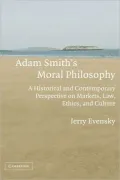
"Adam Smith is best known among economists for his book, The Wealth of Nations, often viewed as the keystone of modern economic thought. For many, he has become associated with a quasi-libertarian laissez-faire philosophy. Others, often heterodox economists and social philosophers, on the contrary, focus on Smith's Theory of Moral Sentiments, and explore his moral theory. There has been a long debate about the relationship or lack thereof between these, his two great works." This work treats these dimensions of Smith's work as elements in a seamless moral philosophical vision, demonstrating the integrated nature of these works and Smith's other writings. Although many practitioners today see the study of Smith as an antiquarian exercise, this book weaves Smith into a constructive critique of modern economic analysis (engaging along the way the work of Nobel Laureates Gary Becker, Amarty Sen, Douglass North, and James Buchanan) and builds bridges between that discourse and other social sciences.Book Details
Published
August 1, 2007
Publisher
Cambridge University Press
Pages
352
Format
Paperback
ISBN
9780521703864