
Gynecology & Obstetrics, Maternity, Perinatal & Women's Health Nursing, Medical & Surgical Nursing, Family & General Practice, General & Miscellaneous - Nursing
Log in to track your reading progress.
Overview
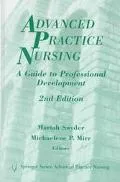
This popular textbook, now in its second edition, presents a clear introduction to the field and a skills-oriented appraoch to the core information needed by all advanced practice nurses. Students and clinicians will learn to apply clinical descision making, care management, client education and advocacy, research, consulting, and writing and oral presentation skills to thier APN role.The book contains black-and-white illustrations.
Editorials
From The Critics
Reviewer: Kathleen Lent Becker, MS, CRNP(Johns Hopkins University School of Nursing)Description: In this second edition the focus is on the expanded role of the advanced practice nurse in today's healthcare environment.
Purpose: The purpose is to provide an overview of the varied roles of the advanced practice nurse, specifically the role of the certified nurse-midwife (CNM), the certified registered nurse anesthetist (CRNA), the nurse practitioner (NP), and the clinical nurse specialist (CNS). The historical context of each role is described as are the core competencies shared by all advance practice nurses. The discussion is current, timely, and relevant.
Audience: This should be required reading for all students in APN programs. This is a thorough review of the APN role, and current issues and trends are discussed as well. The editors clearly state that this text is "applicable for students in educational programs for any of the four APN roles." This may also be a welcome review for seasoned APNs who wish to refresh their knowledge.
Features: Each APN role is described and a detailed description is provided on the shared competencies of all APNs. Chapters on professional issues (licensure, certification, prescriptive privileges, and reimbursement), clinical decision making, ethics, and complementary therapies are all included. The role of the APN as an advocate, educator, provider, communicator, case manager, change agent, and consultant is discussed in detail. The editors and contributors are adept at describing the similarities that exist between the CNM, NP, CRNA, and CNS roles.
Assessment: This is a well written book that should be a primer for all students entering graduate APN programs. The historical context of the four APN roles and how they have evolved into complex multifunction positions is critical to the understanding of advance practice nursing. The editors and contributors clearly and concisely present the role of the APN and knowledgeably discuss future trends and opportunities. The additional chapters on ethics and complementary therapies are a welcome addition.
Kathleen Becker
In this second edition the focus is on the expanded role of the advanced practice nurse in today's healthcare environment. The purpose is to provide an overview of the varied roles of the advanced practice nurse, specifically the role of the certified nurse-midwife (CNM), the certified registered nurse anesthetist (CRNA), the nurse practitioner (NP), and the clinical nurse specialist (CNS). The historical context of each role is described as are the core competencies shared by all advance practice nurses. The discussion is current, timely, and relevant. This should be required reading for all students in APN programs. This is a thorough review of the APN role, and current issues and trends are discussed as well. The editors clearly state that this text is ""applicable for students in educational programs for any of the four APN roles."" This may also be a welcome review for seasoned APNs who wish to refresh their knowledge. Each APN role is described and a detailed description is provided on the shared competencies of all APNs. Chapters on professional issues (licensure, certification, prescriptive privileges, and reimbursement), clinical decision making, ethics, and complementary therapies are all included. The role of the APN as an advocate, educator, provider, communicator, case manager, change agent, and consultant is discussed in detail. The editors and contributors are adept at describing the similarities that exist between the CNM, NP, CRNA, and CNS roles. This is a well written book that should be a primer for all students entering graduate APN programs. The historical context of the four APN roles and how they have evolved into complex multifunction positions iscritical to the understanding of advance practice nursing. The editors and contributors clearly and concisely present the role of the APN and knowledgeably discuss future trends and opportunities. The additional chapters on ethics and complementary therapies are a welcome addition.3 Stars from Doody
Book Details
Published
December 31, 1999
Publisher
Springer Publishing Co Inc
Pages
302
Format
Hardcover
ISBN
9780826112811