
Infectious Diseases, Immunology, Biology - Microbiology, HIV & AIDS, People with Special Needs, Microbiology
Log in to track your reading progress.
Editorials
VOYA -
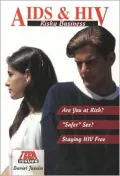
HIV infection is growing more quickly among adolescents than among other groups. AIDS is the seventh leading cause of death among people ages fifteen to twenty-four in the United States. Education about the risks associated with substance abuse and sexual activity is still considered one of the most effective ways to prevent HIV infection. Both AIDS: A Handbook for the Future and AIDS & HIV: A Risky Business present an overview of the history of the disease; current rates of infection; methods of transmission, prevention, testing, and treatment; and current research. Both are written in a factual manner but definitely are addressed to a teen audience. The authors have used appropriate technical language and anatomically correct descriptions of HIV transmission via sexual activity, but have clearly explained and defined terms. The differences between the two books are mostly a matter of style. From the Teen Issues series, AIDS & HIV: A Risky Business has a slightly more technical presentation, utilizing numerous charts and illustrations to clarify the text. Jussim explores the emotional aspects of HIV/AIDS and includes numerous case studies from real teens who have been infected. Since this book was reviewed from a proof, it was difficult to compare it with LeVert in terms of actual layout. Full-page statistical charts and profiles of teens with HIV or AIDS serve to expand or clarify certain topics, but they also tend to interrupt the flow of the text. AIDS:A Handbook for the Future has very few illustrations but includes a number of photos. The pages feature a very readable font set on very white paper with a fair degree of white space. Short chapters are subdivided with bold headings for each topic. Every chapter includes several text boxes that feature a quote from a notable person and statistical or notable fact that serves to illustrate the text. LeVert frequently refers to or quotes famous people familiar to teens who have been infected by the HIV virus, such as Magic Johnson, Greg Louganis, Arthur Ashe, and Ryan White. She also presents some case studies from teens who have the HIV virus. I found this book to be somewhat better organized and more readable than AIDS & HIV: A Risky Business, but the difference is negligible. Teens probably will not pick up either book to read for pleasure, but the information is vital for every teen. At least one of these books belongs in every public and school library; if possible buy several copies of each. Glossary. Index. Illus. Photos. Maps. Charts. Source Notes. Note: This review was written and published to address two titles: AIDS & HIV: Risky Business, and AIDS: A Handbook for the Future. VOYA Codes: 5Q 3P J S (Hard to imagine it being any better written, Will appeal with pushing, Junior High-defined as grades 7 to 9 and Senior High-defined as grades 10 to 12).School Library Journal
Gr 7 UpThese well-written titles offer up-to-date information on serious health problems and sound advice on how to deal with them. Jussim presents a great deal of material in this overview that includes a summary history of AIDS and HIV infection. The many tables of statistics help readers to understand the scope of this contemporary plague. An important feature of the text is a realistic view of the newer treatments, including protease inhibitors. The story of the now-legendary Ryan White plus profiles of many other afflicted young people make for sad, but gripping reading. A chapter devoted to HIV prevention identifies the risks attached to all kinds of sexual contact and offers precise information on how to avoid disease. Readers are warned of the dangers of intravenous drug use and the sharing of needles. Including discussions of both substance abuse and behavioral disorders, Addiction lists causes, characteristics, and results of uncontrolled, compulsive activities. The focus is on the family unit and identification of the roles played by various members in addictive homes vs. their healthier counterparts. Special emphasis is given to places teenage addicts can find help and support at school and in the community. While neither book is illustrated, special sections are often highlighted or set apart, breaking up the texts. These accurate, honest, and readable titles are sound choices for YAs.Sue A. Norkeliunas, Arlington Senior High School, LaGrangeville, NYBook Details
Published
June 1, 1997
Publisher
Enslow Publishers
Pages
112
Format
Binding
ISBN
9780894909177