
Presidental Elections & Candidates, Irish & Irish Americans - Biography, U.S. Politics & Government - 20th Century, Governors - U.S. Political Biography, 20th Century American History - Politics & Government - 1900-1945, General & Miscellaneous U.S. Polit
Log in to track your reading progress.
Overview
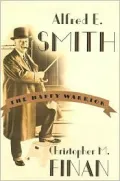
The meteoric rise and dramatic fall of Alfred E. Smith, the brash Catholic anti-Prohibitionist from New York's Lower East Side, are well known. His job at the Fulton Fish Market, his years in the state legislature and as four-time governor of New York, his crushing defeat in 1928, and his final, puzzling defection from the Democratic Party in 1936 are the stuff of legend. Christopher M. Finan provides a full, nuanced study, written with verve and zeal, of this intriguing -- and misunderstood -- politician.Editorials
Publishers Weekly
After his death in 1944, it took 57 years to get Al Smith the excellent biography he deserved. That book finally arrived in 2001, when Robert A. Slayton published Empire Statesman: The Rise and Redemption of Al Smith. Now, a year later, comes another worthy Smith biography, albeit a bit shorter and based somewhat less on primary sources than is Slayton's. Full of sympathy for the always sympathetic Smith, Finan (president of the American Booksellers Foundation for Free Expression) provides a readable, reliable and reasoned portrait of the Catholic Smith's 1870s childhood on New York City's Lower East Side, his early days with Tammany, his years as a pioneer Democratic reform governor in New York, and his political demise when he fell to anti-Catholic bigotry in the presidential election of 1928. Finan borrows his subtitle from FDR's famous phrase describing Smith, and he spends a great deal of time depicting the complex relationship these two men shared. At first FDR's mentor, Smith eventually came to feel betrayed and displaced by the Protestant Knickerbocker who moved into his post as governor in '28 and then, in '32, achieved the White House, succeeding where Smith had failed. Subsequently, FDR could never understand Smith's myriad criticisms of New Deal reforms that were to a large degree based on policies Smith himself had enacted previously in New York. Still, as Finan shows in his first book, FDR and Smith ended as friends. 24 b&w illus. not seen by PW. (June) Copyright 2002 Cahners Business Information.Library Journal
With two major narrative lives of Al Smith appearing within months of each other, could "The Happy Warrior" finally be getting his due? First came Robert A. Slayton's Empire Statesman: The Rise of Al Smith, which centered on Smith's losing 1928 presidential campaign. Now comes this new biography of New York's popular four-term Democratic governor, capping first-time author Finan's years of graduate research. Significantly, Smith, the first Roman Catholic presidential candidate of a major party, suffered a crushing electoral defeat that stood as a political warning to Catholic candidates until JFK in 1960. Academic biographers have long ignored Smith, who did not leave much of a personal paper trail. Liberals seems never to have quite forgiven him for splitting with FDR's New Deal in 1936, while conservatives seem to have invoked his legacy only when politically convenient. In this full biography, Finan reveals a vulnerable person who was too open and too trusting. Ultimately, the Happy Warrior's broader political realism was limited by minimal education coupled with lack of travel prior to his presidential campaign. He was the candidate of urban immigrants pitted against his party's rural populist wing. Finan's solid and highly readable biography is highly recommended for both public and academic libraries. William D. Pederson, Louisiana State Univ., Shreveport Copyright 2002 Cahners Business Information.Kirkus Reviews
A rock-solid biography of the muckraking New York politician. Though he bore the sobriquet "the happy warrior," Al Smith (1873–1944) took anything but a lighthearted approach to politics. He harbored, writes Finan (president of the American Booksellers' Foundation for Free Expression), a "distrust of theory" in an age when big ideas abounded and instead was convinced that the "first step to solving any problem was to get ‘the facts'." His careful, studious approach to politics was learned on the job after an unlikely elevation from his former occupation as a laborer at New York's Fulton Fish Market. Taken up by a Tammany ward boss, Smith soon became an integral part of the city's political machine, securing the support of fellow Irish Catholics. Populist but essentially conservative, he won the governorship in 1918, dismaying the social elite that ruled Albany. Around this time he became a valuable ally of Franklin Roosevelt, though FDR harbored his own ambitions and eventually turned on Smith, ostensibly in the interests of anti-boss system reform but in fact in the interests of the patrician, anti-immigrant, and anti-Catholic wing of the Democratic Party. Angry at Roosevelt's "dodging" on Prohibition, Smith endured a sound defeat at Herbert Hoover's hands in the presidential election of 1928, then became a prominent critic of the New Deal after FDR beat Hoover in 1932. For this supposed betrayal, he was shunned by his fellow Democrats and was subsequently all but forgotten by historians. That's all to the bad, Finan argues; Smith's mistrust of big government is a familiar trope today, his political accomplishments were many, and had he been elected, "he may well have become one of thecountry's great presidents." Well written, thoroughly researched: likely to stand as the definitive portrait of Smith for years to comeBook Details
Published
June 1, 2002
Publisher
New York : Hill and Wang, 2002.
Pages
368
Format
Hardcover
ISBN
9780809030330