
Legends, Myths & Fables - General & Miscellaneous, Fairy Tales & Folklore - General & Miscellaneous, Fairy Tales & Folklore - Regional, Ancient Civilizations - History - General & Miscellaneous, Fiction - General & Miscellaneous
Log in to track your reading progress.
Editorials
Publishers Weekly -
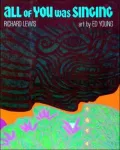
According to an Aztec myth, when Earth and Sky are created, Earth cannot hear the music of the wind, stars and sun. Sky helps the wind steal the musicians of the sun and carry them to Earth where ``silence is opened.'' For a young reader, the story might sometimes be obscured by Lewis's complex and sophisticated language. Certainly the change in narrator--two different voices tell the creation myth and the story of how music came to earth--should have been made more clear. But Lewis's dense imagery will be welcomed by more experienced readers and by book collectors. ``From your eyes,'' Sky tells Earth, ``the gods made springs / of cold water. / From your mouth, they made the deep caves / and echoing caverns.'' Young's pastel illustrations are stunning if somewhat obscured by their highly abstract quality. Black-edged drawings are bordered by scumbled pastel designs that make use of Aztec motifs. The drowning orange sun can be glimpsed through a rent in the black sky. Both Lewis's lyrical text and Young's spectacular illustrations make considerable demands on the reader but play melodies that will long sing in the heart. All ages. (Mar.)School Library Journal
Gr 6 Up-- A retelling of an Aztec myth about how music came to earth. In controlled, sometimes lyric prose, Lewis recounts the creation of earth and sky from the remains of the earth-monster, torn in two by serpents. From out of the darkness the sun appears, and the sound of the wind is the music of the sun. But the sky pleads with the wind to bring music back to earth. It is done, and all things sing. Young's multimedia illustrations (cut-paper collage, watercolor, colored pencil and chalk on colored paper) are arresting and have a certain grandeur in spite of their apparent simplicity. The opening pages are all text and background--white type in small black boxes centered on a background of abstract symbols reflecting the Aztec influence. As the creation progresses, the artwork becomes less abstract and more representational, moving from somber darkness to colorful dawn; from small, contained illustrations centered on a beautiful background border to large, sweeping two-page spreads. They scrupulously interpret the prose, but this can be a problem when what they are supposed to reflect is nothingness. The opening pages are flat and unappealing, and while both art and narrative pick up considerably further on, this is a real weakness in an otherwise beautifully designed book. Highly sophisticated and with limited child appeal, it will, nonetheless, reward those bold enough to make the endeavor. For large comparative literature collections. --Janice M. Del Negro, Chicago Public LibraryBook Details
Published
March 28, 1991
Publisher
New York : Atheneum ; 1991.
Pages
32
Format
Hardcover
ISBN
9780689315961