
General & Miscellaneous American Art, 20th Century American History - Social Aspects - General & Miscellaneous, Modern Art, Fauvism, Expressionism & Early Modern Art Movements
Log in to track your reading progress.
Overview
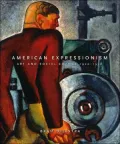
During the 1920s and '30s and until the end of World War II, a distinctly American form of Expressionism evolved. Most of the artists in this movement, children of immigrants from eastern and southern Europe, African Americans, and other outsiders to American mainstream culture, grew up in the urban ghettoes of the East Coast or Chicago. Their art was sympathetic to the dispossessed and reflected a deep concern with the lives of working people. Providing a fascinating look at this art—and at the beginning of a new movement, Abstract Impressionism which followed it—cultural historian Bram Dijkstra offers new insights into the roots of painting in America today.Dijkstra examines the new emphasis these socially conscious artists brought to the pursuit of the American ideals of equality, dignity, and justice for all. Provocatively he suggests that Abstract Expressionism came to be used as part of a backlash, deliberately fostered by conservative political and corporate interests, against the socially conscious Expressionist paintings and the WPA projects supported by the Roosevelt administration. Profusely illustrated throughout with works of art seldom seen today, the book coincides with an important traveling exhibition of the art of this period.
About the Author:
Bram Dijkstra is Professor Emeritus of Comparative Literature at the University of California, San Diego. He has published numerous book on American cultural history. He lives in Del Mar, California.
Editorials
The Los Angeles Times
Dijkstra — who has written such books as Georgia O'Keeffe and the Eros of Place and Cubism, Stieglitz and the Early Poetry of William Carlos Williams — gives us another look at some artists whose accomplishments have not been fully recognized or celebrated. Of their work reproduced in this book, I'd like to see more of Joseph Solman, Matthew Barnes and Clayton Price. But the volume (produced in collaboration with the Columbus Museum of Art) also shows us work by many artists who have been honored in the years since their critical heyday. They have not been erased from history, and the selection of their work is gorgeous. — Pete HamillThe Washington Post
Cultural historian Dijkstra writes superbly well about the terrifying beauty of these disquieting works. — Michael DirdaPublishers Weekly
The conventional story of American visual art generally pegs postwar Abstract Expressionism, in the hands of Jackson Pollack, Willem de Kooning, etc., as the first truly mature manifestation of a national aesthetic, followed by Pop Art and minimalism as its glamorous and cerebral heirs. This polemical picture book seeks to overturn that history, finding in paintings of the pre-AbEx era a rich and undervalued tradition, and an antidote to a 20th-century art history that the author characterizes as fundamentally effete. Collecting images from provincial museums across the country, Dijkstra mixes well-known artists such as Jacob Lawrence and Georgia O'Keefe with consistently under-appreciated talents such as Albert Pinkham Ryder and Charles Burchfield, along with a canon of fascinating unknowns. Together, they flesh out an alternative history of much more humanistic dimensions than the hermetic and apolitical legacy of the postwar decades, with art that is decidedly more earthy and populist and socially engaged. Although Dijkstra pads the case with some sentimental choices-noble sharecroppers and grungy smelting factories and the like-his case stands as a convincing rebuff to the exhausted narratives of contemporary advanced art. Moreover, it resonates interestingly with the sources and practices of emerging artists in the post-conceptual era. This is a provocative, important book. (May) Copyright 2003 Reed Business Information.Library Journal
In this landmark study, which accompanies a traveling exhibition that debuted at the Columbus Museum of Art this May, cultural historian Dijkstra (Idols of Perversity) liberates American Expressionism from the long shadow cast by its successor, Abstract Expressionism. He brings to light its stylistic pedigree, characteristics, and purpose in order to restore its identity and reevaluate its significance to both American art and, ultimately, the course of American history. Establishing American Expressionism as an instrument of positive social change, Dijkstra differentiates the movement from the more popularly recognized German Expressionism, which did not employ its emotive power for activist ends. Occasionally, one detects here a current of hostility toward those conservative political and corporate interests that turned the tide against American Expressionism and caused it to flow toward elitism and nonobjective art. However, Dijkstra's argument is carefully conceived and thoroughly argued, and the book features many important but under-recognized artists and their works. A few of the better-known artists covered in the text and the 258 illustrations (186 in full color) include Ben Shahn, Marsden Hartley, Yasuo Kuniyoshi, and Paul Cadmus. Because this book compellingly recasts and revitalizes the social realist period of American art, it will prove a valuable addition to all comprehensive art libraries.-Savannah Schroll, formerly with Smithsonian Inst. Libs., Washington, DC Copyright 2003 Reed Business Information.Book Details
Published
June 2, 2003
Publisher
New York : H.N. Abrams : 2003.
Pages
272
Format
Hardcover
ISBN
9780810942318