
Poetry, United States History
Log in to track your reading progress.
Overview
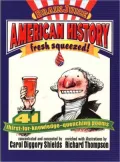
History homework getting you down? Too much to learn? Names? Dates? Important events? Hang in there! Help is on the way! Adroitly reducing reams of boring data about our nations past to a generous selection of over-the-top verses, Carol Diggory Shields presents our history with incisive hilarity. Here, for example, is her wry interpretation of the Louisiana Purchase:Tom Jefferson went shopping for a city one fine day Something in the South with a harbor or a bay,
Voila! said the French, The city of your dreams!
For only 15 million, we will sell you New Orleans.
Nutritionally balanced, guaranteed pure, 100% refreshing, and cleverly distilled future BrainJuice topics will include biography, literature, and geography.
A collection of poems on such important events in the history of the United States as the Pilgrims' landing in Massachusetts, the Louisiana Purchase, the Civil War, Seward's Folly, the San Francisco earthquake, and more.
Editorials
Publishers Weekly
American history comes alive in a variety of informational titles. Carol Diggory Shields condenses history into 41 short poems in Brainjuice: American History Fresh Squeezed!, illus. by Richard Thompson, beginning with, appropriately, "The First," a ditty about dinosaurs ("The first Americans who roamed the prairie/ Were kind of big and kind of scary") and ending with "The Lady," a paean to the Statue of Liberty, which Shields casts as witness to the destruction of the World Trade Center. Poems about the Wright brothers, the San Francisco earthquake of 1906 and "The Great War" (WWI) are among the poems that fall along the timeline that runs at the top of the pages. Thompson, a political cartoonist, offers appropriate doses of humor and poignancy.Children's Literature -
This funny book is a collection of poems on important events in the history of the United States, such as the Pilgrims' landing in Massachusetts, the Louisiana Purchase, the Civil War, Seward's Folly, the San Francisco earthquake, and more. This book comes with the author's apology letter to her sixth grade teacher saying how boring history was and how she tried to convince the rest of the class to agree. She became a poet and learned that history is stories about people doing things. She does the book in poetry format with a timeline at the top of each page. There is actually much said in the concise way in which it is done. The book is cleverly done and will catch the interest of young people. A teacher who aims to meet the needs of kids can use this book as a learning tool and prove that one can learn in different styles and format. The poems are short and the illustrations are different. The book could be useful in the classroom, as well as in library media centers and as a fun read.School Library Journal
Gr 4-8-These more than 40 short poems, filled with humor high and low, don't really attempt to teach about the events, but they offer amusing commentary on them. Like fractured fairy tales, they are best read by those already familiar with the material referenced, in this case, U.S. history from the dinosaur age ("The first Americans who roamed the prairie/Were kind of big and kind of scary") to the present day (the close call election of 2000 shows George W. as a jack-in-the-box, popping out of a ballot box). The tone takes a serious turn at the Trail of Tears, both World Wars (although Hitler, Tojo, and Mussolini are each described as being "worse than a movie meanie"), and the fall of the World Trade Center Towers. The poems may not be great literature, but there are more hits than misses, and the irreverent tone will appeal to older kids. A time line runs along the top of each page, covering items important (the Industrial Revolution) and intriguing (1938 states, "Radio drama of H. G. Wells' War of the Worlds causes national panic"). Numerous pen-and-ink drawings add style and fun. Like all good cartoonists, Thompson knows how to do a lot with a little, and makes it look effortless as well. Creative teachers will find a multitude of uses for this book. Kids may enjoy writing their own poems about historical events. Recent studies show a general lack of interest in and knowledge of history. Brain Juice may help counteract this trend.-Lauralyn Persson, Wilmette Public Library, IL Copyright 2003 Cahners Business Information.Kirkus Reviews
"In fourteen hundred and ninety two, / Columbus did not have a clue." In deft, light verse, Shields (Food Fight, p. 963, etc.) revisits dozens of high and low spots in this country’s history, to which political cartoonist Thompson appends plenty of fine-lined, tongue-in-cheek caricatures and vignettes. The tone is generally, but not always, jocular; between noting that the continent’s earliest inhabitants "hissed and growled and roared great roars— / the first Americans were dinosaurs," and a soaring tribute to the Statue of Liberty, who "saw the towers’ awful fall" but still "holds her torch up high," the poet treats readers to a cavalcade of wars, inventions, and firsts. There’s also a three-part "Parade of Presidents," and accounts of selected watershed events—most memorably the Montgomery bus boycott, sung to a certain familiar tune: "The driver on the bus said, ‘Move on back! / Move on back! Move on back! / White folk in front and black in the back. / All through the town!’" Though the skimpy (and not always accurate: the Emancipation Proclamation did not free "all slaves") running header timeline s a dispensable feature, on the whole this will make an indispensable, refreshing break from tests and textbooks. (index) (Poetry. 9-11)Book Details
Published
October 1, 2002
Publisher
Handprint Books
Pages
64
Format
Hardcover, 2002
ISBN
9781929766628