
Penmanship, Handwriting, Study Aids - General & Miscellaneous, Study Aids - Workbooks
Log in to track your reading progress.
Overview
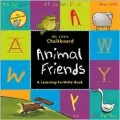
Concept books meet classic chalkboards in this innovative new way for kids to learn and play. Chalkboard Books promote learning through action, rather than passive observation, utilizing a familiar classroom feature that allows children to erase mistakes or repeat the exercise. By drawing pictures that relate to fun-to-read rhymes, forming letters, and vocally answering questions, kids come to understand the relationship of written numbers, words, and letters to the sounds they make. Designed for ages 36, these books "grow" with the child, providing many ways to expand on each story. A parents' guide on the back cover explains how to get the most from these innovative books.
Editorials
Publishers Weekly
For those who like to play school, two board book titles with actual chalkboards prompt plenty of pretend-classroom fun: My Little Chalkboard: Animal Friends and My Little Chalkboard: Playing with Numbers by Nancy Krulik, illus. by Barroux. Sections of each spread are designed to be written on with the chalk provided (along with eraser and cleaning cloth). The first title features creatures from pigs to ants, with a demonstration of how to write the animals' names, and a few brief facts about them, plus some creativity tips ("Draw your favorite place to sing"). The second title spans one to 10, with lines for writing both the numerals and their written spellings. Copyright 2004 Reed Business Information.Children's Literature
This board book comes packaged with a box of colored chalk, cleaning cloth and eraser. The objective is to teach kids to write. One part of a spread makes a statement and then asks kids to draw something on the embedded chalkboard surface. The opposing page shows the letters of the single bold word on the other side of the spread. There is a chalkboard that is lined to help kids put the upper and lower case letters at the correct height. The strokes to create the letters are numbered to show how they should be created. As the title notes the emphasis here is on animals and for the most part they will be familiar to kids (pig, frog, cow, dog, ant, horse, mouse, snake, lamb and bird). The only letters that seem to be missing are j, q, v, x, y and z. The entire alphabet does run along the edges of the cover. There is a note to parents which describes ways to use what is labeled a Kinesthetic Learning Tool. The main challenge may be to find a good writing surface, since the bound book's pages do not lay entirely flat and writing on them may be a little bit difficult for young kids. An interesting idea and one that may help with kids eager to learn to write or conversely for those having difficulty in school and needing extra practice. 2003, Running Press, Ages 3 to 6.—Marilyn Courtot
Book Details
Published
June 15, 2004
Publisher
Running Press Kids
Pages
20
Format
Paperback
ISBN
9780762414352