
General & Miscellaneous Architectural History & Criticism, Architectural Business Practices
Log in to track your reading progress.
Overview
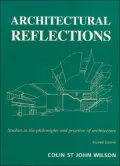
In this book of the world's greatest architects explores the original aims and principles of modern architecture. Where the postmodern critique is often a retreat into the past, Colin St. John Wilson argues that a renewal of the humanist basis of modern architecture is the only sound approach to the future. The essays explore the philosophical and ethical basis of architecture, "the other tradition of modernism," the work of Aalto, Scharoun, Lewerentz, Asplund, and Rietveld, the rise and decline of postmodernism, and a case study of Waterhouse's Law Courts, the most complex of all urban projects.
Editorials
Booknews
Wilson was the beleaguered architect of London's new British Library, a building now generally acclaimed after being maligned for cost overruns and significant delays. This second edition of the architect's 1992 work contains his thoughts on the Library, but is devoted mainly to his philosophy of architecture, which includes a strongly felt critique of current architecture. The book is organized into an exploration of the themes of imagination, ethics, play, historical sense, and how buildings need to accommodate works of art; a polemic on the state of architecture today; and five case studies which consider works by Alvar Aalto, Hans Scharoun, Sigurd Lewerentz, Gunnar Asplund, and Gerrit Rietveld. Distributed by Palgrave. Annotation c. Book News, Inc., Portland, OR (booknews.com)Book Details
Published
November 30, 2000
Publisher
New York : Manchester University Press, 1999.
Pages
240
Format
Paperback
ISBN
9780719057045