
Art Styles & Periods, Art of the Americas, Artists, Architects & Photographers - Biography, Biography Reference
Available on Bookshop
Write a review
Books.org participates in affiliate programs including Bookshop.org and the Amazon Services LLC Associates Program. We may earn a commission from qualifying purchases made through links on this page, at no additional cost to you.
Log in to track your reading progress.
Overview
From the Author of Frida, the Moving and Heroic Story of One of the Central Painters of the Twentieth Century
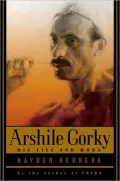
Born in Turkey around 1900, Vosdanik Adoian escaped the massacres of Armenians in 1915 only to watch his mother die of starvation and his family scatter in their flight from the Turks. Arriving in America in 1920, Adoian invented the pseudonym Arshile Gorky—and obliterated his past. Claiming to be a distant cousin of the novelist Maxim Gorky, he found work as an art teacher and undertook a program of rigorous study, schooling himself in the modern painters he most admired, especially Cézanne and Picasso. By the early forties, Gorky had entered his most fruitful period and developed the style that is seen as the link between European modernism and American abstract expressionism. His masterpieces influenced the great generation of American painters in the late forties, even as Gorky faced a series of personal catastrophes: a studio fire, cancer, and a car accident that temporarily paralyzed his painting arm. Further demoralized by the dissolution of his seven-year marriage, Gorky hanged himself in 1948.
A sympathetic, sensitive account of artistic and personal triumph as well as tragedy, Hayden Herrera’s biography is the first to interpret Gorky’s work in depth. The result of more than three decades of scholarship—and a lifelong engagement with Gorky’s paintings—Arshile Gorky traces the progress from apprentice to master of the man André Breton called “the most important painter in American history.”
Finalist for the 2003 Pulitzer Prize for Biography.
Synopsis
From the Author of Frida, the Moving and Heroic Story of One of the Central Painters of the Twentieth Century Born in Turkey around 1900, Vosdanik Adoian escaped the massacres of Armenians in 1915 only to watch his mother die of starvation and his family scatter in their flight from the Turks. Arriving in America in 1920, Adoian invented the pseudonym Arshile Gorky-and obliterated his past. Claiming to be a distant cousin of the novelist Maxim Gorky, he found work as an art teacher and undertook a program of rigorous study, schooling himself in the modern painters he most admired, especially Cézanne and Picasso. By the early forties, Gorky had entered his most fruitful period and developed the style that is seen as the link between European modernism and American abstract expressionism. His masterpieces influenced the great generation of American painters in the late forties, even as Gorky faced a series of personal catastrophes: a studio fire, cancer, and a car accident that temporarily paralyzed his painting arm. Further demoralized by the dissolution of his seven-year marriage, Gorky hanged himself in 1948. A sympathetic, sensitive account of artistic and personal triumph as well as tragedy, Hayden Herrera's biography is the first to interpret Gorky's work in depth. The result of more than three decades of scholarship-and a lifelong engagement with Gorky's paintings- Arshile Gorky traces the progress from apprentice to master of the man André Breton called "the most important painter in American history."Editorials
The New York Times
By the end of Ms. Herrera's accelerating narrative, you may wish it would continue, following Gorky's widow and daughters as they come to terms with the legacy he left them. Perhaps Ms. Herrera's next book will tell that story. It seems to be one that she knows exceptionally well. — Roberta SmithNY Times Sunday Book Review
Hayden Herrera has written the definitive biography of Arshile Gorky -- lucid, persuasive, meticulous, intimate and refreshingly cleareyed. Gorky is the sort of artist who in his life as much as his work invites extreme responses; and some of his biographers and critics have been unable to avoid lionizing him as the singular genius of his generation or dismissing him as a slave to greater masters. Herrera recognizes his strengths and weaknesses. Arshile Gorky: His Life and Work makes the case for his position as the bridge between European Cubism and Surrealism and American Abstract Expressionism, but acknowledges that some of his work is simply a restatement of Matisse, Picasso or Miro. — Andrew SolomonThe Los Angles Times
it is hard to imagine that Herrera's study will soon be superseded. — Arthur C. DantoPublishers Weekly
Most recently seen as a silent, enigmatic figure in the Armenian-Canadian filmmaker Atom Egoyan's Ararat, modernist painter Gorky (1900?-1948) is fastidiously served in this comprehensive biography. Born near Lake Van in Ottoman-held Armenia, the young Gorky witnessed the Armenian genocide, a horror that Herrera (Frida: A Biography of Frida Kahlo) covers with extreme care. Following Gorky's emigration to the U.S. in 1920 and his name change from Manouk Adoian (he claimed to be the cousin of Russian writer Maxim Gorky), Herrera establishes the bulk of the narrative around Gorky's paintings, describing what he was working on when and under what circumstances. Most of Gorky's work life was based in New York, where, by the 1930s, he was paid a salary by the WPA for murals and other work in his surrealist style, largely derived from Miro and Leger, as the 64 pages of color and b&w images affirm. Herrera expects and encounters many difficulties in untangling the secretive Gorky's feelings and mostly confines herself to quoting others extensively, including long passages from the letters of Gorky's American wife, Agnes Magruder (or as Gorky called her, "Mougouch"). Herrera's restraint and suspension of judgment can flatten out events, yet she lingers for paragraphs on Gorky's many paintings, describing them, speculating on their meanings with lucidity and documenting their sales. The result is a book that, exhaustive in its research, will be a starting point for scholars and critics, but that will fail to engross casual readers. Conversely, readers already familiar with Gorky who are looking for political meanings to his suicide, shown here as undertaken in physical and marital distress, may find less than they are looking for. (July) Forecast: The Gorky of the film Ararat is an early Gorky, who paints in an autobiographically realist style. This book will find some readers looking for more than the movie gave them, but the lack of a forthcoming major Gorky retrospective is a drawback. Copyright 2003 Reed Business Information.Library Journal
For many years after he emigrated to America, surrealist painter Arshile Gorky (1904-48) continued his unsuccessful search for psychic refuge from the horrors of the Armenian genocide that scarred his youth. Much of his adulthood was a conscious fabrication, from concealing his nationality under a vaguely Slavic identity to plagiarized love letters and opinions. At his creative apex, Gorky developed a distinctive style of abstraction, influencing such followers as Willem de Kooning. But though for two decades he was part of the artistic avant-garde, his widespread fame occurred posthumously, after his lonely 1948 suicide by rope. Herrera, author of earlier bios of Frida Kahlo and Henri Matisse, illuminates Gorky's sad trajectory with a detailed and unsettling narrative. An improvement upon recent, less objective attempts to encapsulate this turbulent life by Nouritza Matossian (Black Angel), who was too sympathetic, and Matthew Spender (From a High Place), who is related to the artist by marriage, this is recommended for all libraries.-Douglas F. Smith, Oakland P.L. Copyright 2003 Reed Business Information.Kirkus Reviews
A lucid life of the émigré Expressionist painter. Born in 1900 in eastern Turkey, Gorky regaled American friends with tales of an idyllic childhood among mountains and rivers. That much was true, as far as it went, though that paradise would be shattered by the onset of the Turkish war of genocide against ethnic Armenians within the Ottoman Empire-and, though he claimed Russian descent and kinship with the writer Maxim Gorky, the man born Mooradian was Armenian through and through. Biographer and art historian Herrera (Matisse, 1993) spends a full hundred pages discussing the Armenian milieu that Gorky took pains not to remember before landing his subject, in 1920, in New York and thence Watertown, Massachusetts, where he lived in a neighborhood called Little Armenia and set about training himself as an artist. Gorky soon emerged as an apostle of European modernism, introducing his painting students to the works of his beloved Cézanne, Picasso, and Braque; and though his early work was clearly derivative, he soon developed a distinctive style that earned many admirers. As Herrera writes, Gorky was capable of bohemian excess, although he maintained higher standards of behavior than some of his comrades in art, especially the surrealists; as art patron Jeanne Reynal would recall, "He didn't understand the surrealists' fascination with sexual perversion." Though a dedicated family man and, by the early '40s, quite successful as an artist, Gorky suffered from his own demons, and the collapse of his marriage and calamities such as a studio fire that destroyed much of his archive helped lead him to suicide in 1948. Herrera's biography is competent and well-written, and, while it presupposesfamiliarity with major trends in modernist art and demands patience for sometimes unhelpful analysis ("We are not outside looking at the scenery but rather in the midst of stems, petals, leaves, branches, and twigs"), it serves its readers well. A welcome introduction to the work of a painter famed in his day but now largely forgotten.Book Details
Published
January 3, 2005
Publisher
Farrar, Straus and Giroux
Pages
784
ISBN
9781466817081