
Patristic Theology, Apologetics (Christian), Early Church - History, Ethics & Moral Philosophy - Theoretical, Literature, Christian
Available on Bookshop
Write a review
Books.org participates in affiliate programs including Bookshop.org and the Amazon Services LLC Associates Program. We may earn a commission from qualifying purchases made through links on this page, at no additional cost to you.
Log in to track your reading progress.
Overview
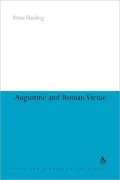
Augustine and Roman Virtue seeks to correct what the author sees as a fundamental misapprehension in medieval thought, a misapprehension that fuels further problems and misunderstandings in the historiography of philosophy. This misapprehension is the assumption that the development of certain themes associated with medieval philosophy is due, primarily if not exclusively, to extra-philosophical religious commitments rather than philosophical argumentation, referred to here as the 'sacralization thesis'. Brian Harding explores this problem through a detailed reading of Augustine's City of God as understood in a Latin context, that is, in dialogue with Latin writers such as Cicero, Livy, Sallust and Seneca. The book seeks to revise a common reading of Augustine's critique of ancient virtue by focusing on that dialogue, while showing that his attitude towards those authors is more sympathetic, and more critical, than one might expect. Harding argues that the criticisms rest on sympathy and that Augustine's critique of ancient virtue thinks through and develops certain trends noticeable in the major figures of Latin philosophy.Book Details
Published
December 22, 2011
Publisher
Bloomsbury
Pages
220
Format
Hardcover
ISBN
9781441175274