
Photography - History, Criticism, & Collections, Artists, Architects & Photographers - Biography, Fashion & Costume - History
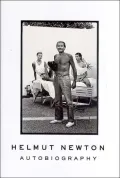
Log in to track your reading progress.
Overview
Born in Berlin in 1920 to a wealthy Jewish family Helmut Newton was an overprotected child with no interest in school. At the age of twelve he purchased his first camera, beginning a fascination with photography that would eventually propel him to the heights of international celebrity. Barely eighteen when Kristallnacht tore Germany apart, Newton managed to escape the Nazis. However, he never made it as far as his intended destination of China. After indulging in a series of shipboard romances, Newton arrived in Singapore and soon became a gigolo and lover of an older woman.But the world was at war, and talk of interning German Jews became prevalent even on the secrets of Singapore. So Newton decamped once more, ending up in Australia, where he joined the Australian army and served as a private for five years. Subsequently, he opened his first "tiny" photography studio in Melbourne and in 1948 he married his wife, June, a successful actress.
In the 1950s Newton moved to Paris, where he continued to astonish clients with his beautiful and provocatively erotic images of women. His controversial White Women, published in 1976, earned him the titles of King of Kink and Prince of Porn. His distinctive visual vocabulary has been widely imitated.
Editorials
The Washington Post
Helmut Newton's Autobiography has little resemblance to his previous books -- White Women, Sleepless Nights, Big Nudes, to name a few collections of the photographs that earned him such titles as "King of Kink" and "Prince of Porn." It is mostly text, written with very little literary flourish and often crude, but disarmingly so. For Newton's life is full of entertaining interludes that sometimes read like those curious graphic novels in which Edward Gorey portrays decadence with tongue-in-cheek humor. — Kunio Francis TanabePublishers Weekly
Famous for his decadent photography, Newton shares his life and times in a tell-all that reveals as much about his narcissism as his artistry. A German Jew whose family was ruined by the Nazis, Newton, born in 1920, has lived an exciting and terrifying life. The product of a privileged Berlin childhood, he bought his first camera at 12 and was hooked. Apprenticed to Yva, a noted fashion photographer, Helmut learned his craft, all the while dreaming of becoming a photographer for Vogue. But once the Nuremberg Laws were passed, coupled with the horrors of Kristallnacht, his family fled. Young Helmut went to Singapore; his parents sailed to South America. This rupture forced him into an independent, nomadic existence that continued throughout his life. A handsome, dashing figure, he is honest about his tenure as a gigolo, his time in an Australian prison camp (holding an expired German passport meant he was considered an enemy alien), his years in the Australian army and his ongoing passion for photography. Proposing to his wife, June, he warned her: "My work will always come first." His big break came in 1961, when he joined French Vogue. Newton was renowned for his erotic, risqu shots of models and nudes recalling the racy cabarets of his youth. In 1976, he published White Women, a controversial book that established him as the agent provocateur of fashion photography. So distinct were Newton's images, they became a Vogue hallmark. His autobiography recounts everything from his numerous affairs to his artistic inspirations. It is a remarkably candid and revealing look at the man behind the camera. (On sale Sept. 16) Copyright 2003 Reed Business Information.Library Journal
Newton's name is synonymous with trouble in the world of photography. The 1976 publication of his White Women ensured his status as a creator of visually stunning and erotic images of women. His photographs and personality together have cemented his image as a man who has pushed the envelope of his chosen medium for the last 50 years. So, with the publication of his autobiography, readers will be curious to discover the narrative of his own life. How much of his personality will he reveal? This book delivers on many levels. Newton, who was born in Berlin in 1920 and got his first camera at age 12, tells his fascinating and entertaining life story with remarkable candor. Unlike so many celebrities who present sanitized views of themselves, Newton lets us see what makes his brain tick and, therefore, what motivates his photography. One will be hard-pressed to look at his photographs the same after reading this book. A strong companion piece to his photography, best seen in the retrospective Helmut Newton Work, this is highly recommended for public and academic libraries. [Previewed in Prepub Alert, LJ 7/03.]-Sheila Devaney, Univ. of Georgia Libs., Athens Copyright 2003 Reed Business Information.Kirkus Reviews
The renowned "bad boy" photographer reflects on his long journey from pampered Berlin brat to international fashion icon. Gloriously self-centered Newton seems to have had a model in his beloved mama, a Berlin matron who ruled her enormous apartment, staff, and "pretty little Helmut" with an iron hand. Before his world went to hell, Newton attended private school and dancing lessons, like any other privileged Jewish youth. Abysmal grades persuaded his parents to allow him to apprentice to a photographer, and he took the trade with him when he fled Germany alone in 1938 at age 18. Making his way through Singapore, an internment camp, and finally the Australian army, Newton maintained his spirits and always, always a single-minded devotion to sex of all sorts, whenever and wherever possible. All his adventures are punctuated with lovers, ending finally with his beloved wife June, whom he met in Melbourne in 1946. His interest in sex didn't stop there, but it took him a good long time to incorporate it into his work and hit his professional stride. Sadly uninspired for an entire decade Down Under, left cold by a stint in rainy London for British Vogue, Newton finally found his footing in Paris, where he got a break from Jardin des Modes magazine. From then on, although there continued to be financial struggles, his career moved ever onward despite heart trouble, his wife's health problems, and his difficulty in being recognized as an artist, not just a craftsman. Finally, he ended up in Monaco, where one presumes he is content, since he ends his tale there in 1982, stating, "People who have arrived at their goal, who are not hungry anymore, are no longer interesting." Part II, "ThePhotographs," offers intriguing notes on some of his better-known subjects. Disarmingly frank, refreshingly unsentimental, surprisingly crude, and utterly absorbing.Book Details
Published
September 1, 2003
Publisher
New York : Nan A. Talese/Doubleday, 2003.
Pages
320
Format
Hardcover
ISBN
9780385508070